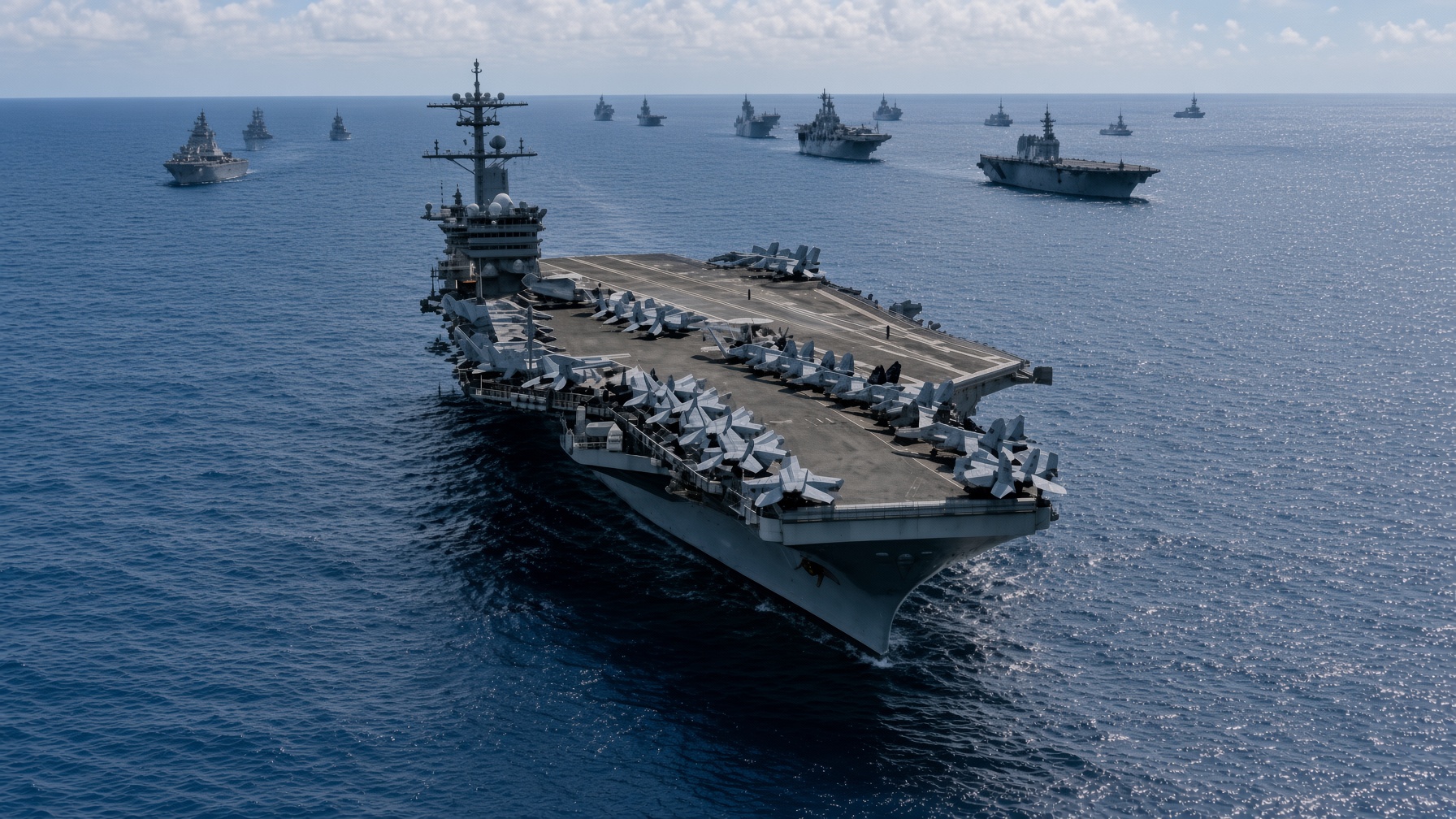
ABOARD THE USS ABRAHAM LINCOLN / WASHINGTON — Multiple sailors assigned to the USS Abraham Lincoln have attempted to jump overboard in recent months as the aircraft carrier endures a record-breaking deployment supporting U.S. operations against Iran, according to reports from military publications and accounts from service members’ families.
The Nimitz-class carrier, which left San Diego in November 2025, has remained continuously at sea for nearly 250 days without a port call—a modern-era record for a U.S. aircraft carrier. Originally tasked for operations in the South China Sea, the ship was redirected to the Middle East ahead of the outbreak of hostilities with Iran in February 2026. Approximately 5,000 sailors and Marines remain onboard as the deployment has stretched well beyond its anticipated timeline.
Navy Times and Stars and Stripes reported this week that several crew members have tried to go overboard amid mounting exhaustion, supply shortages, and deteriorating living conditions. In one case, Annabelle Loma said her husband, a 13-year veteran, attempted to jump after repeated extensions of the deployment. He is now on medical hold. “He’s scared,” Loma told Navy Times. “He thinks he’ll get a dishonorable discharge, and just because he was burnt out, his 13-year career is ruined, just like that.”
In a separate incident, another sailor’s spouse said her husband intervened to stop a shipmate from jumping. Watchstanders have also restrained at least one crew member preparing to go overboard, according to the reports. The Navy confirmed that a sailor went overboard earlier this month, was recovered by helicopter, treated aboard the ship, and later transferred for further care. The circumstances remain under investigation.
Family members and lawmakers have described severe quality-of-life problems on the vessel. These include moldy showers, broken toilets, extended periods without hot water or laundry service, water contamination concerns, and rationed meals—at times limited to half a cup of rice and two tortillas, with shortages of basic hygiene items such as soap, deodorant, and toothpaste. Care packages have reportedly been delayed or lost for months due to mail disruptions. Sailors have also described long work shifts of 12 to 16 hours with few days off.
Sen. Richard Blumenthal (D-Conn.), a Marine Corps veteran and member of the Senate Armed Services Committee, sent a letter to Defense Secretary Pete Hegseth and Acting Navy Secretary Hung Cao demanding answers within two weeks. He cited “shortages of basic supplies, water contamination, plumbing issues, deteriorating mental health, deck safety concerns,” and the lack of a clear return date. Other lawmakers, including Rep. Mike Levin (D-Calif.) and Sen. Ruben Gallego (D-Ariz.), have similarly called for oversight and transparency.
Hegseth dismissed the reports of poor conditions as “completely misrepresented.” A Navy spokesperson stated that leadership has prioritized mission-critical supplies in a contested environment where traditional logistics hubs were disrupted, and that mental health resources, including chaplains and medical professionals, remain available. Officials have indicated that the USS Theodore Roosevelt or USS George Washington carrier strike group is being prepared to relieve the Lincoln, though no firm timeline has been released, citing operational security.
Families who met with Navy leadership in recent days expressed frustration over the uncertainty and the strain on mental health. One spouse relayed a message from her husband saying he hoped he would not wake up the next day. The prolonged deployment has left many sailors missing major family events with no clear end in sight.
The situation highlights broader questions about the sustainability of extended carrier operations during ongoing conflict and the toll on personnel readiness and well-being. As pressure mounts from Capitol Hill, the Navy faces growing calls to address both the immediate conditions aboard the Lincoln and the longer-term demands of sustaining high-tempo naval operations.