**No, the United States has not entered a new war.**
Claims circulating online that America has “begun a war” or crossed into a major new conflict overstate and oversimplify the current geopolitical picture. Verified reporting and official statements point instead to a familiar mix of limited military operations, active diplomacy, and strategic positioning—none of which constitutes a formal declaration of war.
### Diplomacy Continues in the Russia-Ukraine Conflict
One of the most closely watched situations remains the war between Russia and Ukraine. In recent days, officials from the United States, Russia, and Ukraine held trilateral discussions in the United Arab Emirates. These talks form part of broader, ongoing efforts to manage the conflict and explore paths toward de-escalation.
Fighting on the ground has not stopped. Yet the fact that communication channels remain open is significant. Diplomatic engagement during active hostilities is neither unusual nor a sign of imminent wider war; it is a standard tool of statecraft aimed at preventing further escalation and testing possible off-ramps. Analysts note that such meetings demonstrate continuity rather than rupture in how the United States and its partners approach the conflict.
### U.S.-Iran Talks Signal Measured Engagement
A parallel track involves the United States and Iran. After a period of heightened tension, the two sides conducted indirect negotiations hosted in Oman. Officials characterized the discussions as constructive, indicating mutual interest in reducing friction and preserving regional stability.
This pattern—dialogue paired with maintained military readiness—reflects long-standing practice. Nations frequently keep channels open even while preparing for worst-case scenarios. The talks do not erase underlying disagreements or risks in the region, but they do undercut narratives that portray the relationship as locked into inevitable military confrontation.
### How Modern Military Activity Differs from Formal War
Understanding the distinction between current operations and a declared war is essential. Historically, wars began with formal declarations that signaled large-scale, sustained combat between states. The United States has not issued such a declaration since World War II.
Post-1945 engagements, including those in Iraq and Afghanistan, proceeded under congressional authorizations, executive authority, or international mandates rather than formal declarations. Today’s military actions tend to be more limited in geographic scope, focused on specific objectives, and frequently conducted within coalitions. They are authorized through existing legal frameworks rather than the traditional declaration process. This shift reflects both changes in the nature of security threats and the evolution of domestic and international law.
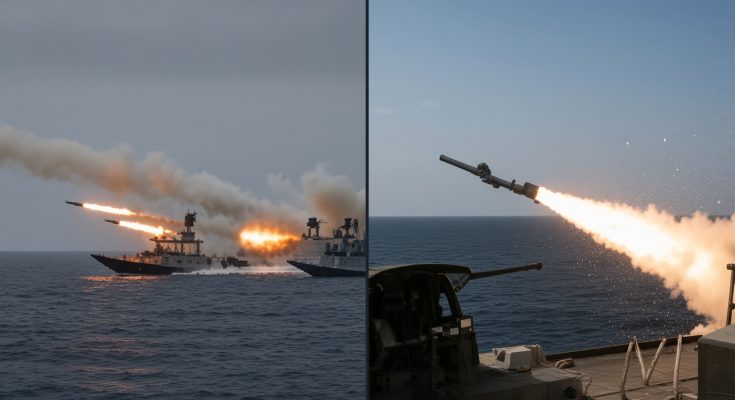
Current U.S. activities fall into categories better described as strategic engagement, defensive or preventive measures, and support for partners—not the broad, open-ended combat operations associated with declared war.
### Domestic Security and Online Narratives
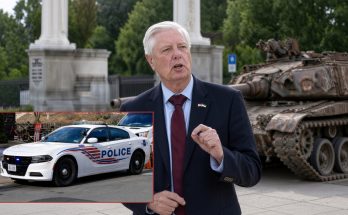
Domestic incidents, including recent events in Minnesota, have also entered the broader conversation. While such situations are primarily managed at the state and local level, they can influence national security discussions and public perception. Authorities continue to treat them as matters of public safety requiring proportionate response rather than as evidence of a new international war.
Much of the alarm about America “starting a war” appears to originate in online commentary that compresses complex developments into dramatic claims. Common markers of this type of content include weak or absent sourcing, exaggerated language, lack of official confirmation, and emotional framing designed to drive engagement. Responsible consumption of information requires checking claims against established news organizations and primary government statements.
### Why the Distinction Matters
Diplomatic efforts remain central even amid tension. Recent talks involving the United States with Russia, Ukraine, and Iran illustrate the continuing role of negotiation: reducing misunderstandings, keeping lines of communication open, lowering the risk of unintended escalation, and searching for workable resolutions. These activities operate alongside, not in place of, military preparedness.
Misreading limited operations or diplomatic outreach as the start of a new war can generate unnecessary public anxiety and distort policy debate. A formal war typically involves official declarations, large-scale mobilization, and sustained, broad combat. Present U.S. posture does not match that description.
### Bottom Line
The United States remains deeply engaged in global security matters. Diplomatic channels with key parties in the Russia-Ukraine conflict and with Iran are active. Military capabilities are maintained and, in specific cases, employed under existing authorities. Yet there is no verified evidence of a newly declared war.
In an information environment that rewards speed and intensity, context remains the most reliable defense against distortion. Distinguishing between ongoing operations, strategic positioning, and formal war is not semantic hair-splitting—it is the difference between accurate understanding and misinformation.