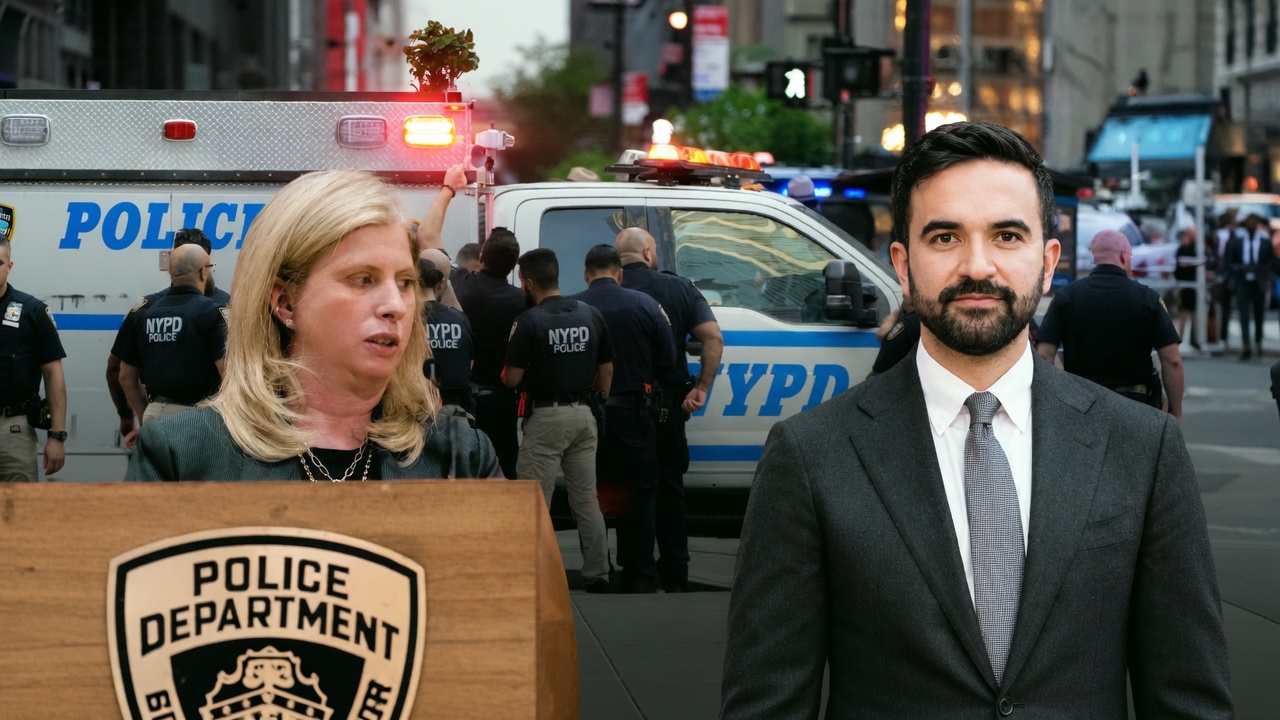
New York City Mayor Zohran Mamdani is facing growing criticism after encouraging New Yorkers to protest Israeli Prime Minister Benjamin Netanyahu during his visit to the city, with police union leaders warning that the move could place additional strain on an already overworked New York Police Department.
The controversy comes after a demanding summer for the NYPD, which recently handled security for several high-profile events, including the FIFA World Cup, Independence Day celebrations, and America 250 festivities. Those events brought millions of visitors to the city and required officers to work extended shifts to maintain public safety.
Now, Mamdani’s public support for demonstrations against Netanyahu has sparked concerns among law enforcement officials, who argue that the city should focus on maintaining order rather than encouraging additional large-scale protests.
Patrick Hendry, president of the NYPD Police Benevolent Association, criticized the mayor’s remarks, saying they could create unnecessary challenges for officers tasked with protecting both demonstrators and the public.
“Protests during the UN General Assembly are nothing new,” Hendry said. “But when the mayor of the city is actively calling for demonstrations, violent agitators may assume they have permission to push events beyond peaceful protest.”
Hendry also argued that the NYPD’s ability to respond to demonstrations has already been affected by legal restrictions stemming from previous settlement agreements, adding that heightened political rhetoric could increase the risk of unrest.
Mamdani has long been an outspoken critic of Netanyahu and Israel’s military campaign in Gaza. During his mayoral campaign, he stated that he would seek to have Netanyahu arrested if the Israeli leader visited New York, referencing the International Criminal Court’s 2024 warrant alleging war crimes in Gaza.
However, Mamdani recently acknowledged that he does not have the legal authority to order such an arrest. Instead, he encouraged New Yorkers to exercise their constitutional right to peaceful protest.
“This is a city where, if anyone feels a level of frustration or opposition, protest is something that we will always respect,” Mamdani told reporters at City Hall. “New Yorkers should be able to express themselves, whether they are in support or in opposition, on any issue. Respecting our Constitution also means respecting the First Amendment.”
Despite emphasizing peaceful demonstrations, the mayor’s comments have drawn criticism from some rank-and-file police officers, who say the timing could not be worse.
One Manhattan officer reportedly questioned the decision, noting that officers had just completed weeks of demanding assignments tied to major sporting events and public celebrations.
“Cops just came off a crazy six weeks working long hours every day,” the officer said. “Now they’re being asked to prepare for another potentially massive protest.”
Another Brooklyn officer reportedly dismissed the mayor’s comments as political grandstanding, arguing that Mamdani knew he lacked the authority to arrest Netanyahu and was seeking headlines rather than solutions.
A veteran NYPD officer also criticized the mayor, saying city leadership should be focused on governing and preserving public order instead of fueling political tensions.
The debate highlights the difficult balance city officials face between protecting First Amendment rights and ensuring public safety during high-profile international visits. As Netanyahu’s trip approaches, the NYPD is expected to deploy significant resources to monitor demonstrations, safeguard public spaces, and prevent any violence, while officials continue to stress that peaceful protest remains a protected constitutional right.