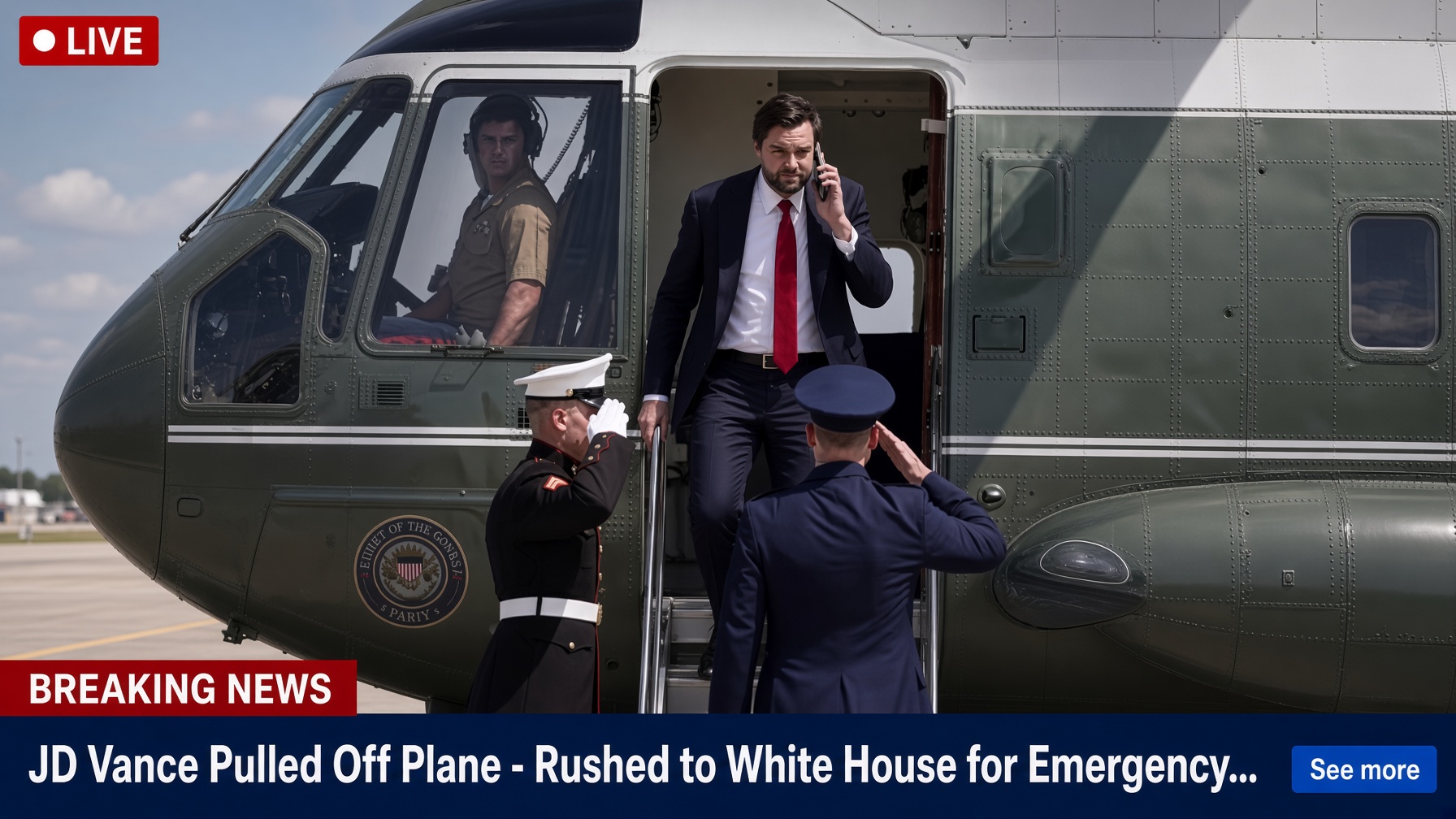
WASHINGTON — Vice President JD Vance was unexpectedly recalled to the White House Tuesday, interrupting plans for him to travel to Islamabad and lead a U.S. negotiating team in discussions surrounding the escalating conflict with Iran.
Vance had been expected to board a U.S. government aircraft bound for Pakistan’s capital, where American officials were preparing for talks focused on the rapidly changing situation in the Middle East. His sudden return to Washington came as uncertainty mounted over whether Iranian representatives would participate in the planned negotiations.
The development immediately raised questions about the status of the diplomatic effort and whether Washington was reassessing its strategy. The precise reason for Vance’s recall was not immediately clear, leaving uncertainty over what role he may ultimately play in the negotiations.
🇺🇸 Uncertainty Surrounds Islamabad Talks
The potential discussions in Islamabad were being closely monitored because any diplomatic engagement involving the United States and Iran could have significant consequences for efforts to prevent the conflict from widening.
Iran’s participation remained a critical issue. Without confirmation that Iranian officials would attend, prospects for substantive negotiations remained unclear.
Vance’s planned involvement had underscored the importance Washington appeared to place on the diplomatic initiative. His presence would have represented a high-level commitment from the Trump administration as officials explored potential ways to reduce tensions and prevent further escalation.
Instead, his unexpected return to the White House added another layer of uncertainty at a sensitive moment.
🌍 High-Stakes Diplomatic Challenge
The episode highlights the difficulty of pursuing diplomacy while military and political developments continue to shift rapidly.
For Washington, maintaining channels of communication with Tehran while protecting U.S. interests presents a complicated balancing act. Officials must weigh opportunities for negotiations against security concerns and the possibility that diplomatic efforts could collapse before producing concrete results.
The situation also leaves unanswered questions about whether the Islamabad meeting will proceed, whether Iranian representatives will ultimately participate and who will represent the United States if talks move forward.
Any change in the diplomatic track could have broader implications for regional stability, particularly as tensions involving Iran continue to dominate international attention.
For now, Vance’s recall to Washington has introduced fresh uncertainty into an already fragile diplomatic effort.
As officials assess their next steps, attention will remain focused on the White House, Islamabad and Tehran for indications of whether negotiations can move forward—or whether the diplomatic window is rapidly closing.