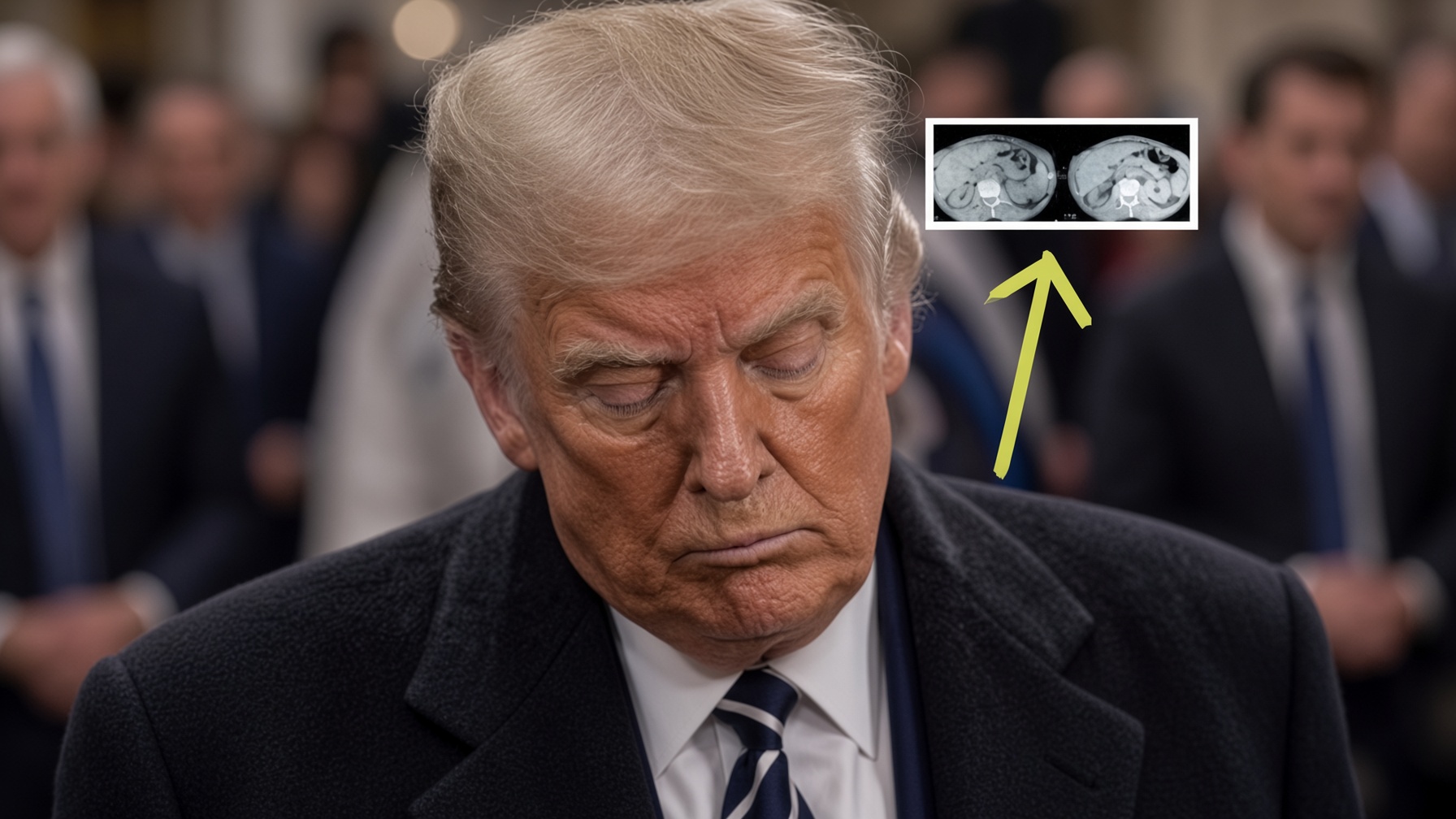
WASHINGTON — Questions surrounding President Donald Trump’s health resurfaced after a medical scan performed during an October 2025 evaluation drew attention because of the limited information initially released by the White House.
Trump discussed the imaging with reporters aboard Air Force One, repeatedly describing the results as “outstanding,” “excellent” and “perfect.” But when asked what part of his body had been examined, Trump acknowledged that he did not know, at one point saying he had “no idea” what the scan covered.
That lack of detail quickly fueled speculation about why advanced imaging had been included in what was initially characterized as a routine medical evaluation.
🔎 Doctors Later Provide More Details
The White House subsequently released additional information from Trump’s physician, Navy Capt. Sean Barbabella.
According to Barbabella, the October examination included preventative imaging of Trump’s heart and abdomen, with the results described as “perfectly normal.” The physician said the testing was intended as part of a broader executive-style physical designed to identify potential problems early.
The White House has maintained that the examination was preventative and was not prompted by a specific medical emergency.
There has also been some confusion over the exact type of imaging. Initial accounts described the procedure as an MRI, while Trump later characterized the imaging as a CT scan in an interview.
⚠️ Transparency Debate Intensifies
The episode has nevertheless revived a long-running debate over presidential medical transparency.
Critics have questioned why the administration did not immediately explain the purpose of the scan, arguing that limited disclosures can leave room for speculation about a president’s health.
Trump and his medical team have rejected suggestions that the examination revealed a serious problem. His physician has reported normal findings from the imaging, while Trump has continued to describe himself as being in excellent health.
For presidents, the issue is especially sensitive. They have legitimate medical privacy interests, but their physical and cognitive condition can also affect the continuity of government and national security.
The White House has not released the underlying imaging itself or complete medical records from the examination.
For now, the physician’s assessment remains positive, while questions about how much medical information a president should publicly disclose continue to draw attention.