WASHINGTON — A brief sign-off on CNN’s “State of the Union” has reopened an old fight: how far a president should go in telling a newsroom how to cover him.
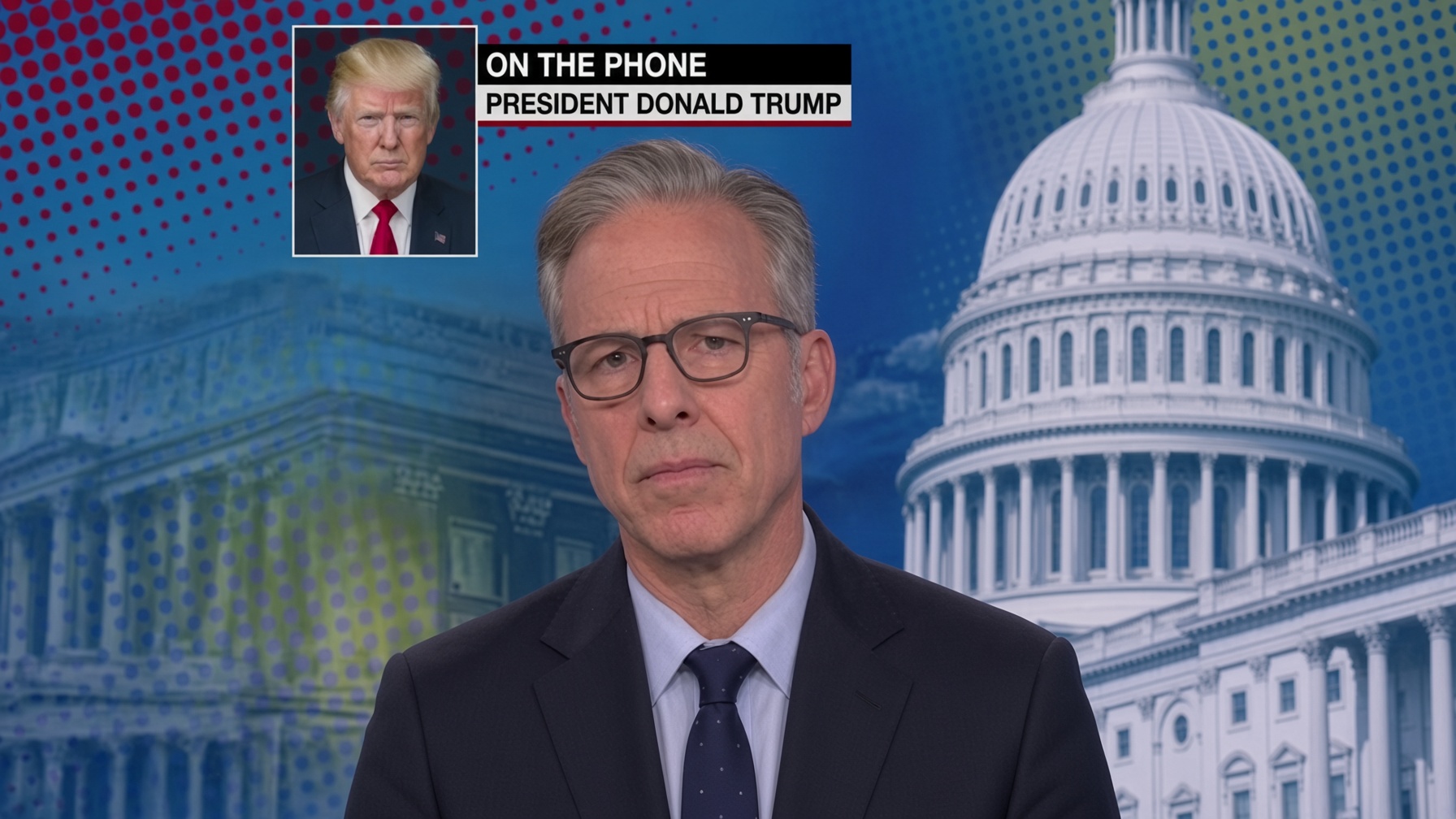
President Donald Trump phoned host Jake Tapper on July 12 to talk about the sudden death of Sen. Lindsey Graham of South Carolina, a onetime rival who became one of his closest Senate allies. Trump said Graham had called him the night before after returning from Ukraine and that the conversation happened only shortly before medical help arrived.
When Tapper tried to turn to Iran and the Strait of Hormuz, Trump cut the subject off. He said he did not want to discuss other issues “out of respect” for Graham — even as the two men circled the topic anyway. As the call wound down, Tapper invited him back for a longer interview.
Trump agreed, then added a line that traveled farther than the rest of the segment.
“We’re trying to have CNN go on a normal path, and we’ll do that,” he said.
Tapper answered, “Well, I’m on a normal path right here, sir, and I appreciate your time.”
“Good, you are,” Trump replied.
The exchange did not spell out what “a normal path” meant, or what the White House intended to do about it. The transcript does not show any specific order to CNN’s editors. Even so, critics said Tapper should have asked Trump to define the phrase. Defenders called it a polite close to a short call the president had already boxed in.
Trump has spent years attacking CNN as biased. The network has said its reporting is driven by news judgment, not by the preferences of any administration. That argument is now colliding with a much larger business story.
In June, the Justice Department’s Antitrust Division closed an eight-month review of Paramount Skydance’s proposed purchase of Warner Bros. Discovery, which owns CNN. The department said the deal was not likely to harm competition in streaming, linear television or theatrical film. Career staff concerns about the combination of two major studios were reported later; DOJ leadership still closed the file.
The merger would put CNN and CBS News under the same corporate roof. Industry journalists have worried about what new ownership could mean for newsroom priorities. The antitrust ruling itself did not find that the deal was designed to steer CNN’s coverage, and it did not give the White House editorial control. Separate state lawsuits remain a live issue; Reuters reported this week that settlement talks have included independent monitoring of CNN among possible terms.
None of that turns Trump’s remark into proof that the government is running the network. It does put the comment in a sharper setting: a president who has long wanted friendlier coverage, a news organization in the middle of a historic ownership fight, and an anchor who chose a short, firm reply instead of a follow-up.
The larger question is unchanged. Where does legitimate criticism of the press end, and where does political pressure on independent journalism begin? Trump’s “normal path” line did not settle that. It put the argument back on the air.