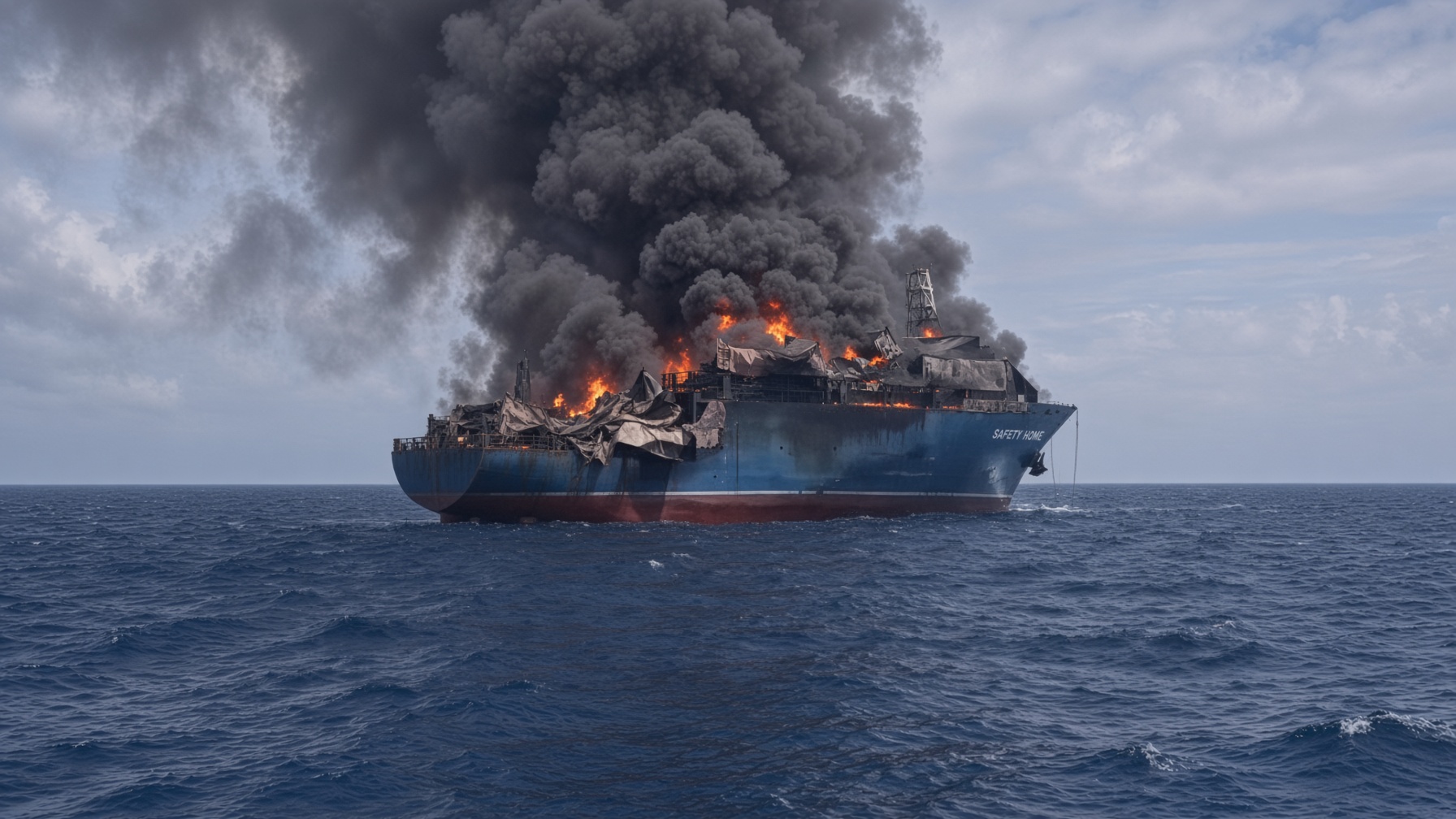
DUBAI — Tensions across the Middle East have sharpened after reports that an Iranian attack targeted a Singapore-flagged commercial vessel, renewing fears over the safety of international shipping through one of the world’s most critical waterways.
Details of the incident remain limited. Authorities have not released a full assessment of the ship’s condition, the extent of any damage, or whether crew members were injured. The report has nonetheless drawn close attention from shipping companies and governments monitoring an increasingly unstable maritime security environment.
In the hours after the reported strike, Tehran issued a pointed warning to commercial vessels operating near waters it regards as part of its military activity. The message instructed ships to stay clear of designated areas and warned that vessels entering those zones could face serious consequences.
“Stay out of our routes… you alone will bear the responsibility,” the warning reportedly stated.
The language has heightened concern that merchant ships could become more directly exposed to the wider regional conflict. Any threat—direct or indirect—to civilian vessels would complicate efforts to keep energy supplies and consumer goods moving through a corridor that underpins global trade.
### Strait of Hormuz: A Vital Chokepoint Under Strain
The incident arrives amid elevated tensions involving Iran and regional adversaries, with international focus fixed on the Strait of Hormuz, the Gulf of Oman, and adjacent sea lanes.
The Strait of Hormuz remains indispensable to global energy trade. Large volumes of crude oil, petroleum products, liquefied natural gas, and other commercial cargo pass through the narrow waterway each day. Even limited disruption could ripple far beyond the Middle East, affecting fuel prices, cargo schedules, insurance premiums, and transportation costs worldwide.
Shipping companies may now be forced to reassess routes, tighten operating procedures, or delay sailings if security risks rise. Longer alternative corridors would increase fuel consumption and delivery expenses, adding further strain to already pressured global supply chains.
Several nations have previously deployed naval forces to protect commercial shipping in the region. Continued threats against merchant vessels could increase pressure on governments to expand patrols, strengthen surveillance, or introduce additional protective measures.
### Investigation and International Response
Officials in Singapore and other countries are expected to monitor developments closely as maritime authorities work to establish exactly what occurred and whether the vessel was deliberately targeted.
Tehran’s warning has also raised practical questions for commercial operators about how to interpret military exclusion zones and navigation advisories issued during the conflict. Shipping companies must weigh the need to keep trade flowing against their duty to protect crews, cargo, and vessels.
Security analysts have cautioned that any expansion of hostilities into major maritime corridors could produce significant economic consequences. Even without a prolonged closure of shipping lanes, isolated attacks or credible threats can inject uncertainty into energy and freight markets.
Authorities are urging vessels operating in the region to remain vigilant, follow official maritime guidance, and maintain contact with relevant security agencies. As investigations continue, international markets and shipping operators remain on alert for any further developments that could threaten stability in one of the world’s most vital trade and energy routes.