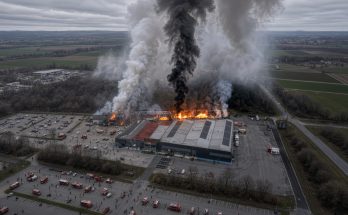
PERSIAN GULF — Regional stability in the Middle East deteriorated sharply on Friday as Iran launched a coordinated wave of missile and drone attacks on installations hosting U.S. military forces in several Gulf states. The escalation triggered air-defense intercepts, emergency alerts, and a rapid hardening of security postures across pro-Western monarchies that host American troops.
The assault marked another dangerous widening of the long-running U.S.–Iran confrontation. American forces maintain a substantial presence in Bahrain, Qatar, Kuwait, and the United Arab Emirates, making those host countries primary targets whenever Tehran chooses to strike beyond its own borders.
**UAE defenses light up the night sky**
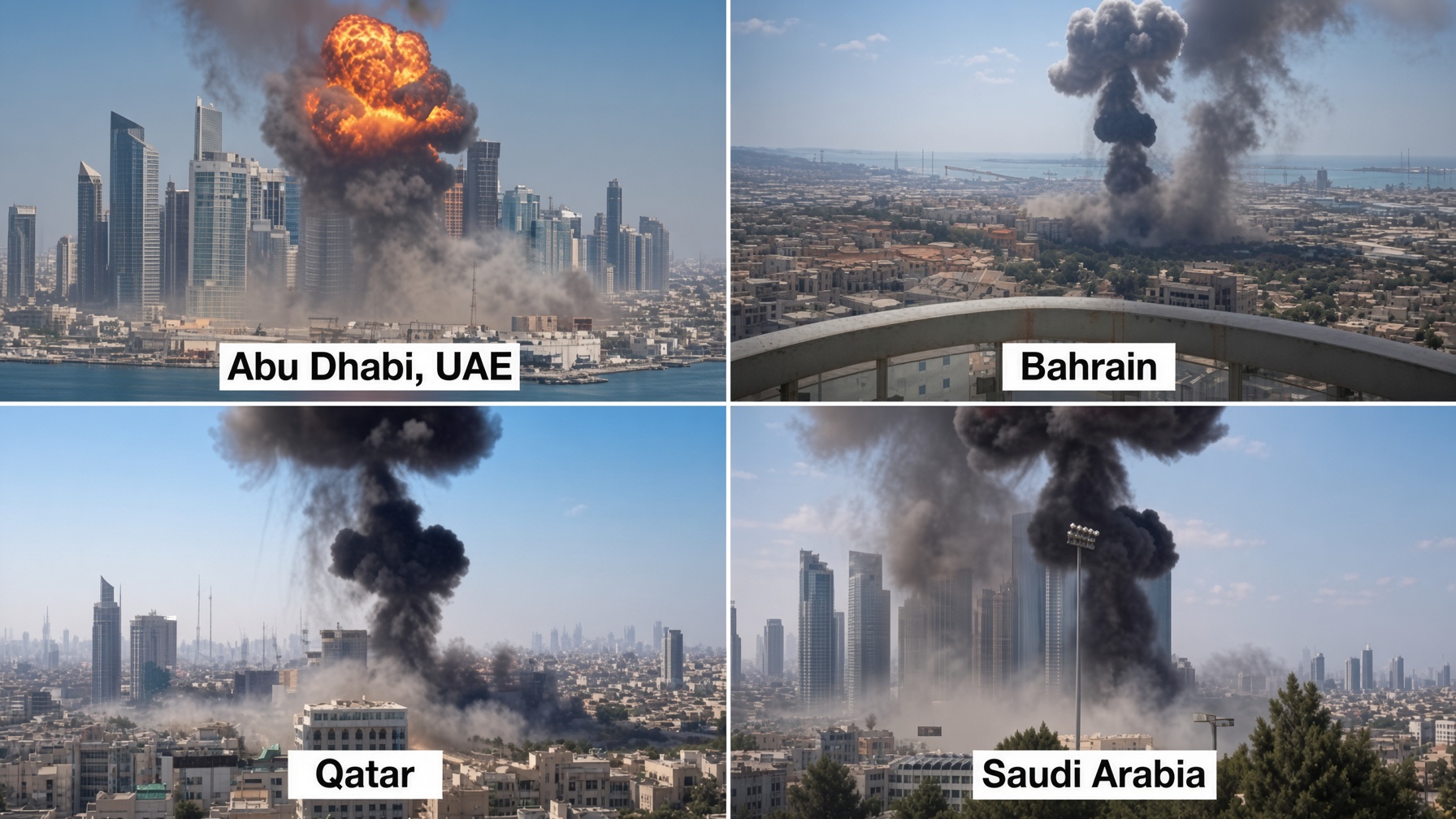
In the United Arab Emirates, explosions echoed across Abu Dhabi in the early hours. Witnesses, including Reuters correspondents, reported multiple powerful detonations concentrated near Al Dhafra and Bateen. UAE air-defense systems engaged incoming threats as the sky filled with interceptions.
Al Dhafra Air Base, a major hub for U.S. operations only a short distance from the capital, has long been considered a high-value target. Independent confirmation of any impact or damage at the base remained pending as assessments continued. The incident follows earlier reporting that Iranian-attributed attacks had already strained protective systems for critical infrastructure in the UAE and Bahrain, prompting a review of defenses against low-flying drones and ballistic missiles.
**Bahrain and Qatar in the line of fire**
Bahrain, home to the headquarters of the U.S. Navy’s Fifth Fleet, was directly in the path of the barrage. Iran claimed strikes on Navy facilities near Jufair and Sheikh Isa. Air-raid sirens sounded in Manama as defensive systems responded. Officials had not independently verified Tehran’s claims of successful hits.
To the north, Qatar’s Al Udeid Air Base — a regional command hub for U.S. forces — was another focal point. Iranian statements asserted attacks on assets there. Qatari air defenses were observed intercepting multiple incoming projectiles, underscoring the multi-front character of the offensive.
**Kuwait reports incoming fire**
Kuwait said its military engaged ballistic missiles, cruise missiles, and suicide drones aimed at facilities supporting U.S. personnel. Authorities urged civilians to follow emergency protocols while damage and casualty assessments remained incomplete.
**Hormuz and the wider stakes**
Beyond the immediate tactical picture, the attacks carry serious economic and geopolitical weight. The Strait of Hormuz remains the world’s most critical maritime energy corridor. A large share of global oil and gas shipments still transits that narrow waterway. Large-scale military activity nearby routinely disrupts commercial traffic. Shipping volumes through Hormuz have already fallen during earlier phases of the 2026 conflict; further instability would raise systemic risk for energy supplies and prices.
Diplomatic channels appeared blocked as military moves dictated events. Officials across the Gulf continued to quantify damage, watch the skies for follow-on waves, and wait for any response from Washington. For now, the Persian Gulf sits on a razor’s edge — a reminder of how quickly a confrontation centered on Iran can spill across the water into the capitals that host its principal adversary.