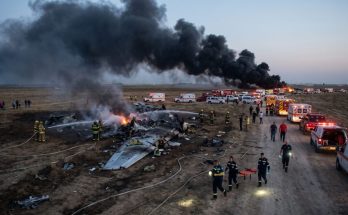
BEIJING/YANGON — A major, powerful earthquake struck a mountainous region near the volatile border shared by China and Myanmar early Monday, forcing residents to flee swaying buildings, cracking critical infrastructure, and triggering an immediate regional mobilization of search-and-rescue teams.
The violent seismic event, which struck as millions were starting their day, occurred without warning, shaking communities with an immense force that witnesses described as sheer terror. Tremors were felt hundreds of miles away, causing high-rise towers to sway in Bangkok, Thailand, and spreading panic through neighborhoods from Kunming in China to Mandalay in Myanmar.
The ground lurched with terrifying force, transforming a quiet morning into chaotic scenes of survival. In towns nearest the epicenter, the shaking was extreme. Buildings groaned and swayed, debris rained down onto streets, and deep fissures appeared in asphalt roads. Families clutched children and scrambled from collapsing homes, gathering in open parks and squares as emergency sirens began to pierce the air. Witnesses recounted fleeing barefoot, leaving all belongings behind, driven by the instinctive need to escape falling structures.
Seismic Impact felt across four Nations
Data from the U.S. Geological Survey (USGS) placed the origin of the powerful earthquake near the border, confirming a seismic reach that extended far beyond the epicentral area. The strong shaking impacted communities across southern China, northern Myanmar, northern Thailand, and neighboring Laos, highlighting the immense energy released.
The reach of the disaster was vividly illustrated in major urban centers far from the border. In northern Thailand, residents in Chiang Mai and Chiang Rai reported significant, prolonged swaying of buildings. In Bangkok, the powerful tremors forced the precautionary evacuation of several office towers and residential high-rises, where stunned occupants gathered in the streets, anxiously checking communication networks. Similar high-stakes precautionary measures were observed in cities across China’s Yunnan Province and Myanmar’s northern territories.
Mobilizing an Emergency Response
National and regional emergency management agencies immediately initiated catastrophic disaster protocols. Search-and-rescue units, specialized medical teams, and disaster response assets were swiftly mobilized toward the border regions to conduct damage assessments, treat the injured, and begin the painstaking search for anyone potentially trapped beneath wreckage. Authorities in all affected nations urged the public to remain extremely cautious, advising against entering unstable buildings and warning of the specific, ongoing danger of aftershocks.
Aftershocks commonly follow large-magnitude events, potentially posing lethal risks to weakened structures and complicating rescue efforts. The priority remains life-saving intervention and the rapid restoration of essential services.
Uncertain Damages and Infrastructure Concerns
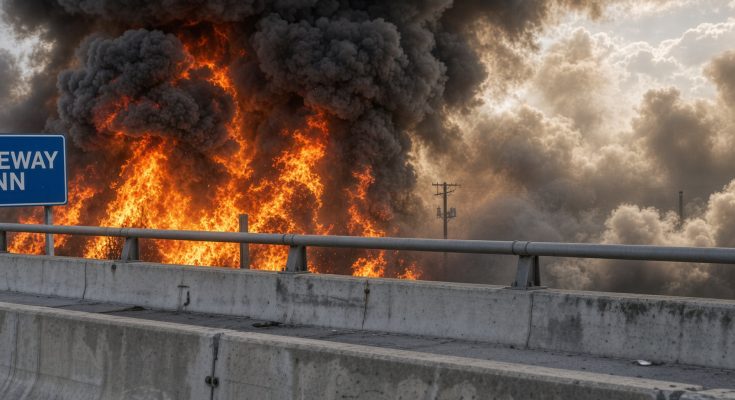
The full extent of the disaster—including casualties, injuries, and the scale of structural damage—remains under critical assessment as information continues to filter in from isolated mountain communities. Engineering teams have begun inspecting vital infrastructure, focusing on the stability of bridges, highways, power grids, schools, and hospitals. Communication networks in some locations have experienced significant disruptions, adding layers of complexity to the emergency operation.
Seismologists from across the region are analyzing data from the event. They note that the China–Myanmar border lies within one of Asia’s most complex and active seismic zones, where the unrelenting convergence of tectonic plates has historically produced devastating earthquakes. Today’s event serves as another harsh reminder of the latent destructive power present in this geologically volatile region.
As rescue crews work against the clock and authorities attempt a comprehensive accounting of the human impact, communities across four nations are facing the difficult aftermath. This powerful earthquake delivers a sober reminder of the unpredictability of natural disasters and the paramount importance of sustained emergency preparedness and resilient infrastructure in the world’s most earthquake-prone regions.