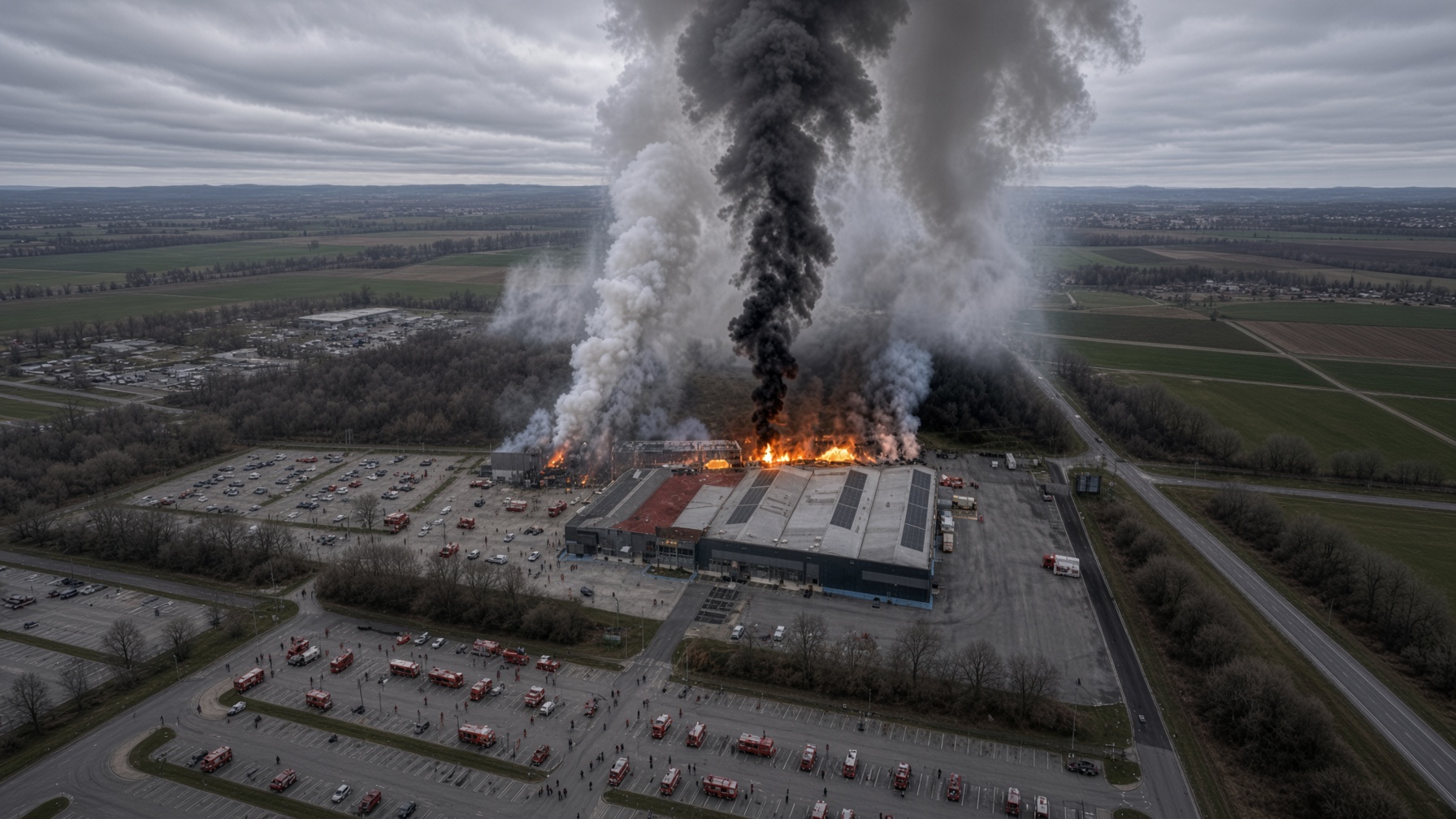
TRIKALA, Greece — A pre-dawn fire ripped through a major commercial biscuit manufacturing plant near Trikala in central Greece, killing four workers, injuring several others, and triggering an intensive industrial safety investigation.
The blaze ignited around 4:00 a.m. at a production complex operated by Violanta, situated roughly 200 miles north of Athens. Thirteen employees were on site handling the overnight processing and packaging shift when the fire abruptly engulfed sections of the main building.
While eight plant workers managed to escape the burning facility as emergency alarms sounded, four others were trapped inside. Search-and-rescue teams later recovered four bodies from the structural wreckage once containment efforts allowed entry into the interior halls.
A multi-hour search was launched to account for an additional missing employee amid initial confusion over shift logs, while seven people—including six workers and a responding firefighter—were transported to regional medical facilities for emergency evaluation, acute smoke inhalation treatment, and burns.
Emergency Response and Heavy Smoke
The Hellenic Fire Service mounted a large-scale emergency response, deploying approximately 40 firefighters backed by 15 specialized fire-suppression vehicles and aerial water tenders. Responders encountered massive plumes of dense, toxic smoke billowing from the plant, with sustained fire breaching the facility’s roofline and threatening adjacent processing wings.
Crews battled the inferno from both perimeter positions and interior corridors, prioritizing structural containment to prevent flames from reaching chemical refrigeration units and primary raw-ingredient storage silos.
Fire command officials confirmed that while the main fire was brought under control within several hours, overhaul operations continued throughout the day to suppress localized hot spots and mitigate the risk of structural collapse before forensic investigators could access the epicenter.
Arson and Safety Investigators Mobilize
Specialized arson and industrial safety investigators from the Hellenic Fire Service have initiated a forensic inquiry to establish what ignited the blaze.
Preliminary witness statements from surviving overnight workers described a sudden, sharp concussive sound immediately preceding the outbreak of intense flames. Authorities emphasized, however, that technical analysis has not yet established whether a mechanical or gas explosion triggered the fire or whether secondary explosions occurred as high heat reached pressurized equipment and commercial ovens.
Forensic teams are scheduled to analyze the plant’s electrical systems, industrial baking ovens, ventilation ducts, and safety interlocks. Investigators have also requested the facility’s routine maintenance logs, compliance certificates, and internal surveillance video feeds recorded leading up to the initial alarm.
Public safety authorities cautioned against premature conclusions circulating across local digital forums, stressing that technical findings would be published only after physical debris and automated telemetry are comprehensively reviewed.
Company Response and Community Impact
In an official dispatch, Violanta executives confirmed the incident, pledged full institutional cooperation with state authorities, and expressed profound sorrow over the loss of life.
The company stated that its executive leadership and human resources teams are focusing resources entirely on assisting the families of the deceased workers, coordinating logistical support with regional hospitals, and providing psychological counseling services to employees who survived the blaze.
The fatal fire has sent shockwaves through Trikala and the surrounding agricultural-industrial towns of Thessaly, where the biscuit company functions as a key regional economic anchor and primary employer. Local civic leaders visited the site to express condolences, pledging municipal resources and social support programs for affected families and coworkers grappling with the tragedy.
Regulatory and Factory Standards Under Review
The fatal incident puts renewed focus on industrial fire safeguards within European food processing plants. Facilities of this scale typically operate continuous-heat baking tunnels, high-voltage packaging machinery, and large concentrations of combustible organic dusts, requiring rigorous adherence to fire suppression protocols, automated sprinkler coverage, and clear escape routes under European Union workplace safety mandates.
Labor inspectors and regional prosecutors are expected to verify whether the plant’s automated suppression systems activated as designed and whether emergency exit corridors were fully unobstructed. While the safe egress of eight shift workers indicates that primary evacuation protocols functioned in parts of the plant, investigators are focusing squarely on why four crew members were unable to reach exits before being overcome.