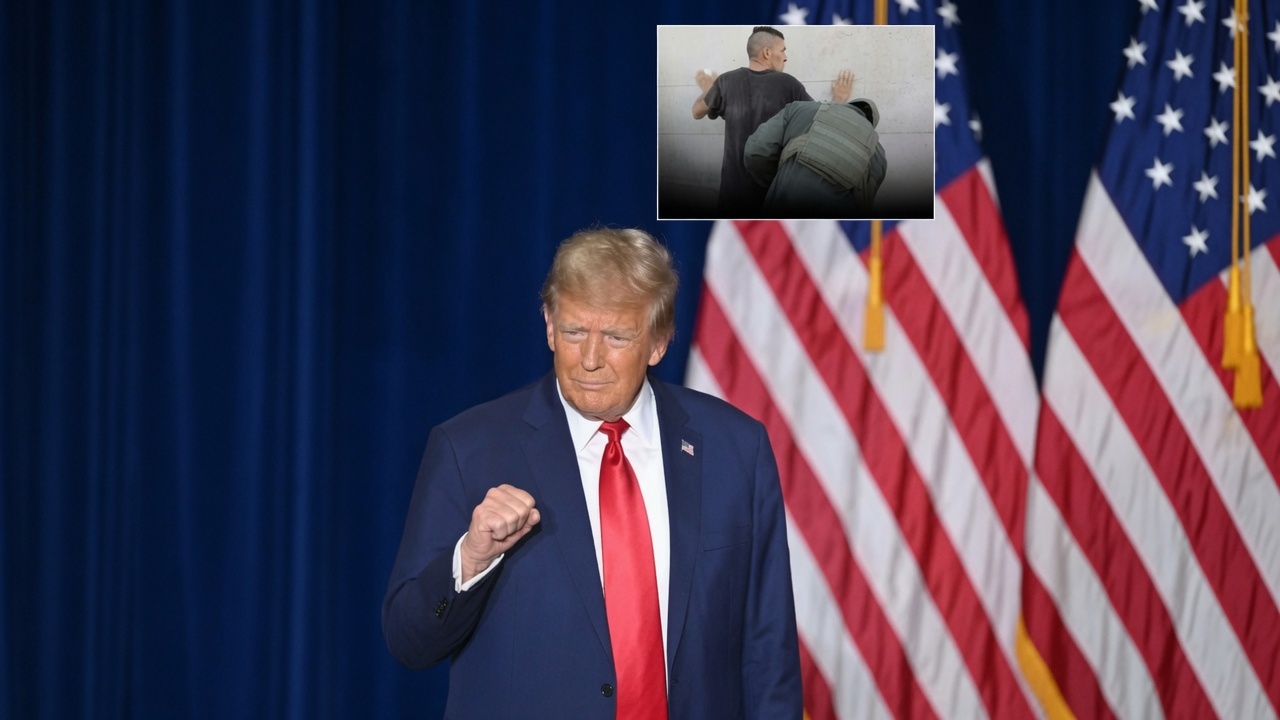
One of President Donald Trump’s signature promises during the 2024 campaign was to reverse the Biden administration’s immigration policies and launch a large-scale deportation effort targeting millions of individuals living in the United States illegally.
Despite facing sustained legal challenges from Democratic-led organizations and advocacy groups, the administration has continued to secure courtroom victories that have allowed its immigration agenda to move forward.
This week marked another significant legal win.
The U.S. Court of Appeals for the Fifth Circuit ruled Tuesday that individuals who are unlawfully present in the United States do not have a constitutional right to remain free from immigration detention while their removal proceedings are pending.
In an opinion written by Chief Judge Jennifer Elrod, an appointee of President George W. Bush, the court overturned a lower court ruling that had granted bond hearings to three immigrants held by U.S. Immigration and Customs Enforcement (ICE). The appeals court also stayed the lower court’s release orders while the case continues through the legal process.
Reacting to the decision, Assistant Attorney General Brett A. Shumate of the Department of Justice’s Civil Division said the ruling reinforces the government’s authority to detain individuals who are in the country illegally during removal proceedings.
“Illegal aliens do not have a constitutional right to roam free in the United States during their removal proceedings,” Shumate said.
The Case
The dispute originated from a February ruling involving Ignacio Sosnava Rodriguez, who was arrested during a 2025 traffic stop in Texas after living in the state for more than two decades.
While in ICE custody, Rodriguez argued that his detention without a bond hearing violated his Fifth Amendment right to due process. A federal district court agreed, applying the three-part balancing test established by the U.S. Supreme Court in Mathews v. Eldridge.
The Fifth Circuit disagreed, concluding that the lower court had erred in granting habeas relief. The appeals court denied Rodriguez’s petition without rehearing the case before the court’s full panel.
Shumate described the decision as an “extraordinary precedential order” that is expected to guide similar immigration detention cases in the future.
The Fifth Circuit also stayed lower court orders granting relief to two additional ICE detainees, Alejandro Villegas Angel and Miguel Angel Gomez.
Second Appeals Court Rules in Mahdawi Case
In a separate immigration ruling issued Tuesday, the 2nd U.S. Circuit Court of Appeals overturned a 2025 decision that had ordered the release of pro-Palestinian activist Mohsen Mahdawi from immigration detention.
Mahdawi was one of several non-citizen students placed into removal proceedings after participating in protests against Israel’s military campaign in Gaza.
Chief U.S. District Judge Geoffrey Crawford, an Obama appointee, had previously ruled that Mahdawi was entitled to First Amendment free speech protections comparable to those enjoyed by U.S. citizens and ordered his release after approximately two weeks in detention.
The Second Circuit reversed that decision, holding that the district court lacked jurisdiction because the matter should have first been resolved through the immigration court system.
Broader Immigration Enforcement Efforts Continue
The latest court victories come as the Trump administration expands its broader immigration enforcement agenda.
Earlier this month, Vice President JD Vance joined the Department of Labor’s inspector general in announcing a new investigation into alleged abuse of U.S. work visa programs.
Speaking at an anti-fraud event in Milwaukee, Vance said federal investigators had already issued dozens of subpoenas as part of the inquiry, emphasizing that the administration intends to combat fraud and ensure employment opportunities are protected for American workers.
The investigation represents another component of the administration’s broader effort to strengthen immigration enforcement and increase oversight of employment-based visa programs.