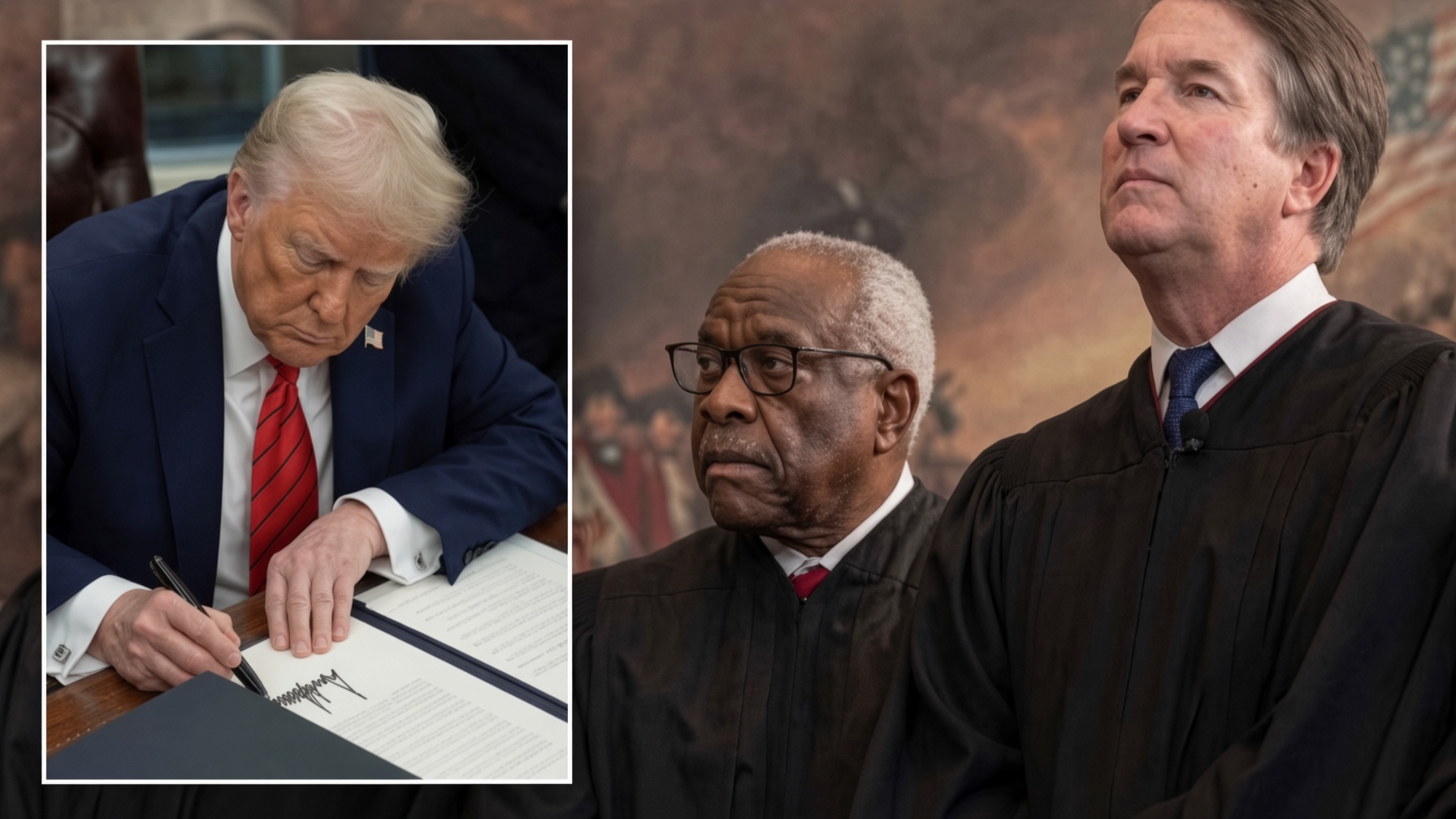
WASHINGTON — The Supreme Court on May 26 refused to hear Florida’s lawsuit accusing California and Washington of issuing commercial driver’s licenses in violation of federal immigration and trucking-safety rules, drawing a dissent from Justices Clarence Thomas and Samuel Alito.
Florida sought to file the case directly in the high court under its original jurisdiction over disputes between states. The unsigned order denied the motion for leave to file a bill of complaint and offered no explanation. Thomas, joined by Alito, said the court was required to take the case because Florida has no other judicial forum.
“If this Court does not exercise jurisdiction over a controversy between two States, then the complaining State has no judicial forum in which to seek relief,” Thomas wrote. He added that the justices “have no more right to decline the exercise of jurisdiction which is given, than to usurp that which is not given.”
The dispute followed an Aug. 12, 2025, crash on Florida’s Turnpike in which tractor-trailer driver Harjinder Singh allegedly made an illegal U-turn and struck a minivan, killing three people. Florida said Singh, an Indian national, held commercial licenses issued by Washington and California and could not adequately read English road signs. Thomas cited federal statutes and regulations that, he said, bar states from issuing commercial licenses unless applicants pass a driving test, understand English and show appropriate immigration status.
Florida argued the two states’ practices created a public-safety threat on interstate highways and amounted to a public nuisance. California told the court the claims were meritless, saying its Department of Motor Vehicles verifies legal presence and tests English proficiency. Washington argued Florida lacked standing and had not shown that the state’s licensing rules caused the harm alleged.
The Supreme Court often treats original actions between states as discretionary, typically reserving them for disputes such as boundaries or water rights. Thomas said that approach cannot apply when the Constitution gives the court exclusive jurisdiction and the complaining state has nowhere else to go.
The denial leaves Florida without a Supreme Court forum for its claims against the two states. Federal regulators have separately pressed states over commercial licensing standards for immigrant drivers, a fight that continues outside this original-jurisdiction case.