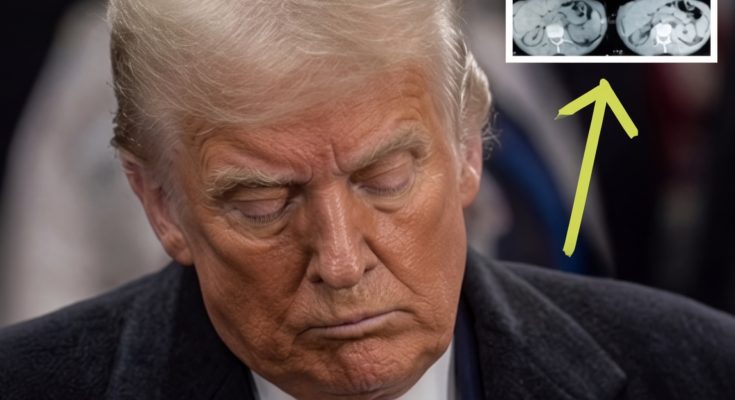
**WASHINGTON** — President Donald Trump’s remarks about an MRI performed during a 2025 medical evaluation have renewed debate over how much detail the public should receive about a sitting president’s health.
The scan was conducted in October 2025 at Walter Reed National Military Medical Center during what the White House called an expanded medical evaluation. Speaking with reporters aboard Air Force One, Trump praised the results as “outstanding,” “excellent” and “perfect,” while offering few specifics about the test itself. At one point he said he had “no idea” which part of his body had been examined.
The limited account immediately raised questions about why advanced imaging was included in an exam first described as routine. The White House later said the visit was an “expanded wellness evaluation” meant to monitor the president’s health amid a demanding schedule.
In early December 2025, White House physician Dr. Sean Barbabella released a memorandum providing more detail. He said the MRI focused on Trump’s cardiovascular system and abdomen. Results in both areas were “perfectly normal,” with no evidence of arterial narrowing, inflammation, clotting or abnormalities in major organs. Barbabella described the imaging as preventative and said comprehensive cardiovascular and abdominal assessments can be appropriate for older adults.
Officials have maintained that the examination was precautionary, not prompted by a specific medical concern. They have argued that advanced imaging can give physicians additional information when evaluating an older patient, particularly for preventative monitoring.
Those assurances have not ended the argument. Critics say the initial lack of detail created unnecessary uncertainty and fed speculation. Greater transparency, they contend, would reassure the public and leave less room for rumor.
Trump and his allies have rejected suggestions that the test pointed to a serious problem. The president has repeatedly described himself as being in excellent condition and has cited his schedule and earlier medical assessments as evidence that he can fulfill the duties of the office.
The episode also illustrates the unusual position presidents occupy. They retain legitimate privacy interests, yet their health can affect national security and continuity of government. For that reason, presidential medical disclosures have long drawn intense public and media attention.
The White House has not released the raw MRI images or complete underlying data. The public has received summaries from the president and his medical team. Administration officials continue to say Trump is healthy and fully capable of carrying out his duties. The physician’s memorandum offered a positive assessment of the areas examined, while leaving larger questions about the proper level of disclosure unresolved.
The episode underscores a familiar tension: balancing a president’s medical privacy against the public’s interest in reliable information about the health of the nation’s highest elected official.