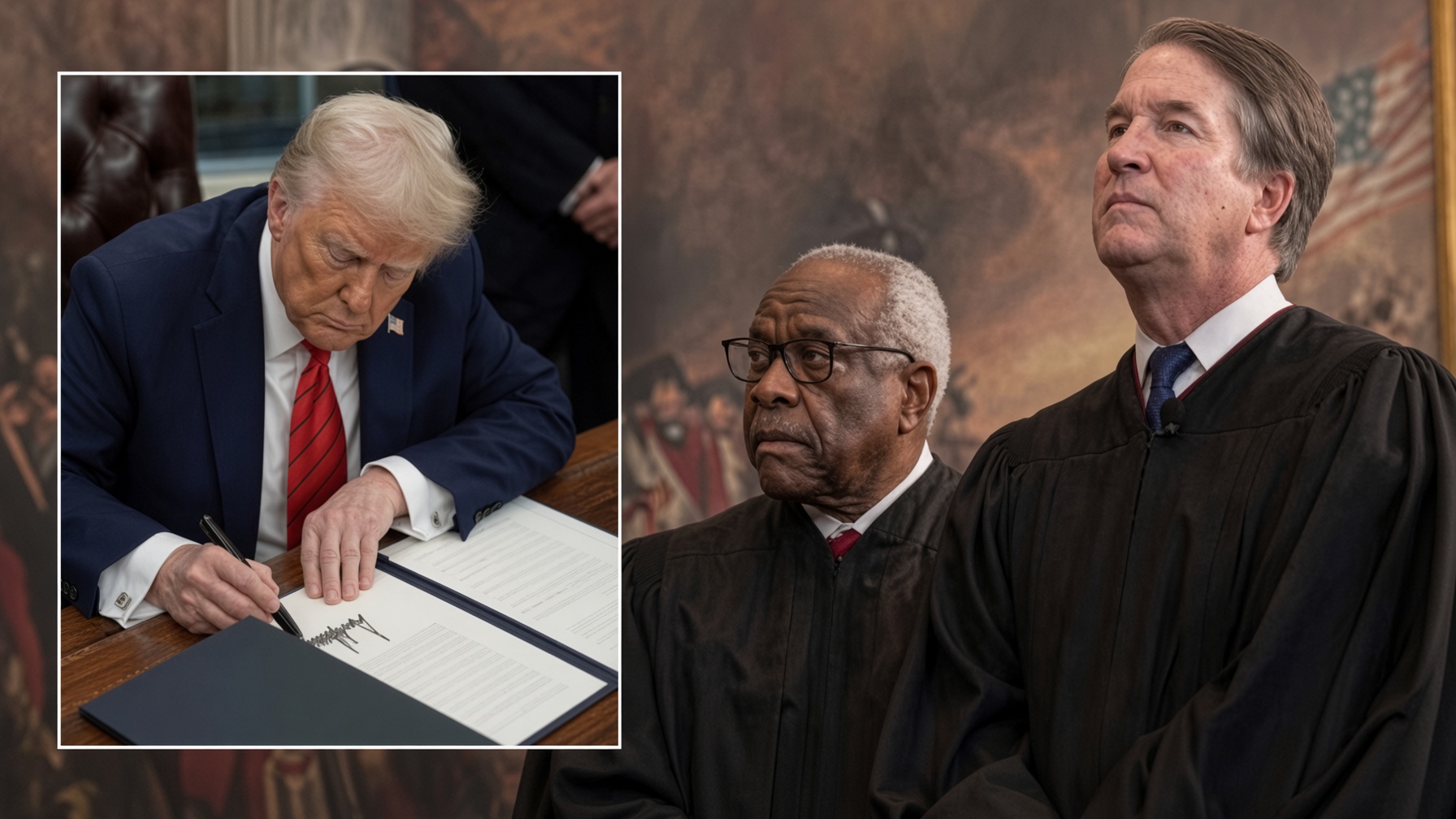
WASHINGTON — Supreme Court Justice Clarence Thomas sharply criticized the court Tuesday after its majority declined to hear a lawsuit brought by Florida against California and Washington over commercial driver’s licenses issued to immigrants who Florida alleges were not legally eligible to receive them.
Thomas, joined by Justice Samuel Alito, argued that the Supreme Court should have accepted the dispute because the Constitution gives the high court a unique role in resolving legal controversies between states.
Florida had alleged that California and Washington violated federal commercial driver licensing requirements by issuing licenses to certain immigrants who allegedly failed to meet federal standards concerning English proficiency and immigration status. The state argued that the policies created a serious public-safety risk on American highways.
Thomas called the case particularly significant because, unlike ordinary appeals, disputes between states fall within the Supreme Court’s original jurisdiction.
“If this Court does not exercise jurisdiction over a controversy between two States, then the complaining State has no judicial forum in which to seek relief,” Thomas wrote.
The justice also pointed to a fatal Florida highway crash involving truck driver Harjinder Singh, citing allegations that Singh could not adequately read road signs in English. Florida had linked the broader licensing dispute to concerns over whether commercial drivers operating large tractor-trailers meet federal safety requirements.
Thomas emphasized that federal law requires commercial drivers to satisfy testing requirements, demonstrate sufficient understanding of English and meet applicable immigration-status requirements.
In his dissent, Thomas argued that the court has greater discretion in deciding whether to hear ordinary appeals but faces a different constitutional question when one state brings a dispute against another.
“We have no more right to decline the exercise of jurisdiction which is given, than to usurp that which is not given,” Thomas wrote.
The decision has reignited debate over the Supreme Court’s responsibility when states seek judicial relief against one another. Thomas and Alito maintained that Florida had no alternative federal court in which to bring its claims, making the Supreme Court’s refusal especially consequential.
The majority’s decision means Florida will not proceed with the lawsuit in the Supreme Court at this stage. It also leaves unresolved the state’s allegations concerning whether California and Washington complied with federal commercial licensing standards.
The dispute highlights broader tensions over immigration policy, federal regulatory authority and highway safety, while raising a fundamental constitutional question: when one state accuses another of violating federal law, what judicial avenue remains if the Supreme Court declines to intervene?
Thomas’ dissent signals that at least two justices believe the court should have taken a more direct role in resolving the conflict.