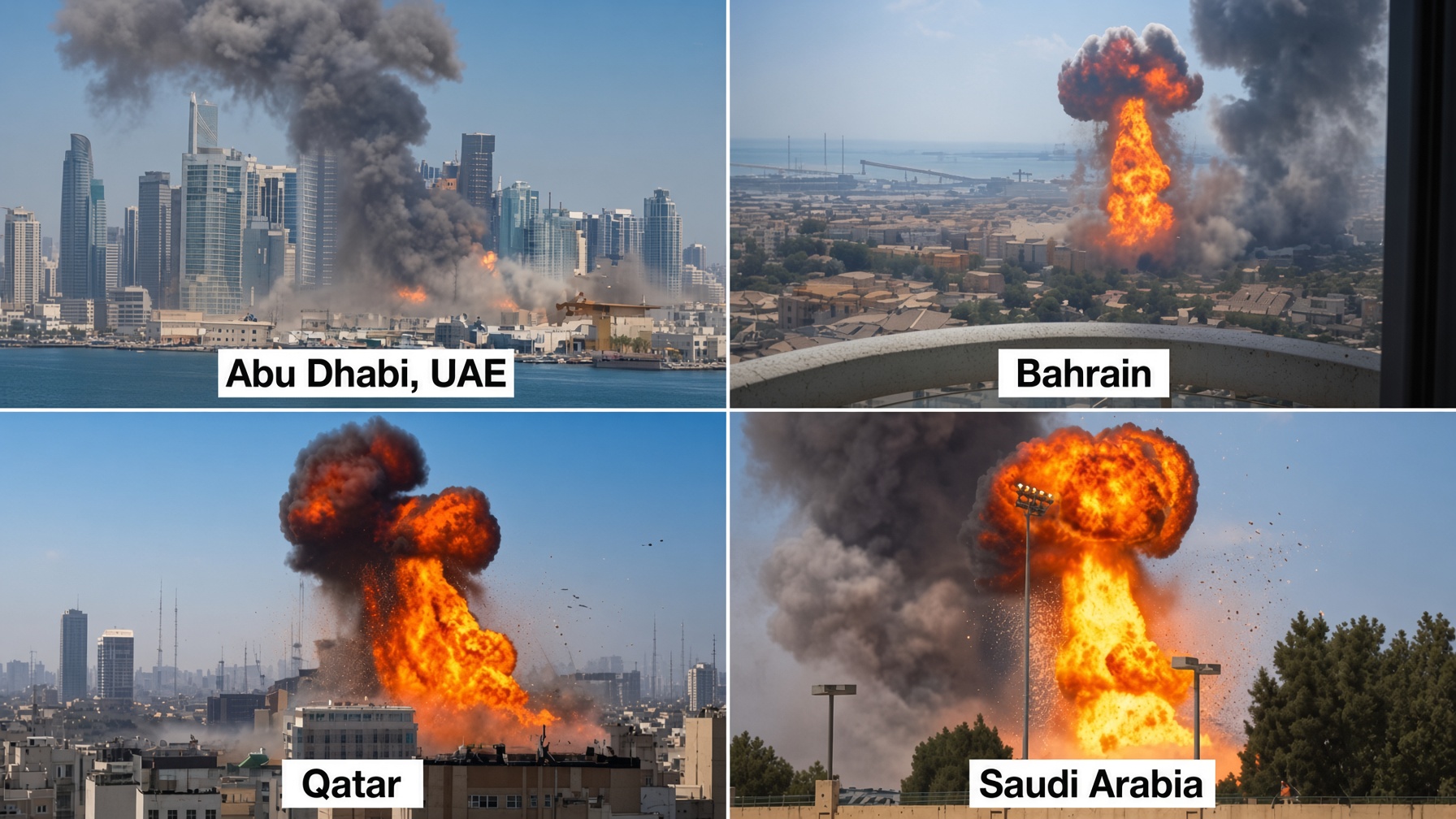
DUBAI — Tensions across the Persian Gulf have sharply intensified as Iran launched a new wave of missile and drone attacks against U.S.-linked military positions and regional allies, prompting governments to activate air defenses and issue emergency warnings to civilians.
The latest escalation comes after renewed U.S. military strikes against Iranian targets, further deepening a conflict that has already disrupted security, aviation and commercial activity across the Gulf. Iranian attacks have been reported or claimed against positions in countries including Kuwait, Bahrain and the United Arab Emirates, while authorities across the region remain on heightened alert.
In the United Arab Emirates, reports have described Iranian attacks targeting U.S.-linked military facilities. The UAE has previously faced Iranian missile and drone threats during the conflict, with regional air-defense systems activated to intercept incoming projectiles. Details about specific damage or casualties from the latest reports remain subject to official assessment.
Bahrain has also reported Iranian attacks, including activity near areas hosting major U.S. military facilities. The country has activated defensive systems and urged residents to follow official instructions as authorities monitor further threats.
Qatar Remains on High Alert
Qatar is also closely monitoring the situation because of the presence of Al Udeid Air Base, one of the most important U.S. military installations in the region.
The base has previously been targeted during the conflict, and heightened tensions have prompted increased attention to air-defense measures and civilian safety. Regional governments have repeatedly urged residents to avoid military installations and rely on official announcements rather than unverified information circulating online.
Kuwait Faces New Missile and Drone Threats
Kuwait has emerged as another major focus of the latest escalation. The Kuwaiti government reported intercepting Iranian missile and drone attacks, while authorities continued monitoring the threat and protecting strategic infrastructure.
The renewed attacks are raising broader concerns over commercial aviation, energy supplies and maritime traffic through the Strait of Hormuz, a critical route for global oil shipments. The European Union Aviation Safety Agency has maintained heightened warnings for parts of the Gulf amid continuing military activity.
With U.S. and Iranian forces continuing to exchange strikes, governments across the region are preparing for the possibility of further attacks. Officials have urged civilians to remain calm, follow emergency instructions and avoid spreading unverified reports.
The latest developments underscore the growing risk that continued retaliation could further destabilize the Gulf and widen an already dangerous regional conflict.