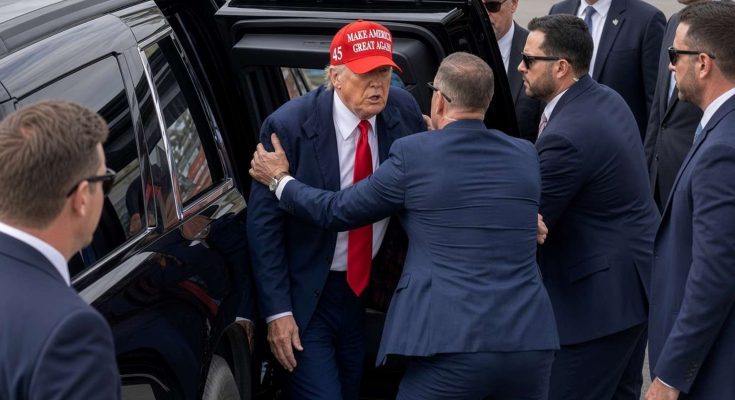
**WASHINGTON** — Alarming claims that former President Donald Trump had been “shot again” in Washington, D.C., spread rapidly across social media Wednesday, triggering widespread panic, speculation and intense online reactions. Within hours, however, the absence of any supporting evidence made clear that the reports were unfounded.
No Secret Service statement, hospital report, federal agency announcement or major news outlet has confirmed any new attack on Trump in Washington or elsewhere. Mainstream U.S. and international media organizations, which routinely verify and report incidents of this magnitude within minutes, carried no such story. Federal authorities remained silent on any related emergency, a strong indicator that the claims lack factual basis.
Much of the confusion appears to have originated from recycled footage, misleading captions and posts designed primarily to generate clicks and emotional engagement. Several of the most widely shared items traced back to unverified social media accounts and private groups known for dramatic, evidence-free language. In today’s digital environment, such false alarms can circulate far faster than official corrections.
It is important to separate today’s rumor from the documented 2024 assassination attempt in Butler, Pennsylvania, where Trump was wounded but survived. That attack prompted major security upgrades, federal investigations and a criminal case that remains part of the public record. Since then, multiple threats against Trump have been disrupted, and protective protocols around him have remained elevated. None of those developments, however, involves a new shooting in the nation’s capital as described in the viral posts.
Misinformation of this kind carries real costs. It can spark unnecessary public panic, flood emergency services with inquiries, mislead citizens and gradually erode trust in legitimate reporting. Public safety agencies are forced to divert resources to address rumors instead of actual threats. Political analysts note that high-profile figures such as Trump are frequent targets of sensational falsehoods, particularly during periods of political tension, when emotionally charged headlines are crafted to encourage rapid sharing before verification.
For now, all available verified information confirms that Donald Trump has not been shot again in Washington or anywhere else. Officials continue to urge the public to rely exclusively on established news organizations and confirmed government statements for developments involving national security or public figures. As this episode demonstrates, not every post labeled “breaking news” reflects reality. In an era when a single unverified claim can reach millions within minutes, careful verification and restraint remain the strongest defenses against deception and unnecessary alarm.