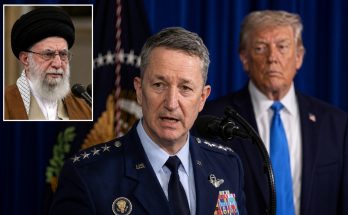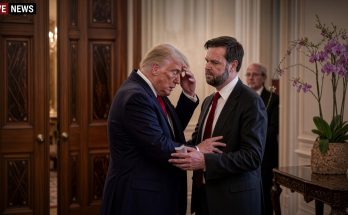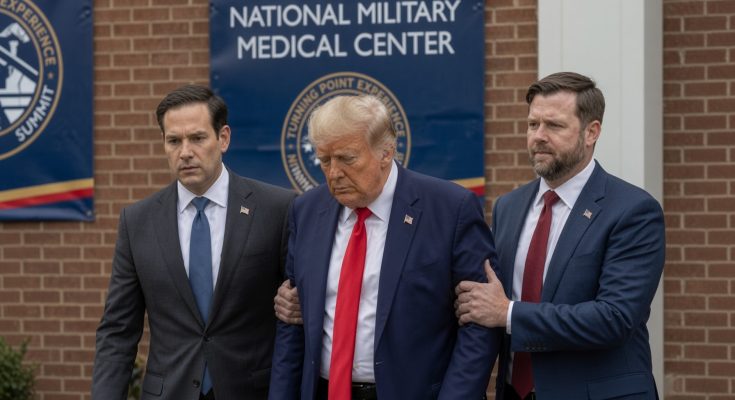
WASHINGTON — A sudden change in Donald Trump’s public schedule was enough to set off a wave of online claims that the former president had been taken to Walter Reed National Military Medical Center. The reports moved quickly across X, Facebook and other platforms. Official sources later said they were not true.
The trigger was an announcement that Trump would not attend events planned for April 4. Because he is known for a packed public calendar, the cancellation immediately drew attention. In the absence of a detailed explanation, speculation filled the gap. Posts describing a hospital admission began circulating without supporting evidence. Some users treated the claims as confirmed fact. Others expressed concern or skepticism and urged people to wait for official word.
That pattern is familiar. Algorithms reward posts that provoke a strong reaction, and health rumors about a high-profile political figure travel especially fast. Similar episodes have played out before: an unexplained change in routine, a burst of unverified posts, then a scramble to separate rumor from record.
Official representatives moved to shut the story down. They said Trump had not been admitted to Walter Reed, remained at his residence and continued his usual work. They also said there had been no medical emergency. The statements were intended to correct the record and limit further spread of the claims.
Public interest in Trump’s health is not new. Officials have previously disclosed that he was diagnosed with chronic venous insufficiency, a condition in which vein valves in the legs do not work as they should. Doctors generally describe it as common among older adults and typically manageable with monitoring and standard care. No recent official update has tied that diagnosis to the April schedule change or suggested a sudden deterioration.
The episode also showed how uneven online reaction can be. Some users treated the rumors as urgent news. Others asked for patience and pointed to the lack of confirmation. Newsrooms that waited for official comment before amplifying the hospitalization claim illustrated a basic rule of coverage: a viral post is not a verified fact.
Schedule changes attract this kind of attention because public figures live on tightly managed calendars. When the calendar breaks and no explanation arrives immediately, audiences invent one. That impulse is stronger when the person involved is already the subject of intense political debate.
The larger lesson is about information, not medicine. Health claims about public officials can shape perception even after they are walked back. Once a rumor is widely shared, a later denial often travels more slowly than the original post. Clear, prompt statements from official sources help. So does a public habit of checking whether a dramatic claim has been confirmed.
As of the official response, there was no confirmed evidence that Trump had been hospitalized. Authorities said he continued his regular activities. The surge in discussion was driven by speculation around a cancelled appearance, not by a verified medical event. The episode is a reminder that in a fast digital environment, the first version of a story is often the least reliable.