PERSIAN GULF — Iran has again fired missiles and drones at countries that host American forces, pulling Bahrain, Qatar, Kuwait, and the United Arab Emirates into a war that started on Iranian soil. Tehran says the targets are U.S. bases. Gulf governments say they are intercepting inbound weapons and managing debris, sirens, and closed airspace. The gap between those two accounts is now a routine part of the conflict. The exposure of the host states is not.
The United States keeps major footprints at Al Dhafra in the UAE, Al Udeid in Qatar, Ali Al Salem and other sites in Kuwait, and Naval Support Activity Bahrain, home of the Fifth Fleet. Iran treats those addresses as fair game whenever Washington strikes inside Iran. That logic turns Gulf cities into the near battlefield even when their governments say they are not parties to the fight.
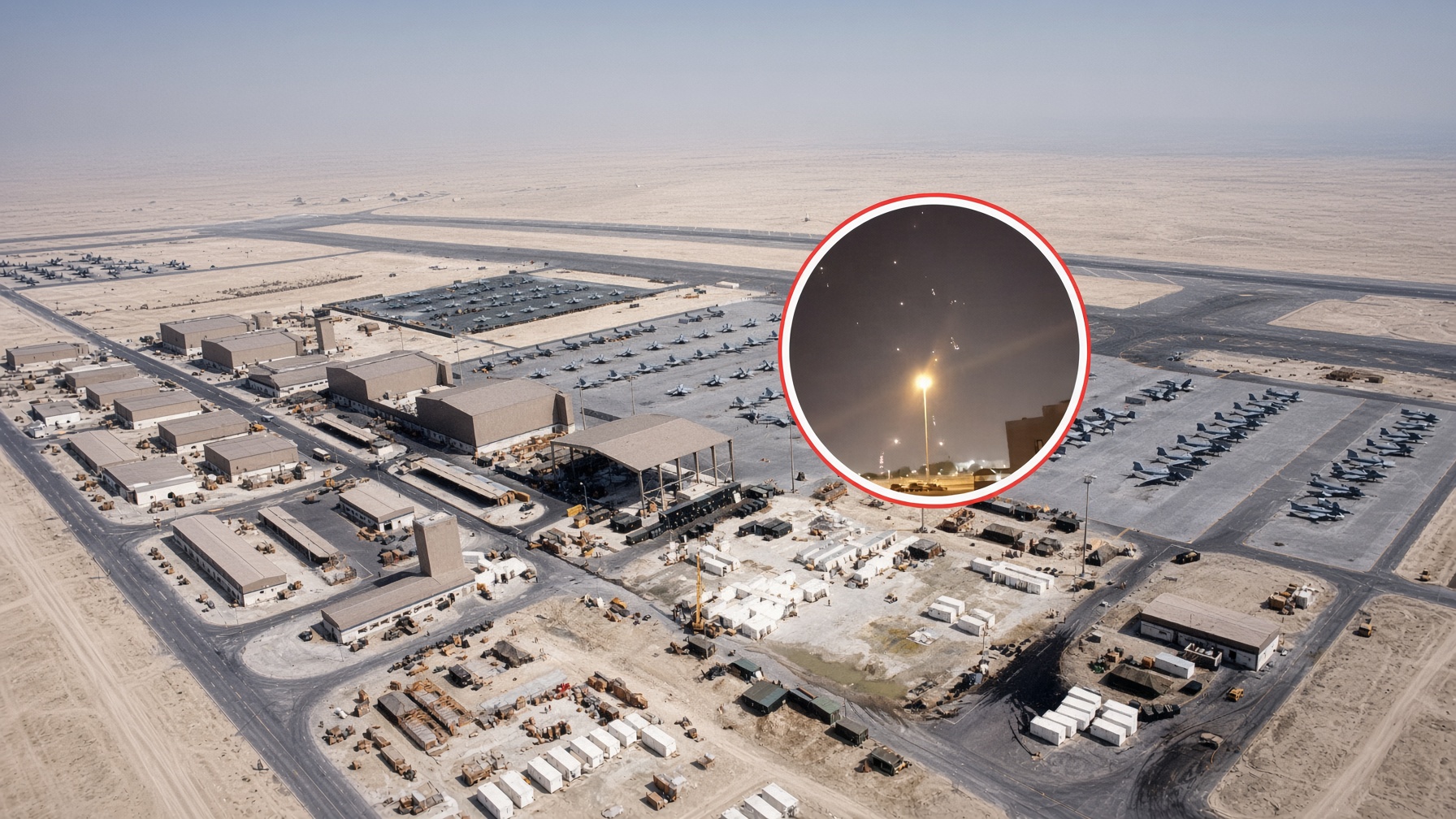
In the UAE, Al Dhafra sits west of Abu Dhabi and has been named repeatedly in Iranian claims. Residents have heard intercepts and explosions near the capital. Officials usually confirm defensive fire faster than they confirm a hit on the base itself. Earlier waves did reach civilian and energy sites, including a drone strike that set fire to a generator outside the inner fence at the Barakah nuclear plant. That history is why each new alert is treated as infrastructure risk, not only air-show noise.
Bahrain is smaller and closer. Juffair, Sheikh Isa Air Base, and Fifth Fleet headquarters have all appeared on Iranian target lists. Manama has sounded air-raid sirens. U.S. officials have at times called claims of damage to fleet headquarters false after intercepts. Bahrain has also reported debris fires and civilian harm. On an island, a miss that still falls is a domestic incident.
Qatar’s Al Udeid Air Base is the largest U.S. site in the region and a command hub. Iran has claimed strikes on command and maintenance buildings there. Doha has raised its security level, intercepted missiles, and reported shrapnel injuries. Qatari officials have said the base is not used to launch attacks on Iran. The projectiles keep coming anyway.
Kuwait’s military has reported engaging ballistic missiles, cruise missiles, and one-way drones aimed at facilities tied to U.S. forces. Authorities tell civilians to follow emergency instructions. Iran publishes long lists of “destroyed” sites. Kuwait and the United States more often report intercepts, scattered damage, and occasional worker injuries.
The commercial risk sits in the water. The Strait of Hormuz still matters even when traffic is a fraction of the prewar flow. Mines, tanker attacks, and naval warnings have already driven ships off the route or onto escorted southern lanes. Insurance and delayed cargoes are the quiet bill for each new Gulf salvo.
Host governments now live with a contradiction they cannot speech-write away: the U.S. presence was sold as deterrence. In this war it is also the stated reason Iran fires at their airspace. Washington’s problem is defending the bases without widening the map. Tehran’s problem is that every barrage against a neighbor makes a settlement harder. The next night of sirens will decide which problem arrives first.