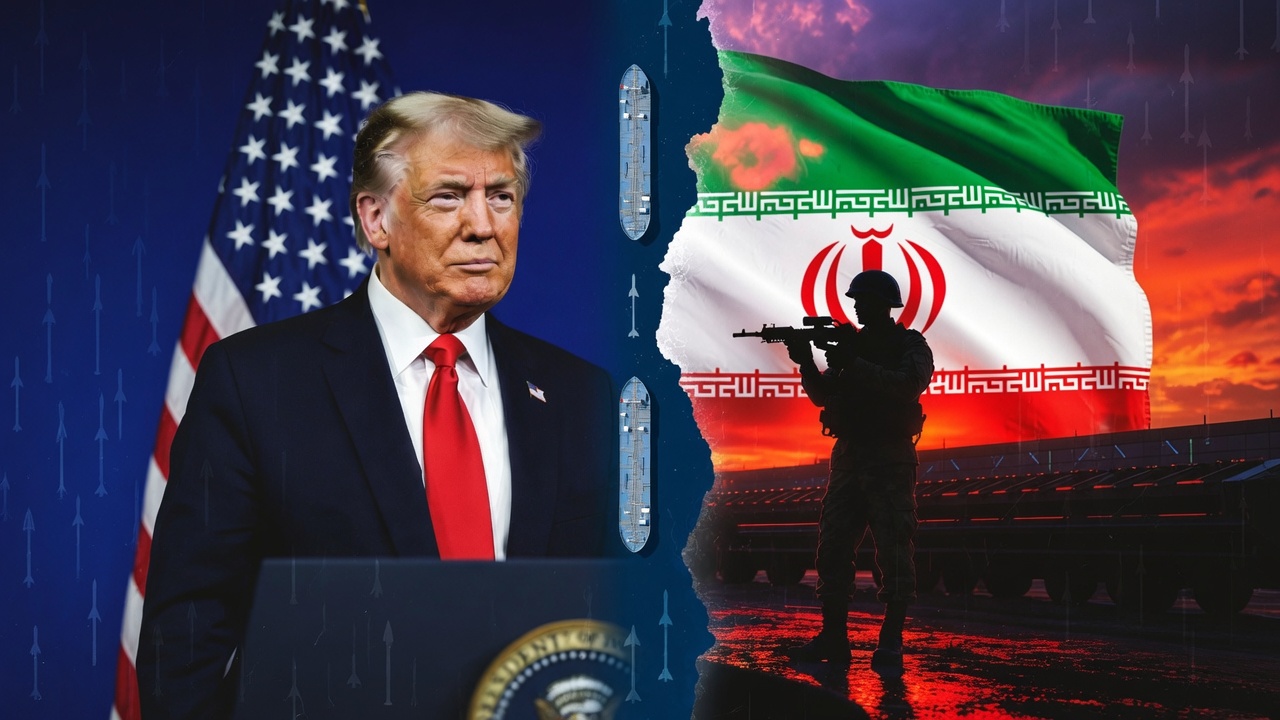
WASHINGTON / TEHRAN — President Donald Trump announced on Sunday that the United States has temporarily suspended planned military strikes against Iran, citing progress toward a potential agreement that would address Tehran’s nuclear program and fully reopen the strategically vital Strait of Hormuz. The move comes after weeks of renewed fighting in the five-month-old conflict that has disrupted global energy markets and raised fears of wider regional escalation.
In a post on his Truth Social platform, Trump said U.S. forces remain “locked and loaded” at unprecedented levels of readiness but that he had decided to hold off on further attacks. He claimed Middle Eastern allies had reached the “perimeters of a deal” to end the war and that any agreement must include the “complete and total” opening of the Strait of Hormuz along with an end to Iran’s nuclear threat. Trump added that Israel had joined the United States in this commitment and urged all parties to finalize an arrangement quickly.
The announcement marks a sharp shift from recent days in which the president had repeatedly threatened intensified strikes, including against Iranian energy infrastructure, and declared that Washington would hit Iran “very hard” until Tehran could no longer sustain the conflict. The broader war, which began with coordinated U.S. and Israeli strikes on February 28, has already claimed thousands of lives, displaced millions, and repeatedly interrupted shipping through the Strait of Hormuz—the chokepoint through which roughly a fifth of the world’s oil supply normally passes.
Iranian officials and state-aligned media swiftly rejected Trump’s characterization of events. Semi-official outlets described the president’s statements as “psychological warfare” and “hollow threats,” insisting that no agreement exists on reopening the Strait of Hormuz or on nuclear issues. One Iranian military source emphasized that the waterway remains closed to vessels that do not coordinate with the Islamic Revolutionary Guard Corps. Iranian media mocked the U.S. decision to pause strikes, with some commentators calling it a retreat and evidence that American pressure had failed. Tehran’s armed forces remain on high alert, and officials have reiterated that any U.S. or Israeli attack would trigger a decisive response.
The conflict has followed a pattern of temporary pauses followed by renewed violence. A memorandum of understanding reached in mid-June was intended to bring formal an end to hostilities within 60 days and restore commercial traffic through the Strait. That arrangement collapsed in early July after Iran attacked commercial vessels that bypassed its preferred routes and protocols. The United States responded with stepped-up strikes, and both sides have since traded missile and drone attacks. Recent weeks have seen continued U.S. operations against Iranian military and IRGC targets alongside Iranian threats against shipping and energy facilities in the Gulf.
The human and economic costs continue to mount. Pentagon figures indicate dozens of U.S. service members have been killed and hundreds wounded since the start of the campaign. Iranian civilian infrastructure and military sites have sustained heavy damage. Global oil markets remain sensitive to every development in the Strait, with shipping companies forced to take longer, more expensive routes or risk attack.
Analysts note that while Trump’s announcement offers a temporary diplomatic opening, deep distrust on both sides makes a durable settlement difficult. Iran continues to reject any framework it views as unilateral surrender on nuclear enrichment or control of the Strait. The United States and Israel insist that any deal must verifiably eliminate what they describe as an existential nuclear and conventional threat. Israeli officials have separately signaled that they retain the right to act independently if Iran resumes nuclear or ballistic missile work.
For now, the battlefield remains tense. U.S. forces in the region stay at elevated readiness, Iranian air defenses and missile units remain mobilized, and commercial shipping continues to navigate a high-risk environment. Whether Trump’s pause produces substantive negotiations or simply another cycle of brinkmanship will become clearer in the coming days. Global energy markets, regional stability, and the risk of wider war all hang in the balance.