Secretary of State Marco Rubio this week revoked the legal status of Laotian national Tou Lue Vang, a convicted child sex offender who received a pardon last month from Minnesota Gov. Tim Walz, clearing the way for federal agents to take him into custody and remove him from the United States.
The action follows the June 10 decision by the Minnesota Board of Pardons—comprising Walz, Attorney General Keith Ellison, and Chief Justice Natalie Hudson—to unanimously grant clemency to Vang. The pardon effectively cleared his criminal record and raised the possibility of shielding him from longstanding deportation orders.
Vang arrived in the United States as a child refugee from Laos in 1994. In 2006, he was convicted of first-degree criminal sexual conduct for repeatedly sexually assaulting a 10-year-old girl between 2002 and approximately 2005. Court records show he pleaded guilty under an agreement that avoided prison time. He received a stayed 12-year sentence, served eight months in a county workhouse, and was placed on 30 years of supervised probation, which was discharged in 2019.
According to reports, Vang attempted to pay his victim for her silence and later characterized the offenses as “minor things.” Following the conviction, he lost his legal status and entered removal proceedings. An immigration judge issued a final order of removal in 2006. He faced imminent deportation when the state pardon was issued.
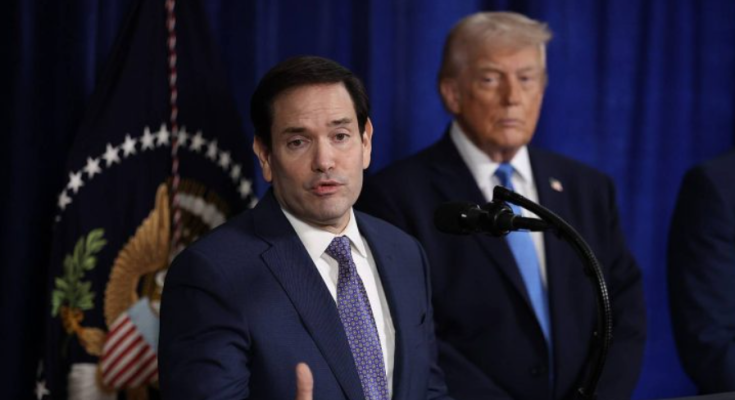
In a video posted to X, Rubio described the administration’s response: “Just weeks ago, a foreign child rapist was freed to once again endanger America’s children after receiving a pardon from Minnesota Governor Tim Walz. Just days before he was scheduled to be deported, the Minnesota Governor pardoned him, setting him free to endanger American families once again. Well, this week I revoked his legal status in the United States and as a result, federal agents took him into custody and as of today, he has been removed from the United States. Because of our action, this foreign criminal will never pose a threat to any American ever again.”
Rubio further noted that Vang “even tried to pay his victim for her silence” and had referred to the crimes as “minor things.” In comments to Fox News Digital, he stated: “Americans should never have to live in fear that foreign sex predators — shielded from deportation by their own elected officials — could endanger them or their children. That’s why I terminated his legal status in the United States. Vang has now been removed from our country and will never pose a threat to any American ever again.”
The Department of Homeland Security sharply criticized the pardon. Acting Assistant Secretary Lauren Bis said: “Governor Tim Walz’s decision to pardon an illegal alien convicted child rapist so he can remain in our country is disgusting. These are the criminal illegal aliens he and his Minnesota sanctuary politicians are protecting. Tou Lue Vang lost his legal status following his conviction for repeatedly sexually assaulting a 10-year-old girl. Following the conviction, he was placed in removal proceedings and issued a final order of removal by a judge. This pardon will take away this child rapist’s qualifying convictions that made him removable from the United States.”
The decision has drawn bipartisan criticism in Minnesota. House Republican Floor Leader Harry Niska called the pardon “despicable” and “morally indefensible,” arguing that Walz and Ellison prioritized criminals over public safety and used clemency in a manner that obstructed federal immigration enforcement.
Rubio’s revocation underscores the Trump administration’s emphasis on restoring federal authority over immigration and prioritizing the removal of individuals with serious criminal convictions. While state pardons can restore certain civil rights under state law, they do not automatically eliminate immigration consequences under federal statute. By terminating Vang’s legal status, federal authorities ensured the state clemency did not create a pathway for the convicted offender to remain in the country.