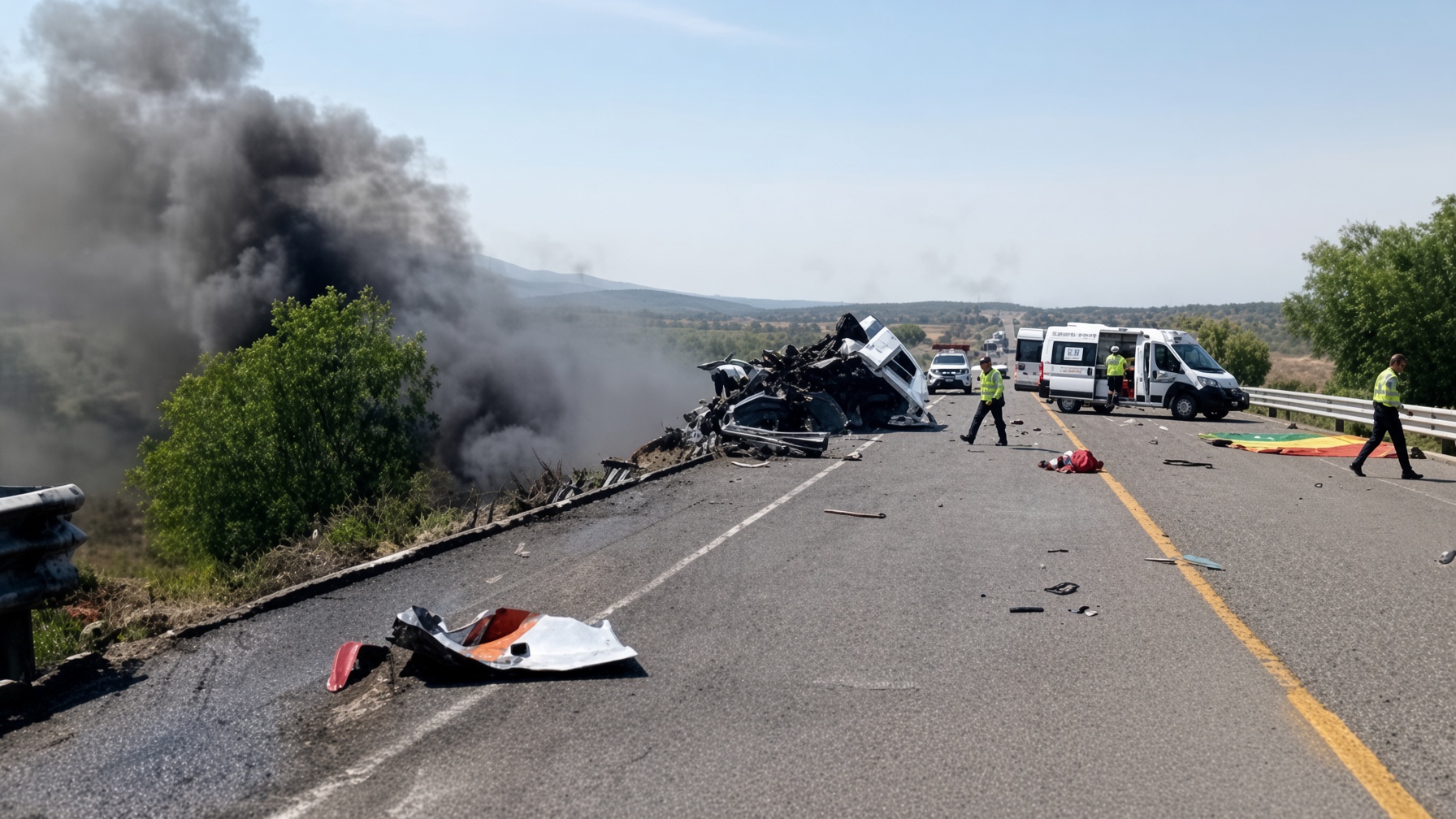
A multi-vehicle collision on one of Mexico’s most critical transportation corridors has drawn national attention, not only for the lives lost but for the broader issues of road safety, infrastructure strain, and accountability it has brought into sharp focus. The Mexico–Querétaro Highway, a vital artery linking the capital to major industrial and commercial regions, was the scene of a devastating chain-reaction crash that halted traffic for hours and left families confronting sudden loss.
What began as a routine stretch of travel for commuters and freight drivers near the municipality of Huehuetoca turned chaotic at the well-known Jorobas intersection. Several vehicles—including private cars and heavy freight trucks—were involved in the collision. The force of the impacts left wreckage strewn across multiple lanes. Emergency responders arrived quickly, yet the scale of the incident underscored how quickly even essential infrastructure can be overwhelmed when multiple risk factors align.
The Mexico–Querétaro Highway ranks among the country’s busiest and most economically significant routes. Thousands of vehicles travel it daily, moving goods, workers, and passengers. Its central role in commerce makes any prolonged disruption especially costly. On the day of the crash, traffic conditions were typical for the corridor until the sudden sequence of collisions transformed a familiar stretch of road into an emergency zone. Witnesses described an abrupt series of impacts followed by the sounds of alarms, horns, and calls for help.
Rapid but challenging emergency response
Emergency services from multiple agencies—paramedics, firefighters, and civil protection units—mobilized within minutes. First responders confronted a difficult scene. Several victims were trapped in damaged vehicles, requiring specialized extraction tools and careful work amid debris and unstable wreckage. Medical teams established on-site triage areas to assess injuries and prioritize care. Some patients needed immediate life-saving interventions; others were stabilized and transported to nearby hospitals that had already begun preparing for a surge in emergency cases.
Ambulances shuttled continuously between the crash site and medical facilities. The coordinated response helped limit further harm, yet the complexity of the wreckage and the volume of traffic complicated every phase of the operation.
Traffic paralysis and public safety measures
While rescue efforts continued, authorities faced a growing traffic crisis. The highway quickly backed up for kilometers in both directions. Security forces implemented detours and redirected vehicles to keep emergency personnel safe and allow operations to proceed. Heavy machinery was brought in to clear debris and remove damaged vehicles, a slow process given the extent of the destruction. Restoring even partial flow required careful sequencing and time. The presence of emergency lights, twisted metal, and uniformed personnel created a somber atmosphere that reminded waiting motorists how quickly conditions on a major highway can change.
Investigation into multiple contributing factors
As the immediate emergency phase wound down, investigators turned to determining the causes. Early indications pointed to excessive speed as a possible factor. On high-velocity corridors, even modest errors in judgment can produce severe outcomes, especially when combined with other risks. Environmental conditions were also under review. Reports suggested reduced visibility at the time of the crash, potentially from fog, lighting, or atmospheric factors that can sharply limit reaction time.
Authorities are examining the mechanical condition of the vehicles involved, particularly the heavy freight trucks. Maintenance records, braking systems, and tire conditions are being scrutinized for possible technical failures. Investigators are reconstructing the sequence of events through physical evidence, witness statements, and technical analysis. The findings will help establish accountability and may also reveal systemic weaknesses in the transportation network.
Human cost beyond the numbers
Statistics alone cannot capture the impact. Each fatality represents a family altered and a community in mourning. For relatives of the victims, understanding what happened is part of the difficult process of coping. Survivors face not only physical recovery but also emotional trauma and long-term challenges that require sustained support from medical professionals, communities, and loved ones. This human dimension turns a traffic incident into a lasting memory and a catalyst for demands that similar tragedies be prevented.
Calls for stronger road safety measures
The crash has intensified discussion of highway safety. Experts, advocacy groups, and citizens are urging concrete steps. Stronger enforcement of speed limits—especially for commercial vehicles—and meaningful penalties for violations rank high on the list of recommendations. Regular, rigorous mechanical inspections of heavy vehicles are seen as essential to reduce the risk of technical failures. Infrastructure upgrades at high-risk locations such as the Jorobas intersection, including improved lighting, clearer signage, and better traffic management systems, are also under discussion.
Individual responsibility remains critical. Maintaining safe speeds, staying alert, and adapting to changing conditions are daily decisions that affect everyone sharing the road. Experienced drivers are not immune to the hazards of a busy corridor where conditions can shift rapidly.
Longer-term solutions will require sustained investment. Rising traffic volumes demand modernization: better road design, intelligent traffic systems, and enhanced monitoring. Progress depends on coordination among government agencies, private operators, and the public. While such changes take time, their potential to reduce risk is significant.
Looking ahead
Cleanup continues and traffic is gradually returning to normal. Physical traces of the crash will fade, but the memory will not. For those directly affected, the consequences are permanent. For the broader public, the incident serves as a reminder that efficiency and safety on major highways must be kept in balance. Events of this kind are not isolated; they form part of a pattern that demands attention.
Meaningful change will come through a combination of policy, infrastructure investment, consistent enforcement, and responsible driving. The goal is not merely to respond effectively after tragedy, but to prevent the next one. The lives lost and the families changed by this collision on the Mexico–Querétaro Highway stand as the clearest argument for treating road safety as a national priority.