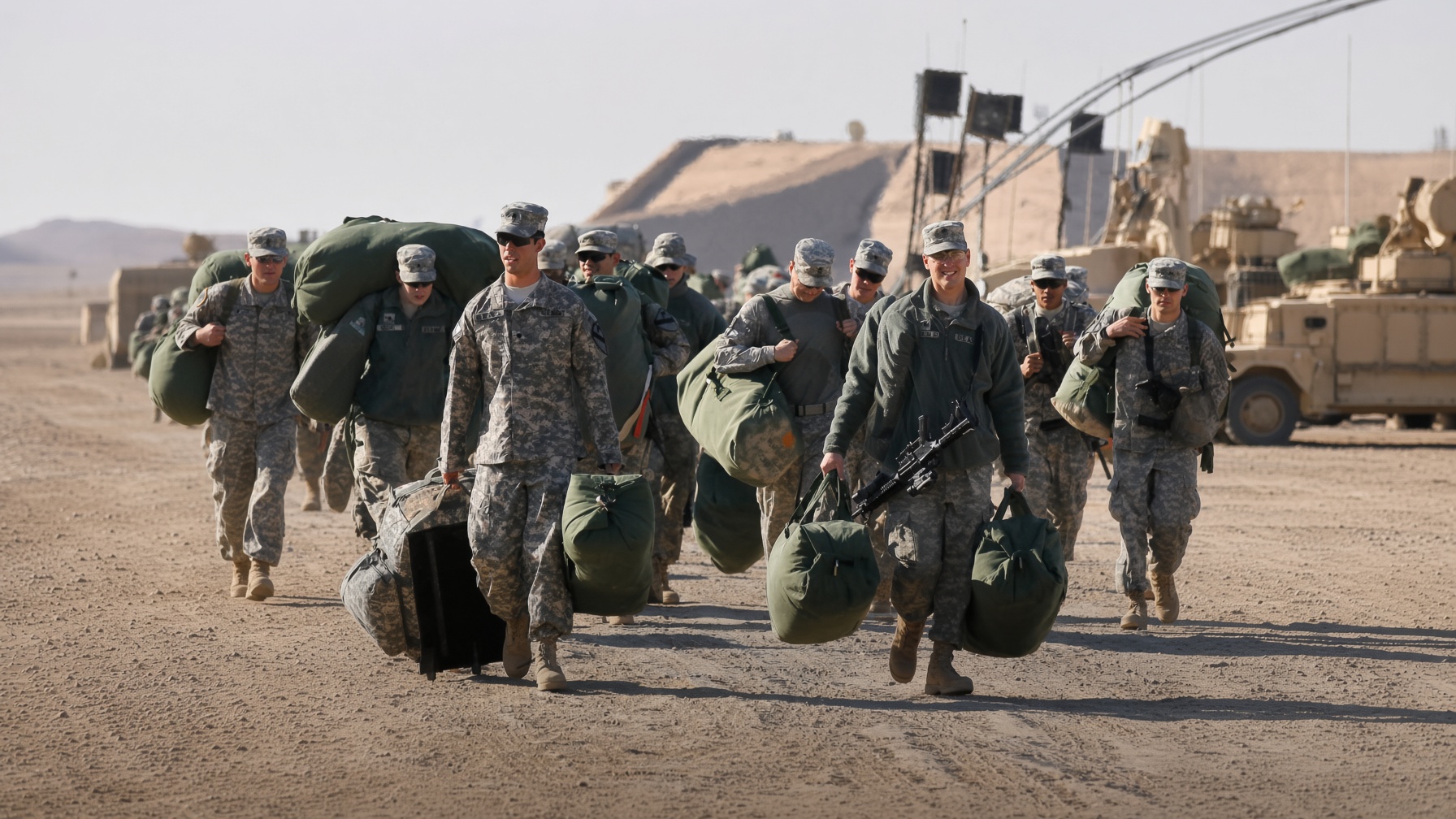
WASHINGTON — The United States is on track to complete the withdrawal of its remaining military forces from Iraq by September 30, bringing an end to a U.S. military presence that began with the 2003 invasion and later evolved into a counterterrorism mission against the Islamic State group.
The planned withdrawal represents a major turning point in the relationship between Washington and Baghdad. U.S. and Iraqi officials have confirmed that the September 30 deadline remains in place, with the remaining American military footprint expected to be removed as the two countries transition toward a more conventional bilateral relationship focused on security cooperation, trade and investment.
The United States invaded Iraq in March 2003, launching a war that ultimately toppled longtime leader Saddam Hussein. At the height of the conflict, the American military presence grew to more than 170,000 troops. Most U.S. combat forces eventually left in 2011, but American troops returned in 2014 after ISIS rapidly captured large areas of Iraq and Syria.
The latest withdrawal follows years of declining U.S. military involvement. Under an agreement reached by Washington and Baghdad in 2024, the U.S.-led coalition’s military mission in Iraq was scheduled to wind down, with responsibility for counter-ISIS operations increasingly transferred to Iraqi forces.
U.S. officials say Iraqi security forces, including Kurdish Peshmerga units, are now positioned to take the lead in confronting remaining terrorist threats inside the country. The Pentagon has described the transition as the result of significant progress in defeating ISIS and strengthening Iraq’s own security institutions.
The drawdown has already involved the consolidation of American forces and the transfer of military facilities to Iraqi control. Equipment and personnel have also been moved as the final phase of the withdrawal approaches.
The change does not necessarily signal the end of the U.S.-Iraq security relationship. Instead, officials on both sides have emphasized a shift toward a long-term bilateral partnership. Washington is expected to continue working with Baghdad through diplomatic channels and defense cooperation rather than maintaining a large-scale military presence.
Economic ties are also expected to become increasingly important. Iraqi and American officials have discussed expanding commercial relationships, investment and other forms of cooperation as the military mission comes to an end. U.S. officials have stressed that a stable and sovereign Iraq could create opportunities for deeper economic and defense partnerships.
Still, the transition comes as Iraq faces a complicated security environment. Iran-aligned armed groups remain a major concern, and the Iraqi government has sought to reinforce state control over weapons and armed organizations. The United States has linked a stable security environment to the development of stronger long-term bilateral ties.
If completed as planned, the September 30 withdrawal will close one of the longest and most consequential chapters in modern U.S. military history while opening a new phase in relations between Washington and Baghdad—one centered less on American troops and more on diplomacy, economic engagement and Iraqi responsibility for its own security.