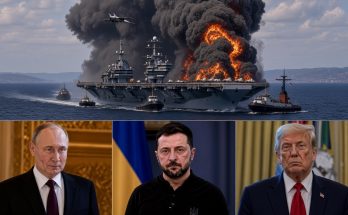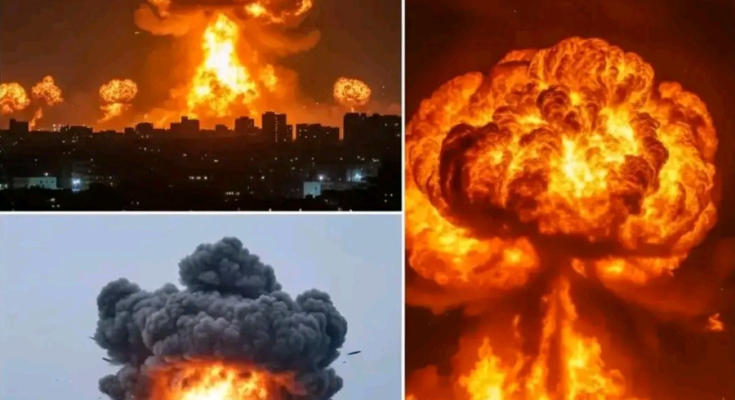
The Middle East was plunged deeper into crisis as explosions and airstrikes shook multiple cities, sending residents rushing for shelter and raising fears that the widening conflict between the United States, Israel and Iran could trigger an even broader regional confrontation.
In Tehran, thick columns of black smoke rose above the capital after Israeli strikes hit fuel depots and refinery facilities. The attacks marked another escalation in a campaign that has increasingly targeted infrastructure linked to Iran’s military capabilities and war effort. Iranian officials condemned the strikes and warned of serious environmental and public-health consequences.
Iran has continued launching missiles toward Israel and regional targets, while Israeli and U.S. forces have carried out additional strikes against Iranian military and strategic sites. Air-defense systems have intercepted many incoming weapons, but falling debris and direct impacts have caused deaths, injuries and property damage.
The violence has also spread into Lebanon. Hezbollah, the Iran-backed militant organization, has launched attacks against Israel, prompting Israeli strikes on Hezbollah positions and areas of Beirut. The fighting has created a growing displacement crisis, with hundreds of thousands of Lebanese residents forced from their homes.
Across the Gulf, governments have remained on high alert. Qatar, Bahrain, Kuwait, Saudi Arabia and the United Arab Emirates have faced missile and drone threats linked to the conflict. Authorities have urged residents to follow emergency instructions and seek shelter when warnings are issued.
The regional instability is also being felt far beyond the battlefield. Energy markets have experienced sharp swings as investors assess the possibility of prolonged disruption to oil supplies. The Strait of Hormuz, one of the world’s most important energy corridors, has become a central concern because any prolonged disruption could have consequences for fuel prices and the global economy.
Air travel has also been severely disrupted. Major airlines have canceled or suspended flights across parts of the Middle East as governments and carriers reassess the safety of regional airspace.
The conflict has entered a particularly dangerous phase following the death of Iran’s longtime Supreme Leader Ayatollah Ali Khamenei and the appointment of Mojtaba Khamenei as his successor. Iran’s leadership has vowed to continue resisting the U.S. and Israeli campaign, while President Donald Trump has threatened further escalation if Iran attempts to interfere with regional oil shipments.
Despite the intensity of the fighting, there is no indication that the conflict has become a worldwide war. The principal military activity remains concentrated in Iran, Israel and neighboring areas, although the involvement of regional armed groups and attacks affecting Gulf states have increased the risk of a wider confrontation.
Diplomatic efforts remain possible, but the situation is highly fluid. Governments are working to protect civilians, secure critical infrastructure and prevent further escalation.
For millions across the region, however, the immediate reality is one of sirens, explosions, evacuations and uncertainty. As the fighting continues, the world is watching closely for signs that the conflict will either move toward negotiations—or expand into an even larger regional war.