**WASHINGTON** — A federal judge has cleared a significant legal hurdle for the Trump administration’s effort to terminate Temporary Protected Status for Somali nationals, lifting a court order that had blocked the Department of Homeland Security from ending the designation.
The ruling removes a key obstacle that had prevented DHS from moving forward with the termination. Officials can now take steps to end protections for Somali nationals who have relied on TPS to remain lawfully in the United States, according to the court’s decision.
The development follows a recent Supreme Court ruling that narrowed the ability of lower federal courts to intervene in certain challenges to the administration’s decisions to terminate TPS designations. That high-court guidance has strengthened the executive branch’s position in disputes over temporary immigration protections.
Temporary Protected Status is a federal program that allows eligible nationals of designated countries to stay in the United States on a temporary basis when conditions in their home countries make safe return impractical. Recipients can also receive work authorization while the designation remains in effect. The program was designed as a short-term humanitarian measure rather than a long-term immigration status.
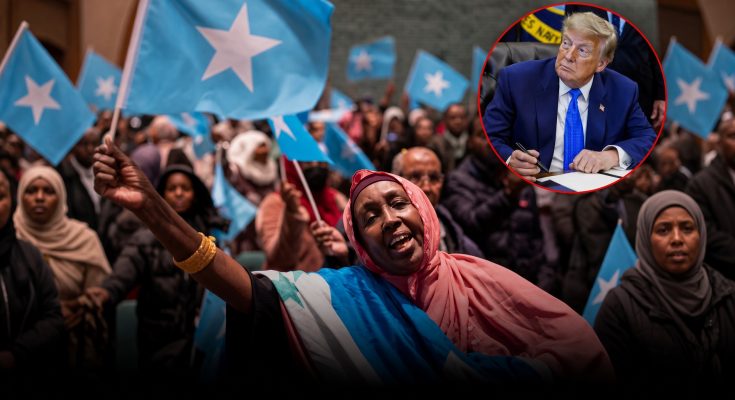
For the Somali community covered by the designation, the practical stakes are immediate. Figures previously reported by Fox News Digital show approximately 2,471 Somali nationals currently hold TPS, with another 1,383 applications still pending. If the termination takes effect and individuals lack another lawful basis to remain in the country, they could become subject to immigration enforcement and potential removal proceedings.
The Trump administration has framed the case as a matter of restoring the original intent of the program. Officials argue that TPS was never meant to create an indefinite pathway to remain in the United States. They contend that once conditions no longer justify the designation, the protections should end. Ending the Somali designation aligns with the administration’s broader effort to tighten immigration enforcement and restructure temporary programs.
Immigration advocates have raised sharp concerns about the human consequences. They note that many TPS holders have lived in the United States for years, built families, held jobs, and established deep community ties. Terminating protections, they argue, would inject uncertainty into the lives of people who have complied with the law and contributed to their communities, potentially forcing difficult choices about remaining without status or facing deportation.
The dispute over Somalia’s TPS designation is part of a larger national conflict over the limits of presidential authority in immigration policy and the proper role of federal courts in reviewing executive decisions. The Supreme Court’s recent guidance has shifted the legal landscape, making it more difficult for challengers to secure nationwide injunctions that freeze administration actions.
The judge’s latest order does not resolve every outstanding legal question. Additional lawsuits or procedural challenges could still arise as DHS moves toward implementation. For now, however, the path for the administration is clearer than it has been in recent months.
For the thousands of Somali nationals who currently depend on TPS, the ruling raises the prospect of a significant change in legal status. Those without alternative immigration pathways may ultimately face the possibility of removal if protections expire and no other relief is available.
The administration is expected to view the decision as confirmation of its authority to determine when temporary protections should end. Whether further litigation slows that process remains to be seen, but the latest court action has removed one of the most immediate barriers standing in the way.