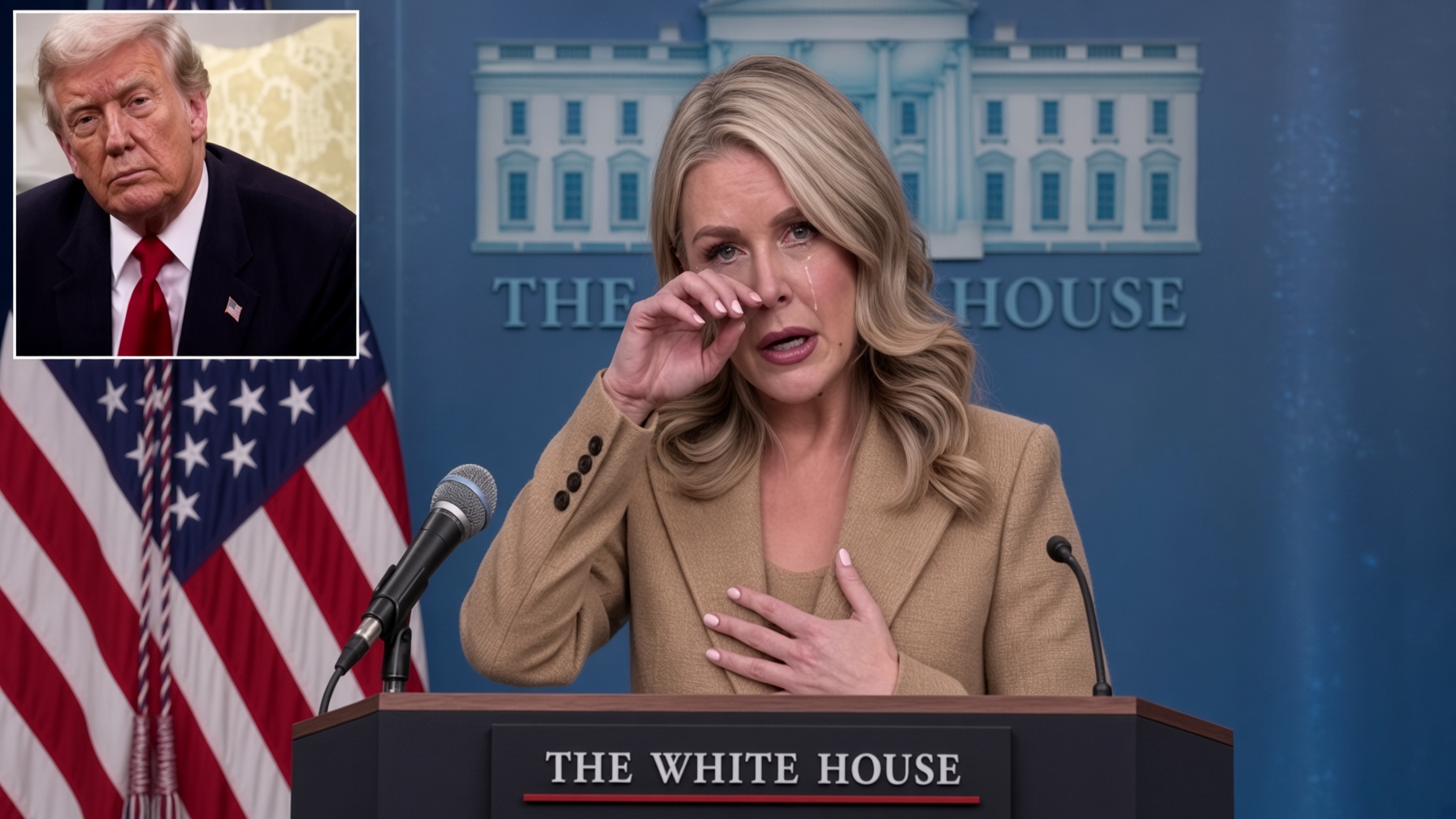
WASHINGTON — White House Press Secretary Karoline Leavitt told Axios co-founder Mike Allen that the administration’s rewrite of presidential press rules is meant to widen the room, not lock traditional outlets out.
The remarks came as the White House and the White House Correspondents’ Association remain at odds over who picks the small group of journalists allowed into tight spaces — Oval Office events, Air Force One, and other limited-access settings.
Leavitt rejected the word critics use. “I don’t view them as restrictions,” she said. The White House, she argued, is trying to open access to “more outlets, more voices, more news, journalists and outlets.”
The fight over the pool
The presidential press pool is a compact rotation, typically about 13 journalists, that covers the president when there is no room for the full briefing-room corps. For decades the Correspondents’ Association managed that rotation. In 2025 the press office took a larger role in choosing who sits in it.
Leavitt asked why one organization should hold a daily seat by habit. “Why should a single outlet have the privilege of being in that 13-person press pool every single day?” she said.
When she started as press secretary in January 2025, she also set aside two briefing-room seats for what she called “new media voices” — independent reporters, podcasters, social-media figures and other digital outlets that had rarely been in the rotation.
The AP fight
The same period produced a separate clash with the Associated Press. After the AP declined to adopt the administration’s preferred name, “Gulf of America,” for the body of water long known as the Gulf of Mexico, the White House limited AP access to some presidential events.
The AP sued, arguing the exclusion was viewpoint discrimination under the First Amendment. U.S. District Judge Trevor McFadden later ordered the administration not to treat the AP worse than peer wire services when those limited spaces are opened to the pool. The White House has maintained that access to presidential events is not itself a constitutional right and that the government may decide who enters constrained venues.
A changed industry
Leavitt tied the policy to the industry itself. Newspapers, networks and wires now share audiences with podcasts, newsletters and creators. “It’s not about ideology,” she said. “It’s about increasing the wide array of outlets that have access.”
Supporters say legacy outlets should not keep preferred seats simply because they have always had them. Critics say the government should not pick which independent journalists get to cover it. The argument is less about any one reporter than about who controls the gate when space is scarce.
Axios has also noted that presidents measure access differently. An analysis using data compiled by presidential scholar Martha Joynt Kumar found that, by a comparable point in a fourth year, Joe Biden had held 164 formal press conferences and interviews, Donald Trump 468, and Barack Obama 570. Those counts omit many informal exchanges, but they show how differently administrations treat the podium.
The practical problem has not gone away. Traditional organizations want rules that keep coverage independent of the office they cover. The White House wants a pool that looks more like the media Americans actually use. Both sides agree the landscape has changed. They do not agree on who should decide what that change means inside the most guarded rooms in American politics.