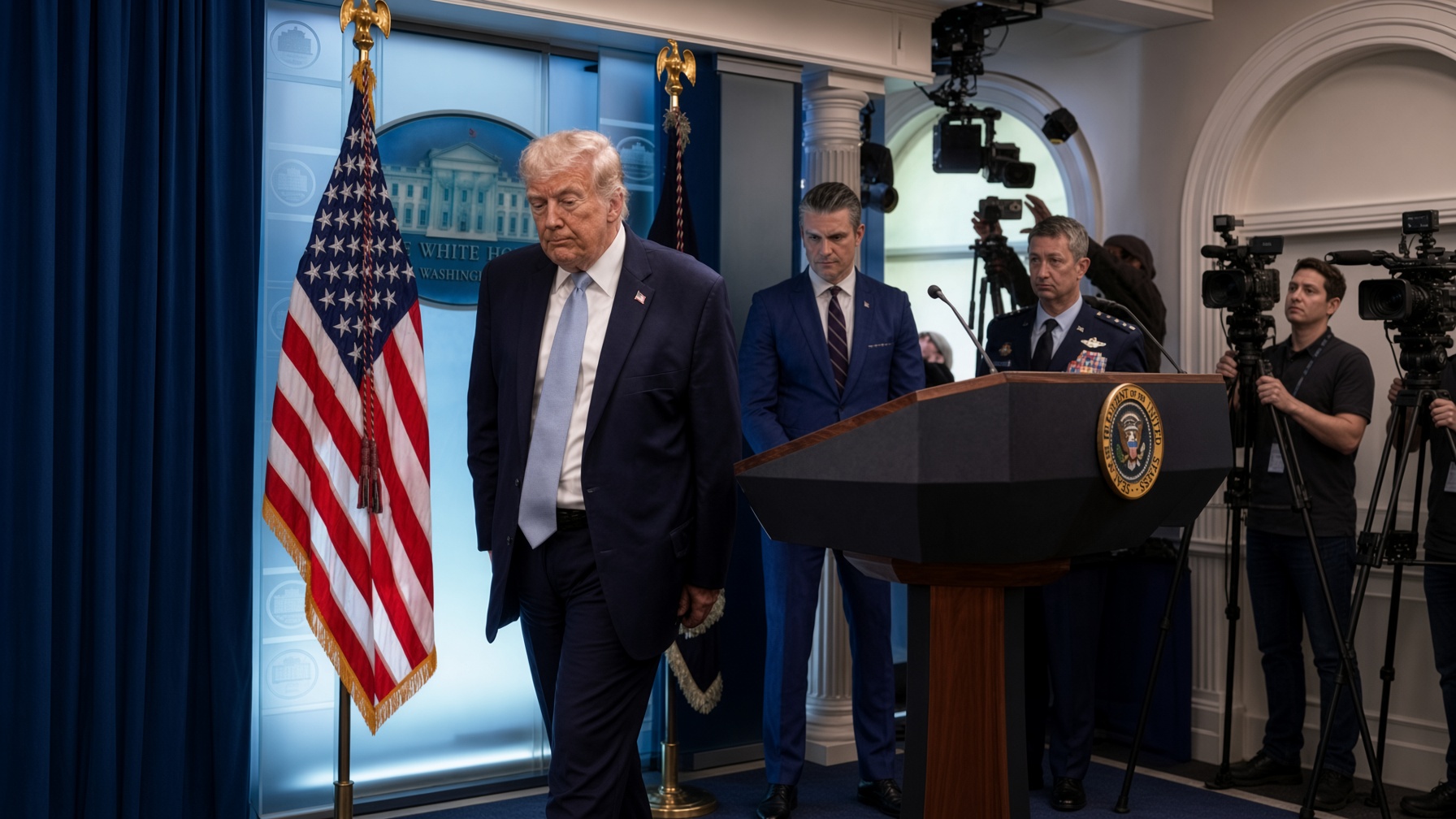
WASHINGTON — A days-old U.S.-Iran ceasefire nearly came apart in late June after American aircraft struck Iranian military sites and President Donald Trump warned Tehran that further attacks on commercial shipping could bring the Islamic Republic to an end.
On Truth Social, Trump said continued disruption of maritime corridors would invite overwhelming force and that Washington was prepared to “complete the job” if Iran did not stop operations against international vessels. “If that happens,” he wrote, “the Islamic Republic of Iran will no longer exist.” The language followed a U.S. Central Command announcement of coordinated airstrikes on June 27 against missile and drone storage sites, coastal radar, command-and-control nodes, air-defense batteries, and mine-laying assets along Iran’s southern coast.
The Pentagon cast the raids as retaliation for unmanned attacks on merchant ships in the Strait of Hormuz, the chokepoint that carries roughly a fifth of the world’s oil. About 4:30 a.m. Eastern on June 27, a one-way attack drone hit the Panama-flagged tanker M/T *Kiku*, which was carrying more than two million barrels of crude. The bridge was damaged. Crew members were reported safe, and no major spill was confirmed. Two days earlier, a drone had struck the Singapore-flagged container ship M/V *Ever Lovely* off Oman. U.S. officials said they had downed other incoming drones. CENTCOM said Iran “was given a chance to honor the ceasefire” after the first ship attack and “elected not to.” American forces said they would keep maritime patrols in the corridor.
The clash tested a memorandum of understanding signed June 17 by Trump and Iranian President Masoud Pezeshkian. That deal called for an immediate halt to formal military operations and a 60-day window to negotiate a longer security framework. Tehran was to use its best efforts to keep commercial traffic moving through Hormuz. Washington called the drone strikes material breaches. Iran denied violating the pact, accused the United States of breaking it with airstrikes, and later said it had fired missiles and drones at U.S.-linked sites in Bahrain and Kuwait. Iranian officials did not formally claim the two ship hits. The agreement had no clear mechanism for gray-zone attacks or proxy activity during the interim.
Energy desks reacted at once. Any lasting militarization of Hormuz threatens crude and LNG prices, pump prices, and inflation. Trump has tied his political standing to energy costs and open sea lanes, arguing that quick force is the way to keep shocks from reaching U.S. consumers. A Daily Mail/J.L. Partners poll around that period put his job approval near 47 percent, with the country split on how he handles foreign crises.
By June 28–29, both sides signaled a pause and talk of returning to negotiations, including possible meetings in Qatar — a reminder that each still had reasons not to let a shipping war become a full regional war. The June 17 framework survived the weekend only as a strained truce. If low-level attacks on tankers resume, the same ladder of retaliation that nearly collapsed it remains in place.