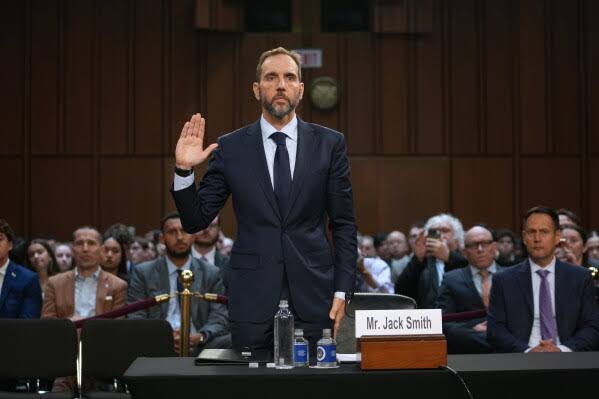
WASHINGTON — In a dramatic and combative appearance on Capitol Hill, former Special Counsel Jack Smith delivered an unapologetic defense of his federal investigations into Donald Trump, testifying under oath before the Senate Judiciary Committee that he refused to be intimidated by mounting political pressure or direct threats of prosecution.
Appearing before a packed committee room, Smith directly addressed the hostile political climate surrounding his tenure, using his opening statement to formally enter the findings of his historic election interference probe into the permanent congressional record.
“I will not be silenced by the continued threats of prosecution from the President or others,” Smith stated firmly. He warned lawmakers that the nation’s foundational legal apparatus faces an existential threat when career prosecutors and investigators are threatened with criminal retaliation simply for fulfilling statutory duties.
Key Pillars of the Testimony
Throughout hours of pointed questioning, the former special counsel anchored his testimony around several core arguments:
-
Proof Beyond a Reasonable Doubt: Smith emphasized that his prosecution team had amassed sufficient, admissible evidence to prove beyond a reasonable doubt that Trump engaged in multiple criminal conspiracies designed to overturn certified 2020 election results and obstruct the peaceful transfer of power.
-
Nonpartisan Standards: Rebuffing accusations that the Justice Department had been weaponized for political advantage, Smith insisted the prosecution followed facts and law without fear or favor. He maintained that presented with identical evidence, he would bring the exact same indictments against a Democrat or an independent.
-
Integrity of Public Service: Smith warned that allowing political actors to intimidate prosecutors would establish a dangerous precedent, effectively granting high-ranking officials immunity from accountability.
Heated Clash Over Investigative Tactics
The hearing grew particularly tense during exchanges with committee Republicans, who sharply challenged the special counsel’s methods—focusing heavily on the collection of telephone metadata and communications involving lawmakers during the post-election period.
GOP senators characterized the subpoenas as congressional overreach and an infringement on legislative prerogatives. Smith forcefully countered that every subpoena and warrant secured by his office complied fully with Title 18 statutes, the Fourth Amendment, and long-standing Department of Justice guidelines, having received rigorous independent scrutiny and sign-offs from federal judges.
Refusing to cede ground, Smith concluded his remarks by warning that retreating under political intimidation would inflict permanent damage on the American legal framework.
“Our system of justice cannot survive if the application of the law depends on the popularity or power of the person accused,” Smith testified, concluding an extraordinary chapter in modern American jurisprudence.