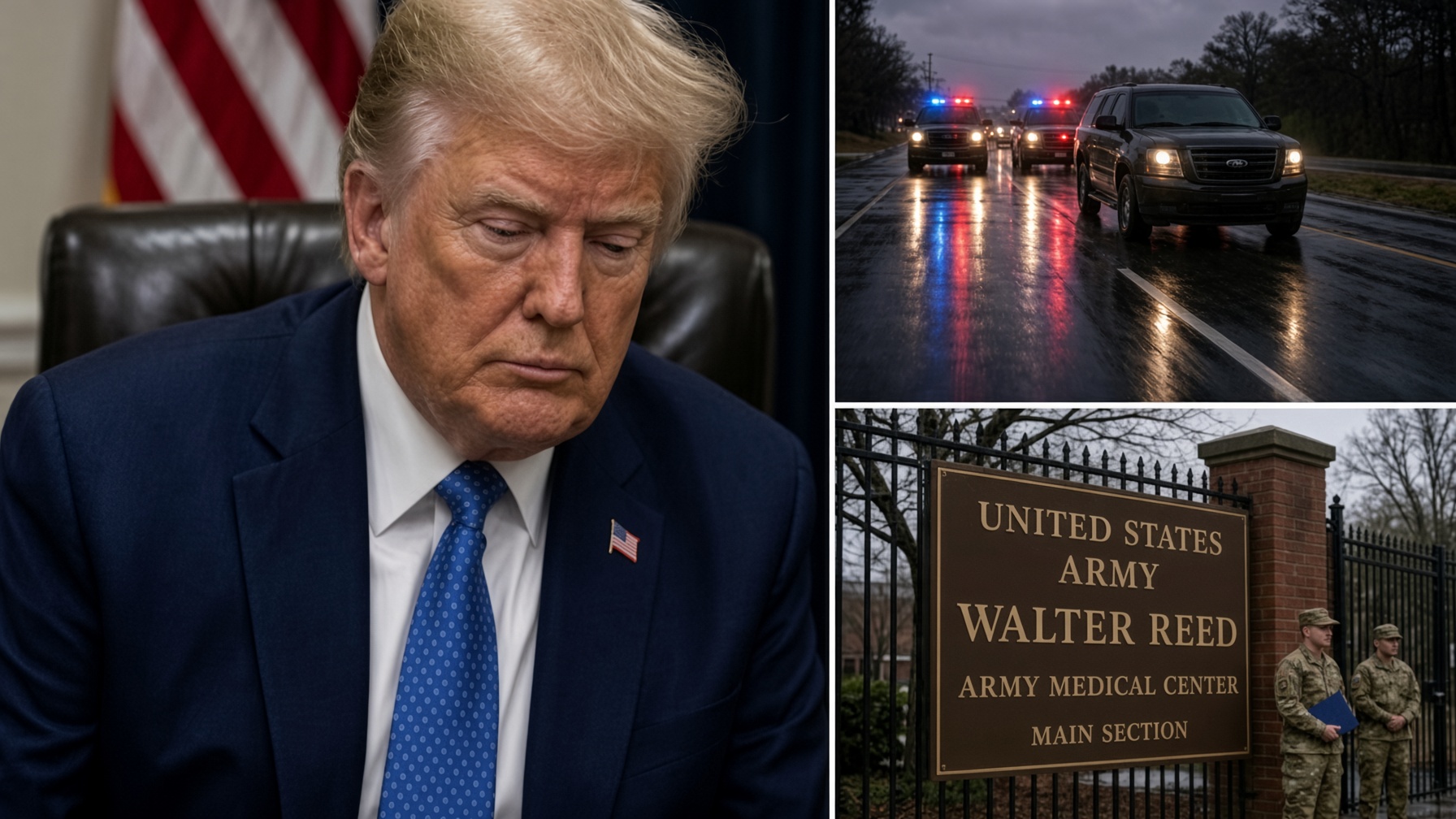
WASHINGTON — President Donald Trump remains in “excellent health” and is “fully fit” to execute the responsibilities of commander in chief and head of state, according to a detailed medical summary released Friday following an extensive physical examination at Walter Reed National Military Medical Center.
The memorandum, prepared by physician Dr. Sean Barbabella, detailed findings from evaluations coordinated across a panel of 22 medical specialists. The multi-tiered screening included computed tomography (CT) scans, advanced cardiac imaging, oncological screenings, and routine preventive assessments, identifying no acute abnormalities across the president’s major organ systems.
Key Biometrics and Clinical Findings
The report registered Trump’s weight at 238 pounds, reflecting a 14-pound gain compared to his April 2025 examination. Standing 6 feet, 3 inches tall, his body mass index (BMI) was recorded at 29.7, positioning him just under the clinical threshold of 30 designated for obesity.
While the medical staff outlined standard lifestyle recommendations addressing nutrition, physical conditioning, and weight control, clinical indicators demonstrated overall stability:
-
Cardiovascular Profile: Total cholesterol measured 143 mg/dL, marking a sharp decline from historical benchmarks such as 223 mg/dL in 2018. Physicians attributed the reduction to a pharmaceutical regimen featuring rosuvastatin, ezetimibe, and aspirin.
-
Cognitive Screening: Trump completed the Montreal Cognitive Assessment (MoCA), a recognized clinical diagnostic tool utilized to detect mild cognitive impairment and neurological changes, securing a top score of 30 out of 30—replicating previous results from 2018 and 2025 evaluations.
-
Vascular Condition: The report noted trace lower-extremity swelling consistent with chronic venous insufficiency—first publicly acknowledged in 2025—while highlighting that the condition had shown measurable improvement year over year.
-
Dermatological Notes: Minor superficial bruising on the hands was documented and characterized as benign soft-tissue irritation stemming from frequent public handshaking, exacerbated by routine aspirin intake. Barbabella advised adjusting to a lower-dose aspirin therapy.
“His demanding daily schedule, including multiple high-level meetings, public engagements, and regular physical activity, continues to support his overall well-being,” Dr. Barbabella stated, characterizing the president’s cognitive and physical functional capacity as excellent.
The Political and Generational Landscape
The release marks the fourth publicly disclosed clinical assessment of Trump’s current term, arriving at a strategic juncture as the administration underscores executive stamina heading into a consequential midterm legislative cycle. While incumbent commanders in chief are under no statutory obligation to publish their full medical files, issuing summary disclosures from military physicians has remained a standard transparency practice.
With Trump approaching his 80th birthday, age and vitality continue to serve as enduring focal points within American political discourse. The debate over executive endurance has remained at the forefront of national politics, following intense scrutiny surrounding age and fitness during recent election cycles.
White House officials framed the Walter Reed findings as confirmation of Trump’s capacity to maintain a rigorous governing agenda and travel itinerary without physical hindrance.