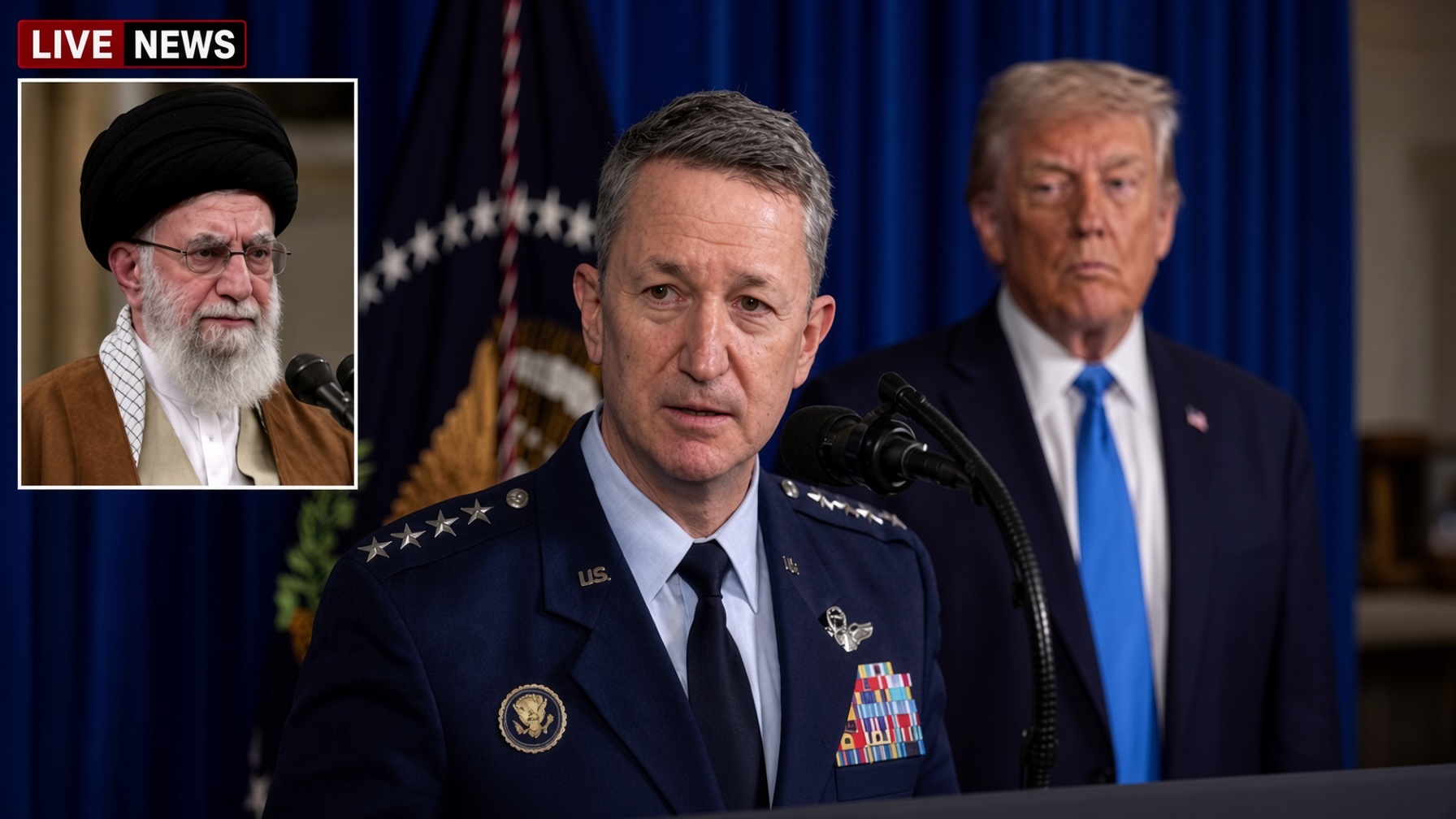
WASHINGTON — Military confrontation between the United States and Iran escalated sharply after the Islamic Revolutionary Guard Corps (IRGC) fired a coordinated barrage of ballistic missiles at American military installations across the Middle East, triggering allied strikes in Iraq and extensive U.S. retaliatory bombardments across mainland Iran.
According to operational briefings from U.S. Central Command (CENTCOM), multi-tiered air defense networks—anchored by Patriot and Terminal High Altitude Area Defense (THAAD) surface-to-air batteries—intercepted all incoming Iranian ballistic missiles. The successful defense prevented casualties among the more than 50,000 U.S. personnel deployed across theater bases on highest alert.
Bilateral Sorties Strike Eastern Iraq
Within hours of intercepting the missile barrage, U.S. strike aircraft joined Royal Saudi Air Force fighters in joint precision air operations targeting logistical infrastructure, munitions storage sites, and command nodes operated by Iran-aligned militias across eastern Iraq.
CENTCOM reported that these paramilitary units operated under direct IRGC direction and had intensified offensive actions against allied forces and key Saudi hydrocarbon arteries, including more than 30 drone attacks over the preceding 72 hours. Bilateral operations targeted threats against crucial pumping infrastructure along Saudi Arabia’s strategic East-West pipeline corridor.
Pentagon telemetry showed that Iranian proxy forces had conducted over 600 attempted strikes against American military facilities, personnel, and diplomatic outposts between February and April 2026 alone.
Theater-Wide Retaliation Across Mainland Iran
The confrontation widened significantly when Washington launched a coordinated, deep-penetration aerial campaign striking dozens of critical IRGC targets within Iran.
| Engagement Phase | Target Profile | Operational Assets Involved |
| Phase 1: Inbound Defense | Incoming IRGC ballistic missile salvos | Regional Patriot & THAAD interceptor batteries |
| Phase 2: Iraq Counterstrikes | Militia command posts, arms caches, drone hubs | Joint U.S. Air Force & Royal Saudi Air Force strike wings |
| Phase 3: Mainland Retaliation | Underground missile depots, radar sites, naval docks | Long-range precision strike packages & naval aviation |
Pentagon defense officials confirmed the mainland sorties struck reinforced subterranean missile silos, unmanned aerial vehicle (UAV) assembly centers, coastal early-warning radar arrays, and IRGC Navy logistics centers along the Persian Gulf. Defense planners characterized the operation as a targeted move to neutralize Tehran’s ability to interdict maritime commerce in the Strait of Hormuz or launch further asymmetric attacks against regional partners.
An Expanding Battlespace
The swift cycle of escalation highlights the volatility of the theater, where an initial launch from Iranian soil led rapidly to coalition counter-sorties in Iraq and direct strikes on Iranian sovereign territory.
The expanded theater now stretches from the Persian Gulf and Iraq through the Red Sea and the Bab el-Mandeb strait. With merchant maritime traffic under recurring threat from anti-ship batteries and loitering munitions, multinational naval forces remain on sustained escort posture. With regional air defense systems at maximum readiness, defense planners warn that narrowing diplomatic off-ramps could risk an uncontained conflict spanning the wider Gulf region.