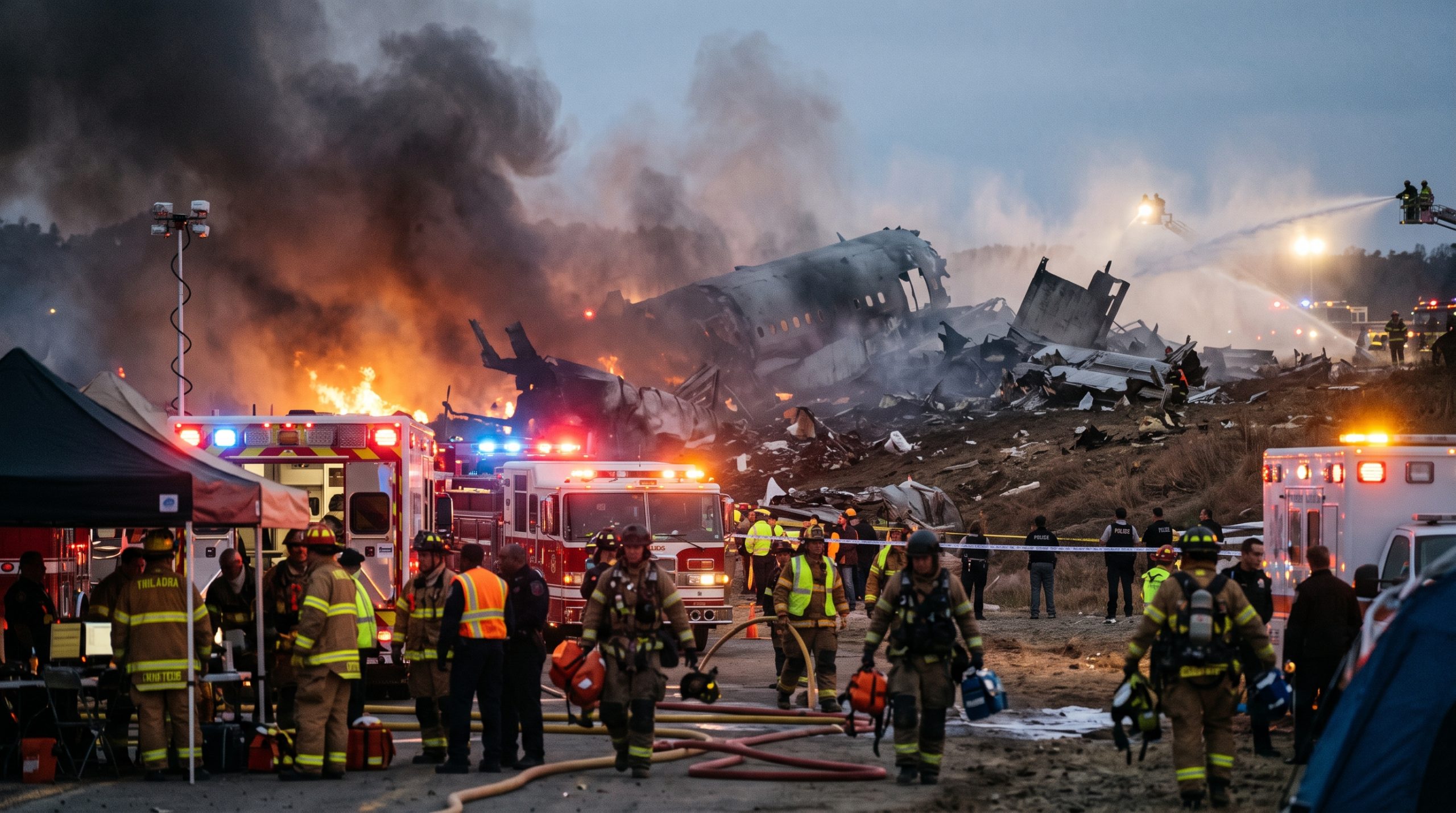
DISPATCH DESK — Tactical search-and-rescue teams, specialized aviation firefighting units, and regional disaster response agencies are converging on the scene of a major commercial aviation disaster, following preliminary reports that a wide-body passenger aircraft has gone down.
Initial, unverified estimates indicate that more than 244 passengers and crew members were aboard the flight. The identity of the carrier, flight number, departure and destination hubs, and confirmed casualty numbers have not yet been released as unified command works to secure the crash perimeter.
Eyewitnesses in the vicinity reported heavy plumes of black smoke, localized explosions, and a wide debris field spread across the impact zone. First-due emergency crews faced extreme environmental hazards upon arrival, including active jet-fuel fires, toxic smoke plumes, and structural instability among fragmented fuselage sections.
Life Safety and Triage Operations Take Immediate Priority
Federal aviation authorities and incident commanders emphasized that active search-and-rescue efforts supersede all technical investigations during the initial operational period. Heavy structural fire suppression units are cooling wreckage hot-spots to create survivable corridors, allowing tactical rescue teams to conduct secondary sweeps for possible survivors.
Regional medical facilities have activated mass-casualty surge protocols:
-
Trauma Surge Activation: Level 1 trauma centers across the region have suspended elective operations, cleared intensive care beds, and placed surgical teams on immediate standby.
-
Blood Bank Mobilization: Area blood banks and donor logistics networks have been placed on high alert to dispatch units directly to forward triage sites.
-
Air-Ambulance Staging: Critical-care aeromedical helicopters are staged outside the active smoke perimeter to facilitate rapid patient transport should survivors be extracted.
Aviation officials reiterated that the reported figure of 244 occupants remains unverified until verified passenger manifests, ticketed rosters, and crew logs are formally matched against field operational logs.
Family Assistance and Information Control
Dedicated Family Assistance Centers (FACs) are being deployed near the region’s transit hubs and primary municipal centers. These restricted-access compounds will provide arriving family members with verified briefings, emotional and mental health counseling, logistical coordination, and DNA reference collection points.
Authorities issued an urgent appeal to the public to refrain from circulating unverified passenger manifests, speculative flight tracking screenshots, or recycled archival disaster video on digital channels. Unconfirmed claims during the opening hours of a mass-casualty incident routinely generate severe emotional distress for families awaiting official notices.
Federal Investigators Mobilizing
National transportation safety regulators and civil aviation investigative bodies have dispatched “go-teams” composed of airframe specialists, systems engineers, and human factors analysts. Securing the crash site remains paramount to prevent contamination of critical forensic evidence.
Investigators will prioritize locating the aircraft’s cockpit voice recorder (CVR) and flight data recorder (FDR)—the “black boxes”—alongside securing raw radar data, air traffic control radio recordings, and maintenance logs.
A joint press briefing between municipal first responders and federal transportation officials is scheduled for later today to deliver verified details.