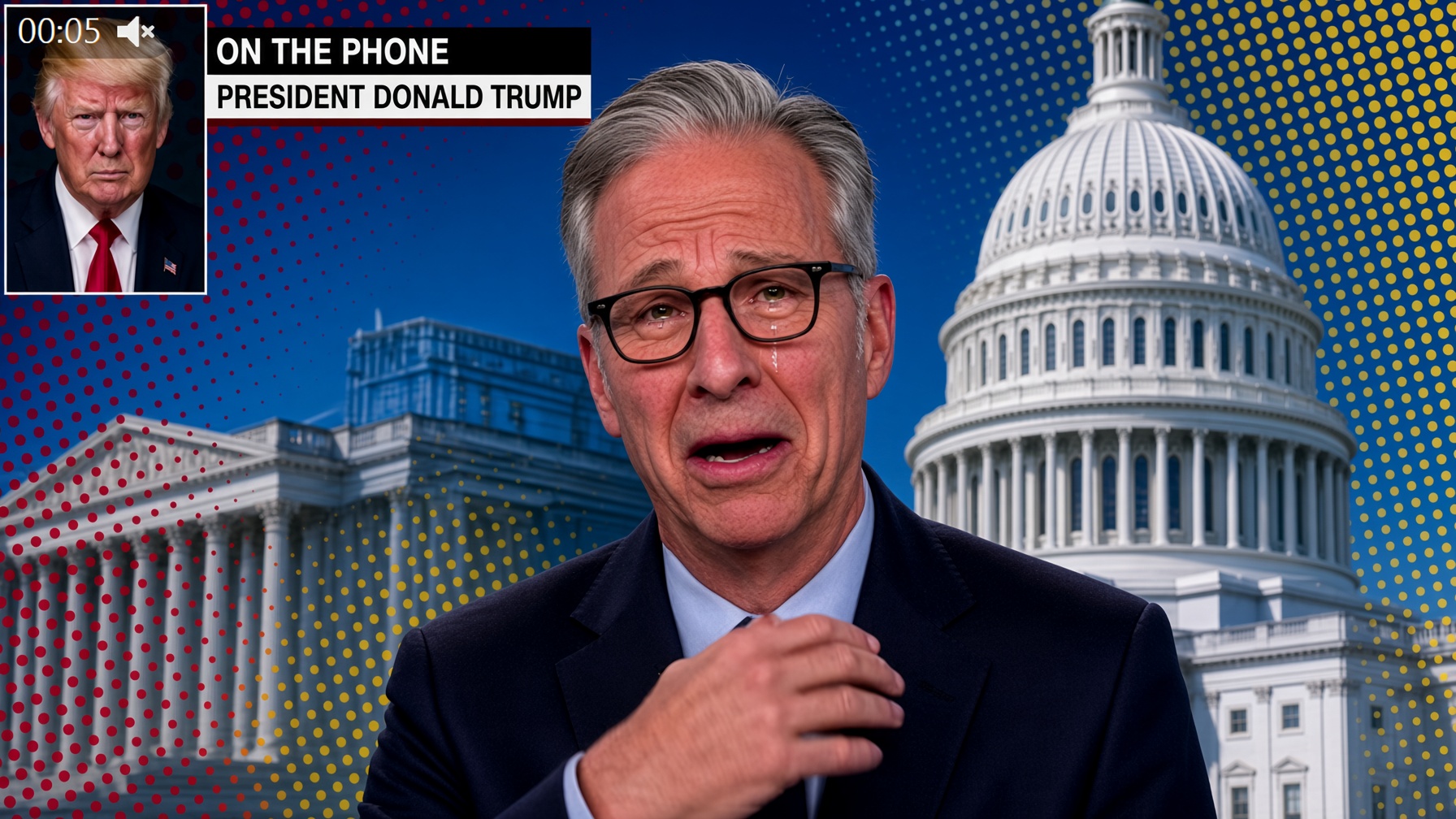
WASHINGTON — In a rare live call-in to CNN, President Donald Trump delivered an unexpected parting shot to the network, asserting his administration was working to steer the news organization onto a “normal path.”
The exchange occurred during an interview on CNN’s State of the Union, an appearance initially arranged as a tribute to longtime South Carolina Sen. Lindsey Graham, who passed away recently at age 71. While anchor Jake Tapper steered the discussion through Graham’s political legacy and alliance with the White House, the dialogue pivoted sharply in its closing seconds.
After tentatively agreeing to return for a comprehensive policy interview, Trump pivoted to critique the network itself: “We’re trying to have CNN go on a normal path. And we will do that.”
Tapper swiftly countered that the network already follows a normal path before thanking the president. “Good. You are,” Trump responded as the call concluded.
The unscripted remark arrives at a pivotal juncture for both presidential-press relations and the American media landscape. While Trump has maintained a notoriously combative posture toward CNN for nearly a decade—routinely lodging allegations of political bias—the context surrounding his latest comments extends well beyond standard White House rhetoric.
CNN is navigating the operational aftermath of a seismic corporate realignment:
-
The Megamerger: The $110 billion Paramount-Skydance acquisition of Warner Bros. Discovery recently closed following antitrust clearance, placing CNN and CBS News beneath a unified corporate roof led by David Ellison.
-
Oversight Safeguards: To address regulatory and public scrutiny, the merged conglomerate established a News Editorial Independence Board, though media watchdogs remain skeptical regarding the board’s practical enforcement powers.
-
Newsroom Stability: CNN Chief Executive Mark Thompson and CBS News head Bari Weiss are retaining their posts, with Thompson actively securing assurances to safeguard core editorial autonomy against corporate or political interference.
Trump offered no operational roadmap or legal justification to clarify what a “normal path” entails. The brief telephone exchange included no indication of formal executive action, regulatory directives, or direct White House control over CNN’s editorial operations.
Instead, industry analysts view the rhetoric through the lens of Trump’s ongoing pressure campaigns against legacy broadcasters. Just days after the Tapper exchange, the president publicly lambasted networks that opted against airing a prime-time address, even hinting at repercussions for broadcast licenses.
As traditional television faces structural contractions and unprecedented corporate consolidation, newsrooms confront mounting pressure to retain public trust. For CNN, preserving clear editorial boundaries will be critical as it adjusts to new corporate ownership while fielding persistent scrutiny from an administration long determined to influence its coverage.