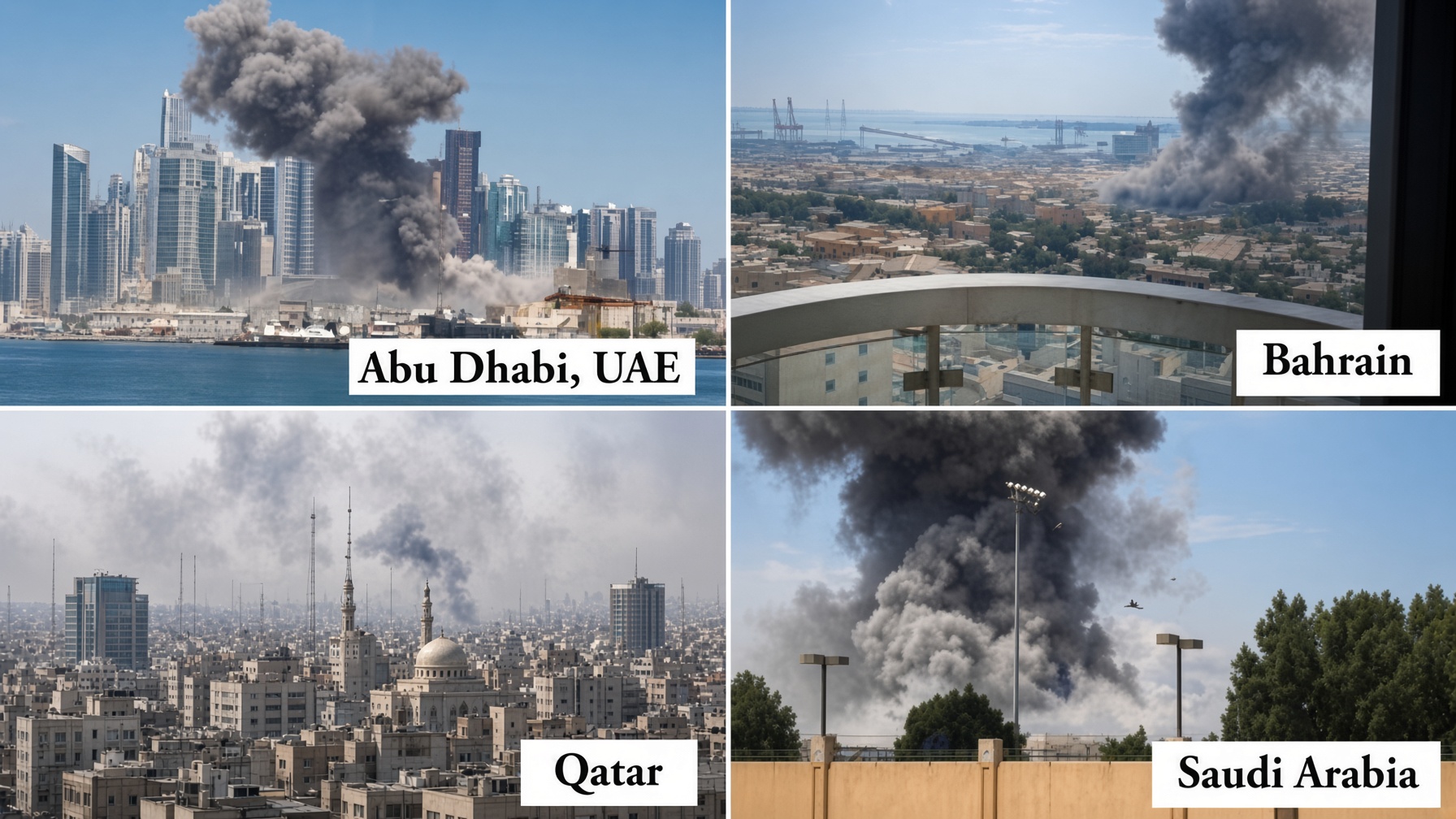
DUBAI — A relentless barrage of Iranian ballistic missiles and one-way attack drones has thrust the Persian Gulf onto an active war footing, transforming the critical waterway into a high-intensity battleground and testing allied air-defense networks to their operational limits.
What originated as calibrated military posturing has metastasized into a theater-wide conflict spanning sovereign borders across the Arabian Peninsula. Direct strikes targeting major logistics hubs, air bases, and command installations hosting U.S. forces in Bahrain, Qatar, Kuwait, and the United Arab Emirates have shattered the premise that regional capitals could remain shielded from direct conflict between Washington and Tehran.
With tens of thousands of American service members deployed alongside Gulf partner forces, every incoming salvo threatens to puncture integrated defensive shields and ignite an uncontrolled spiral of escalation.
Interceptors Strained Over the Emirates
In the United Arab Emirates, elite air-defense brigades have engaged recurring waves of threats following early-warning detections of ballistic tracks and low-altitude loitering munitions crossing maritime borders. Layered defense batteries—anchored by U.S.-manufactured Patriot PAC-3 and Terminal High Altitude Area Defense (THAAD) units—have downed dozens of incoming projectiles before reaching urban centers, but interceptor inventories are operating near continuous depletion thresholds.
The primary target has been Al Dhafra Air Base, situated south of Abu Dhabi. A hub for coalition aerial reconnaissance, airborne early warning, and tactical strike operations, the airfield remains central to Iranian strike plans. While Tehran’s state media claimed substantial damage to taxiways and hangars, defense ministries and the Pentagon have maintained strict operational secrecy pending formal damage assessments.
Forward Garrisons in the Crosshairs
The threat corridor spans the full maritime expanse of the Gulf, placing key forward commands under saturation attacks:
-
Bahrain: Naval Support Activity Bahrain, headquarters of the U.S. Fifth Fleet and U.S. Naval Forces Central Command, remains on maximum alert following repeated attempts to target naval infrastructure and southern military sectors.
-
Qatar: Al Udeid Air Base, home to CENTCOM’s forward command and the Combined Air Operations Center, has faced sustained waves of munitions, with commercial satellite imagery revealing damage to perimeter auxiliary structures.
-
Kuwait: Northern installations, including Ali Al Salem Air Base and Camp Buehring, have contended with radar-evading drone incursions that have frequently forced local alerts near critical hydrocarbon transport corridors.
Tehran’s strategy centers on asymmetric attrition: by targeting American forward posture across multiple Gulf states, Iranian commanders seek to exhaust allied interceptor stockpiles and impose untenable operational costs on host governments.
Global Energy Chokepoint Destabilized
Beyond inland military bases, kinetic skirmishes have turned the Strait of Hormuz—the vital maritime artery handling one-fifth of global petroleum supplies—into a perilous combat zone. Attacks involving anti-ship cruise missiles, swarm craft, and loitering drones have damaged commercial tankers, prompting international shipping firms to reroute vessels around southern Africa.
Soaring war-risk insurance premiums and energy market volatility threaten broader supply-chain disruptions. With interceptor inventories facing numerical limits against mass drone salvos, defense analysts warn that a single catastrophic penetration could close remaining diplomatic avenues, pulling the wider region into an irreversible conflagration.