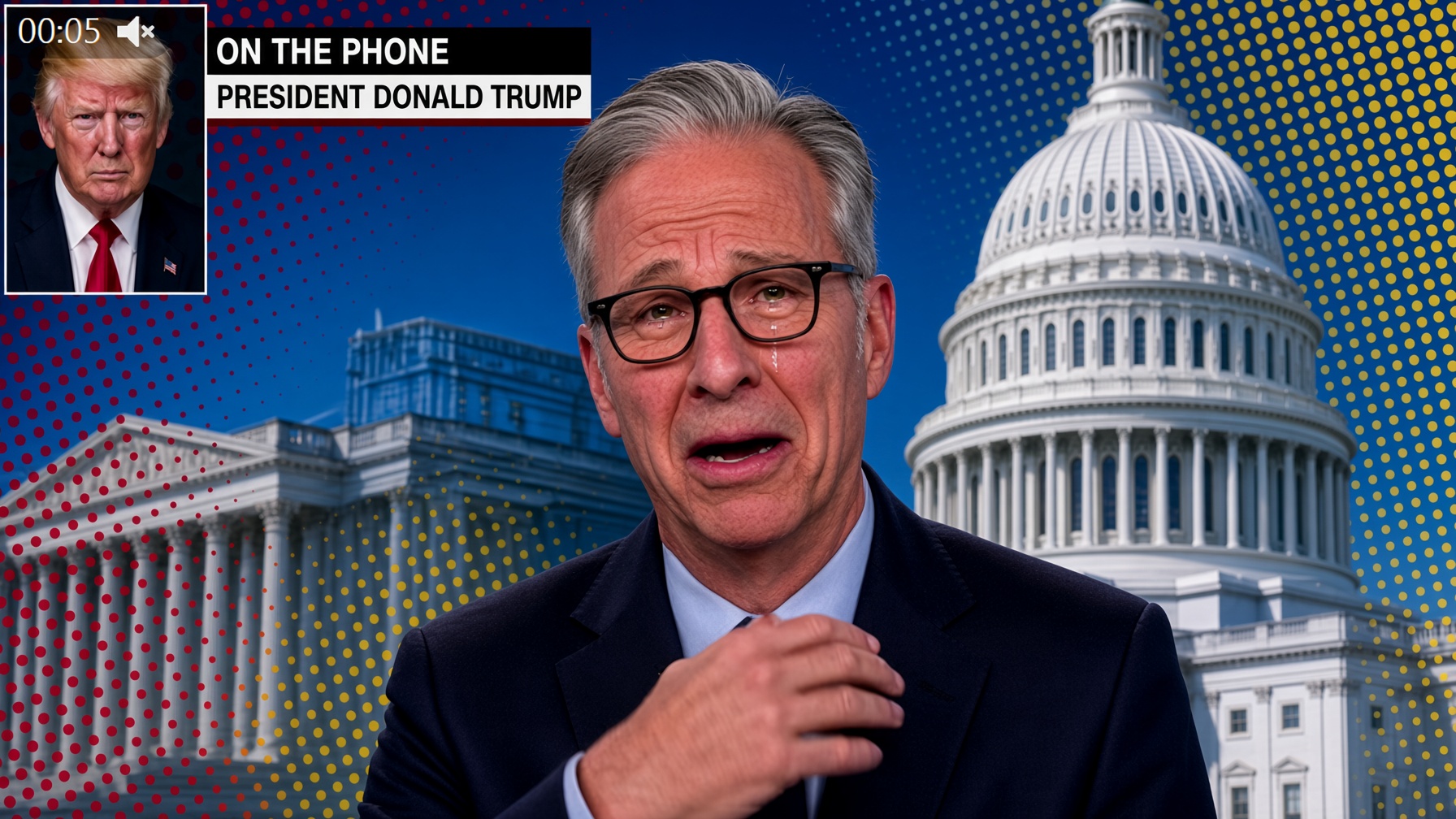
WASHINGTON — In an unscripted live call-in to CNN’s State of the Union, President Donald Trump leveled an unexpected warning at the network, declaring his administration is actively working to push the legacy news organization onto what he termed a “normal path.”
The brief exchange occurred at the tail end of an appearance originally scheduled to honor the late South Carolina Sen. Lindsey Graham, who recently passed away at 71. After discussing Graham’s political legacy and tentatively agreeing to a future sit-down interview with host Jake Tapper, Trump sharply pivoted to critique the network itself.
“We’re trying to have CNN go on a normal path. And we will do that,” Trump asserted.
Tapper pushed back immediately, telling the president that the network is already on a normal track, before wrapping up the call. “Good. You are,” Trump concluded before hanging up.
Corporate Consolidation and Editorial Vulnerability
While Trump’s adversarial posture toward CNN spans nearly a decade, his latest salvo arrives during an extraordinary restructuring of the American media landscape.
CNN is currently adjusting to the fallout of the recently closed $110 billion Paramount-Skydance megamerger with Warner Bros. Discovery. Led by David Ellison, the combined entity brings CNN and CBS News under a single corporate umbrella.
To mitigate regulatory pushback and antitrust concerns, the conglomerate created an independent News Editorial Independence Board. Nonetheless, media watchdogs and journalism advocates have expressed deep skepticism regarding the board’s practical authority to shield newsrooms from top-down business and political pressures.
Inside the ranks, CNN Chief Executive Mark Thompson and CBS News leadership have sought to project stability, reaffirming their commitments to aggressive, independent reporting. Even so, the sheer scale of the consolidation has left major broadcast operations increasingly sensitive to external political headwinds.
Escalating Rhetoric Against Legacy Broadcasters
Trump provided no legal framework or policy mechanism to define what a “normal path” would entail, nor did he outline specific regulatory measures during the telephone appearance.
However, media analysts view the remarks as part of a renewed, multifaceted pressure campaign against legacy broadcast outlets. The exchange follows recent warnings from the White House targeting major networks that opted against airing a prime-time presidential address, with Trump raising the prospect of reviewing broadcast licenses—a move First Amendment scholars emphasize would face severe constitutional hurdles.
The collision of regulatory scrutiny, corporate ownership shifts, and sustained White House hostility underscores the delicate position facing mainstream networks. For CNN, preserving its operational independence will serve as an ongoing test of endurance as it charts a course through massive corporate transition while weathering persistent political salvos from the Oval Office.