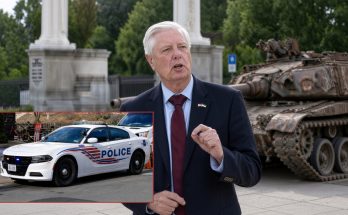
WASHINGTON — With a single executive directive, the routine rhythms of the nation’s capital dissolved overnight into a high-visibility federal operation. Tactical vehicles now idle at neighborhood intersections, flashing cruiser lights cut through residential corridors, and an austere quiet has settled over city blocks long accustomed to sirens and street-level unrest.
The emergency federalization of law enforcement across Washington, D.C., ordered by President Donald Trump, accomplished within days what years of legislative gridlock, municipal initiatives, and community policing pilots struggled to deliver: a stark, immediate transformation of the urban landscape. Yet as crime metrics register a precipitous drop, the atmosphere on the ground reflects a complex portrait of relief interwoven with deep civic apprehension.
A Tangible Respite for Fatigued Neighborhoods
For a significant cross-section of residents and small business owners, the surge provides a long-awaited reprieve from chronic public safety concerns. Neighborhoods previously plagued by carjackings, armed robberies, and gunfire have seen an abrupt cessation of open street crime.
-
Quieted Watch Networks: Community forums and local messaging threads that once churned out endless surveillance clips and urgent warnings have largely gone quiet.
-
Restored Foot Traffic: Commercial corridors report an uptick in evening pedestrians, with patrons expressing newfound confidence walking home after dark.
-
Perceived Accountability: Supporters view the muscular federal posture as an overdue intervention, arguing local governance had long failed to protect working families from persistent violence.
To these communities, the tactical presence is not an intrusion, but a tangible stabilization measure that finally prioritizes victims over administrative paralysis.
New Fault Lines: Anxiety, Rights, and Community Distrust
Just streets away, however, the heavy deployment has sparked a profoundly different reaction, replacing street-level anxieties with dread over state surveillance and civil liberties.
In several predominantly minority and working-class wards, families report mapping alternative routes to avoid tactical checkpoints. Parents hold difficult conversations with school-age children on how to navigate unplanned stops by uniformed federal personnel. Immigrant advocacy networks report that families are increasingly retreating from public services, refusing to open doors to unfamiliar officials amid heightened concerns over ancillary immigration enforcement actions.
Compounding community unease, operational friction is surfacing within the ranks of law enforcement. Metropolitan Police Department officers, speaking on condition of anonymity, describe an ambiguous command architecture where federal task forces, military-style detachments, and municipal patrol units overlap without unified procedural guidelines, leaving line officers uncertain over jurisdictional authority during dynamic field encounters.
The Enduring Cost of Imposed Order
Washington now stands at the center of a fundamental constitutional debate over the boundaries of federal power and democratic governance. While the rapid drop in reported incidents demonstrates the sheer mechanical efficacy of overwhelming force, it leaves an unresolved question in its wake: can public safety endure if it relies on perpetual occupation rather than community trust?
As federal personnel solidify their presence along the District’s avenues, the conflict between immediate suppression and durable constitutional liberty remains unresolved—setting a contentious precedent for urban policing nationwide.