LILLOOET, B.C. — Search-and-rescue teams operating in treacherous alpine terrain south of Lillooet have recovered the bodies of three men buried by a massive mudslide on Highway 99, bringing the confirmed death toll to four. One motorist remains unaccounted for as deteriorating weather and secondary slide hazards forced authorities to suspend active search efforts.
The Royal Canadian Mounted Police (RCMP), alongside volunteer rescue personnel and provincial emergency task forces, formally concluded tactical ground and air operations along the mountain route, known locally as Duffey Lake Road. Officials cited shifting terrain and an unacceptably high risk of further slope collapse following an exhaustive multi-day campaign.
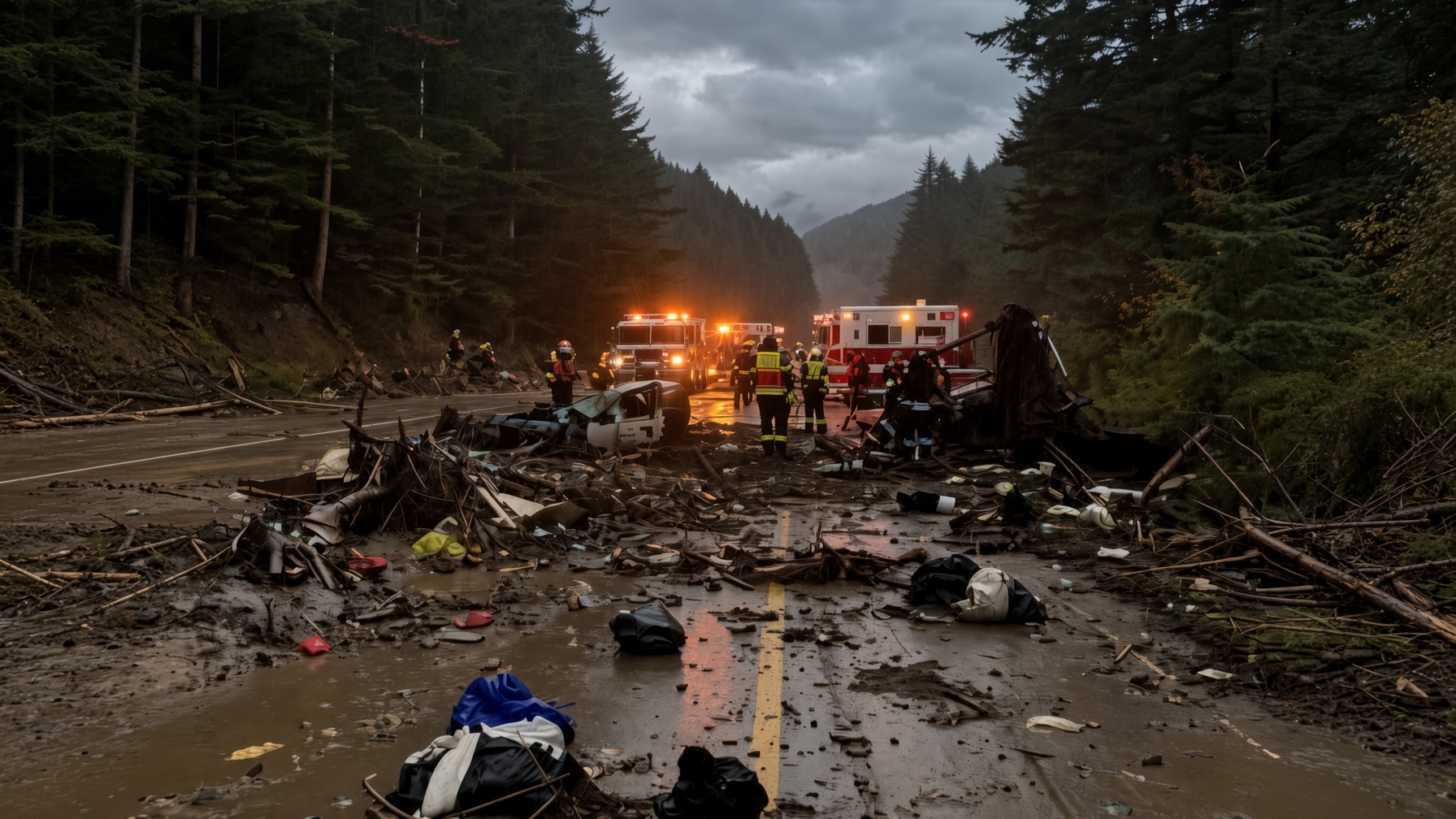
The lethal debris torrent struck roughly 42 kilometers south of Lillooet on Nov. 15, when record-shattering rainfall caused waterlogged mountainsides to shear away. Tens of thousands of tons of timber, boulders, and liquefied mud swept across the highway, pushing commercial and passenger vehicles off the asphalt and into a steep canyon below.
Relentless Hazards Faced by Field Crews
Heavy search-and-rescue teams, specialized canine units, and geotechnical engineers conducted painstaking grid sweeps across a debris field extending hundreds of meters. Crews worked through falling rock, shifting mudpacks, sub-zero conditions, and sudden rain squalls that repeatedly halted operations.
“Difficult weather and hazardous terrain presented substantial obstacles for investigators and search teams,” said RCMP Staff Sgt. Janelle Shoihet during an operational briefing. “Our thoughts continue to be with all of those who have been impacted by this terrible tragedy.”
The disaster claimed its first confirmed victim—a woman from British Columbia’s Lower Mainland—hours after the slide struck. Crews later located the remains of three male drivers beneath deep layers of compacted silt and rock. B.C. Chief Coroner Lisa Lapointe confirmed that ground sweeps were suspended late Friday after geotechnical assessments warned that the saturated slope remained dangerously unstable. Identities are being withheld pending formal forensic identification and next-of-kin notifications.
Atmospheric River Severed Critical Transit Arteries
The disaster at Duffey Lake is part of an unprecedented meteorological catastrophe that battered southwestern British Columbia. A historic “atmospheric river” funneled tropical moisture into the Pacific Northwest, shattering rainfall records across coastal basins and mountain passes.
The deluge overwhelmed alpine watersheds, saturated soil previously scarred by summer wildfires, and triggered simultaneous landslides that severed every major highway link between Metro Vancouver and the Canadian interior. The systemic collapse of the transit network isolated communities, paralyzed regional supply chains, and prompted a province-wide state of emergency.
Highway 99 remains closed indefinitely between Pemberton and Lillooet. Geotechnical teams with the Ministry of Transportation and Infrastructure are deploying drone mapping, aerial LiDAR surveys, and seismic monitors to gauge mountain stability before clearing residual debris.
Simultaneously, the BC Coroners Service has launched an official fact-finding investigation into the fatalities. The inquiry will examine environmental early-warning systems, travel advisories, and the timing of preventive road closures to help shape future climate-adaptation standards for the province’s mountain highways.