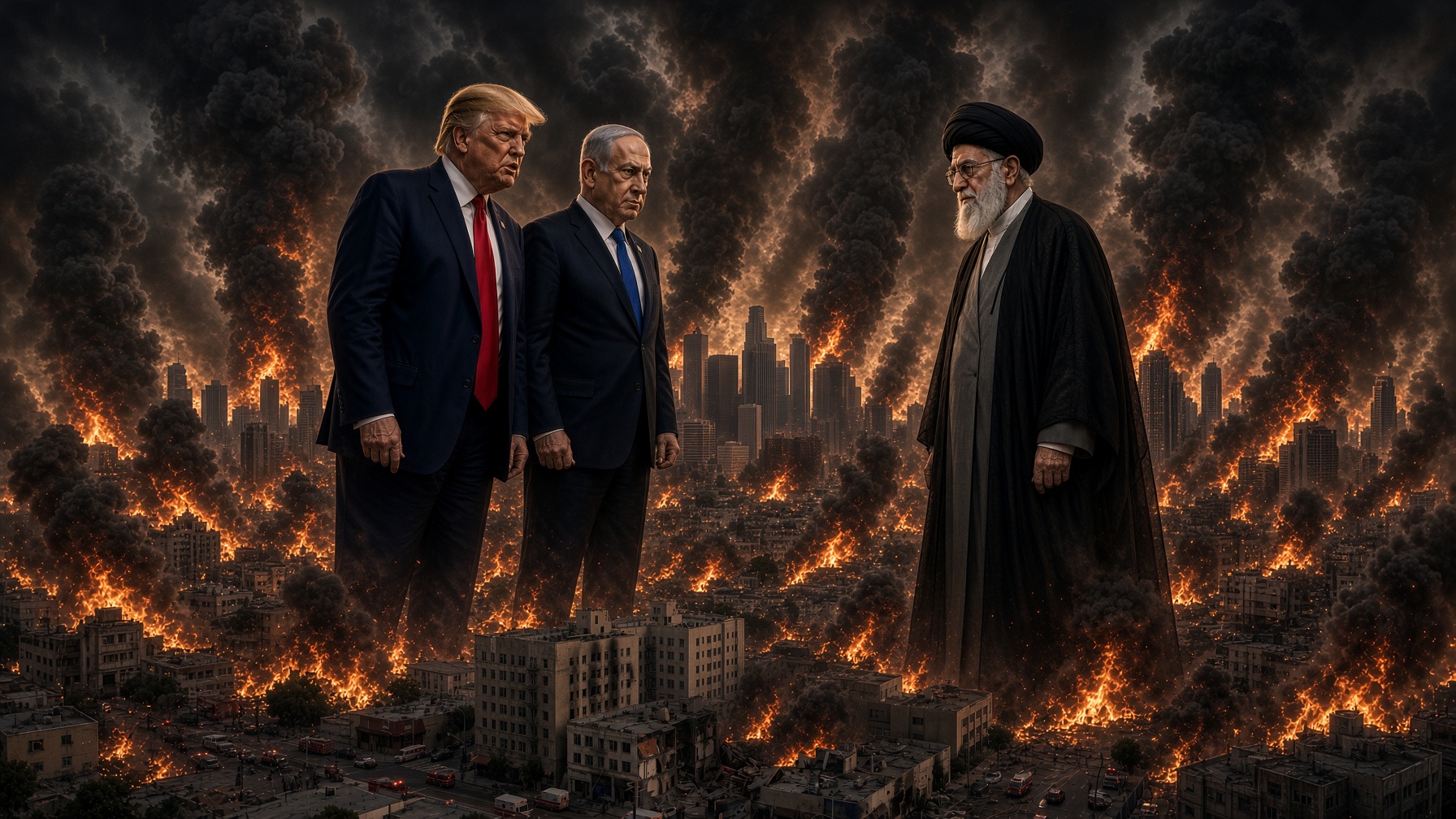
WASHINGTON — Senior American and Israeli officials held high-stakes discussions regarding the potential launch of a large-scale military offensive against Iran ahead of Israel’s upcoming general election late this month, according to a report published Tuesday by Axios.
The consultations underscore an intensifying geopolitical gamble across the Middle East, where domestic political timelines in Jerusalem appear increasingly intertwined with strategic decisions regarding Tehran’s advancing military and nuclear posture.
Strategic Timelines Intersect with Domestic Politics
Citing senior officials familiar with the closed-door proceedings, the report indicates that defense and security leadership from both allied nations examined operational scenarios aimed at preemptively degrading Iran’s strategic assets, missile infrastructure, and allied regional proxy networks.
The sensitive discussions reportedly focused on the narrow window leading up to Israel’s nationwide vote scheduled for late October. Strategic analysts suggest that the timing of such high-level deliberative war-planning reflects heightened concerns in both capitals that ongoing deterrence measures have failed to halt Iranian advances, leaving defense planners contemplating decisive military options before shifting political dynamics alter the regional landscape.
Neither the White House National Security Council nor the Israeli Prime Minister’s Office has formally confirmed the substance of the private talks, though regional defense observers note that coordination between the Pentagon and the Israel Defense Forces (IDF) has surged to historic highs in recent months.
Multi-Front Escalation Risks
Defense analysts warn that any preemptive strikes targeting Iranian territory would carry profound tactical and economic risks. Beyond triggering direct retaliatory ballistic missile and drone volleys from Iranian forces, an open war could activate regional asymmetric networks across Lebanon, Syria, Yemen, and Iraq, sparking a synchronized multi-front conflagration.
Key operational considerations highlighted in bilateral planning include:
-
Regional Retaliation Vectors: Anticipating asymmetric strikes against coalition bases in Iraq and Syria, as well as critical infrastructure across the Persian Gulf.
-
Maritime and Energy Shockwaves: Containing severe maritime disruptions along the Strait of Hormuz, where heightened naval combat could paralyze commercial container shipping and trigger sharp spikes in global crude prices.
-
Air Defense Depletion: Sustaining interceptor missile stockpiles across regional integrated air defense shields, which would face sustained saturation salvos.
High-Stakes Diplomacy Under Pressure
The revelation of these strategic deliberations highlights the growing fragility of ongoing diplomatic backchannels mediated by regional partners, which have sought to negotiate maritime off-ramps and nuclear containment measures.
Critics of the accelerated timetable warn that launching a major military campaign against a sovereign adversary in proximity to an electoral contest risks conflating vital national security imperatives with political expediency. Conversely, defense hawks maintain that waiting could allow Tehran to fortify critical installations and harden deterrent systems against future coalition actions.
With voting day approaching in Israel, allied commanders remain positioned on a heightened operational footing across the Eastern Mediterranean and the Persian Gulf, leaving the region balanced on a razor’s edge between a fragile standoff and an expansive regional war.