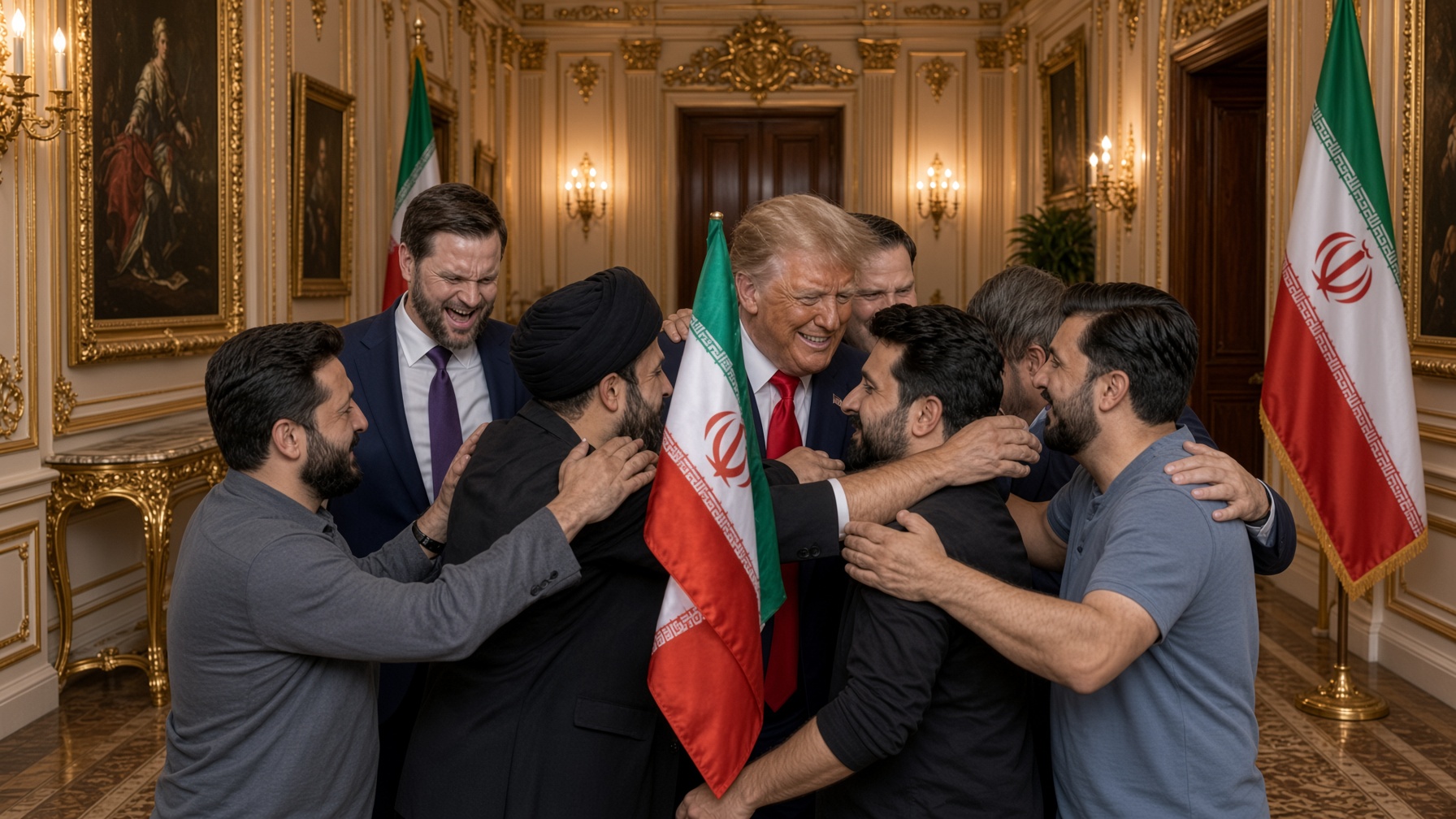
WASHINGTON — Senior Trump administration officials are engaged in high-stakes negotiations to broker a sweeping agreement ending military confrontation with Iran, pairing fragile diplomatic talks in Qatar with a formidable naval interdiction campaign across the Persian Gulf.
President Donald Trump, Vice President JD Vance, and Secretary of State Marco Rubio are directing the framework of an accord aimed at curtailing Tehran’s nuclear program and permanently restoring commercial transit through the Strait of Hormuz. Yet even as negotiators trade drafts in Doha, the diplomatic channel remains exposed to volatile tactical clashes between American carrier air wings and Iranian coastal batteries.
Speaking to reporters during an official visit to India, Rubio delivered a blunt ultimatum regarding the vital energy corridor, insisting maritime freedom will be re-established regardless of Tehran’s resistance.
“The straits have to be open, they’re going to be open,” Rubio said. “What’s happening there is unlawful, it’s illegal, it’s unsustainable for the world, it’s unacceptable.”
Rubio confirmed that Qatari-mediated indirect communications remain active, though he cautioned that securing binding terms will require grueling line-by-line negotiations.
“There were some talks going on in Qatar today, so we’ll see if we can make progress,” Rubio said. “It’ll take a few days. The president expressed his desire to make it. He’s either going to make a good deal or no deal.”
Interdiction Under Fire
While diplomats meet in Doha, American forces remain locked on a combat footing. Nearly two dozen U.S. warships—led by two carrier strike groups—alongside dozens of frontline combat aircraft, continue enforcing a tight naval cordon designed to choke off sea traffic to and from Iranian ports across the Gulf of Oman and the Arabian Sea.
The standoff escalated Monday when Iranian air defense batteries fired on U.S. strike aircraft operating near the perimeter of the blockade zone. American forces countered with precision strikes, neutralizing the mobile launchers and destroying regional radar nodes.
The exchange punctured an uneasy, six-week pause in large-scale air strikes, highlighting the fragility of negotiations conducted under live fire.
Tehran Urges Restraint
In Tehran, officials confirmed significant alignment on primary concepts while pushing back against premature assertions of a finalized pact.
Iranian Foreign Ministry spokesman Esmaeil Baqaei noted that envoys have narrowed technical divisions, but accused Washington of introducing shifting parameters late in the process.
“It is correct to say that we have reached a conclusion on a large portion of the issues under discussion,” Baqaei said. “But to say that this means the signing of an agreement is imminent—no one can make such a claim.”
Core Pillars of the Draft Accord
Diplomatic sources indicate the proposed settlement rests on three reciprocal commitments:
-
Maritime Security: Iran must remove coastal minefields, withdraw fast-attack swarms, and guarantee unhindered transit through Hormuz. In exchange, the U.S. Navy will terminate its blockade in the Gulf of Oman.
-
Nuclear Restraints: Tehran must dilute enriched uranium stockpiles, cap enrichment well below weapons-grade purity, and reinstate comprehensive international inspections.
-
Economic Relief: Upon verified compliance, Washington would suspend secondary energy sanctions, unfreeze designated foreign currency reserves, and authorize monitored crude exports.
With two U.S. carrier strike groups remaining inside regional striking range, the coming days will determine whether the draft text yields a durable diplomatic off-ramp or precipitates a rapid slide back into direct conflict.