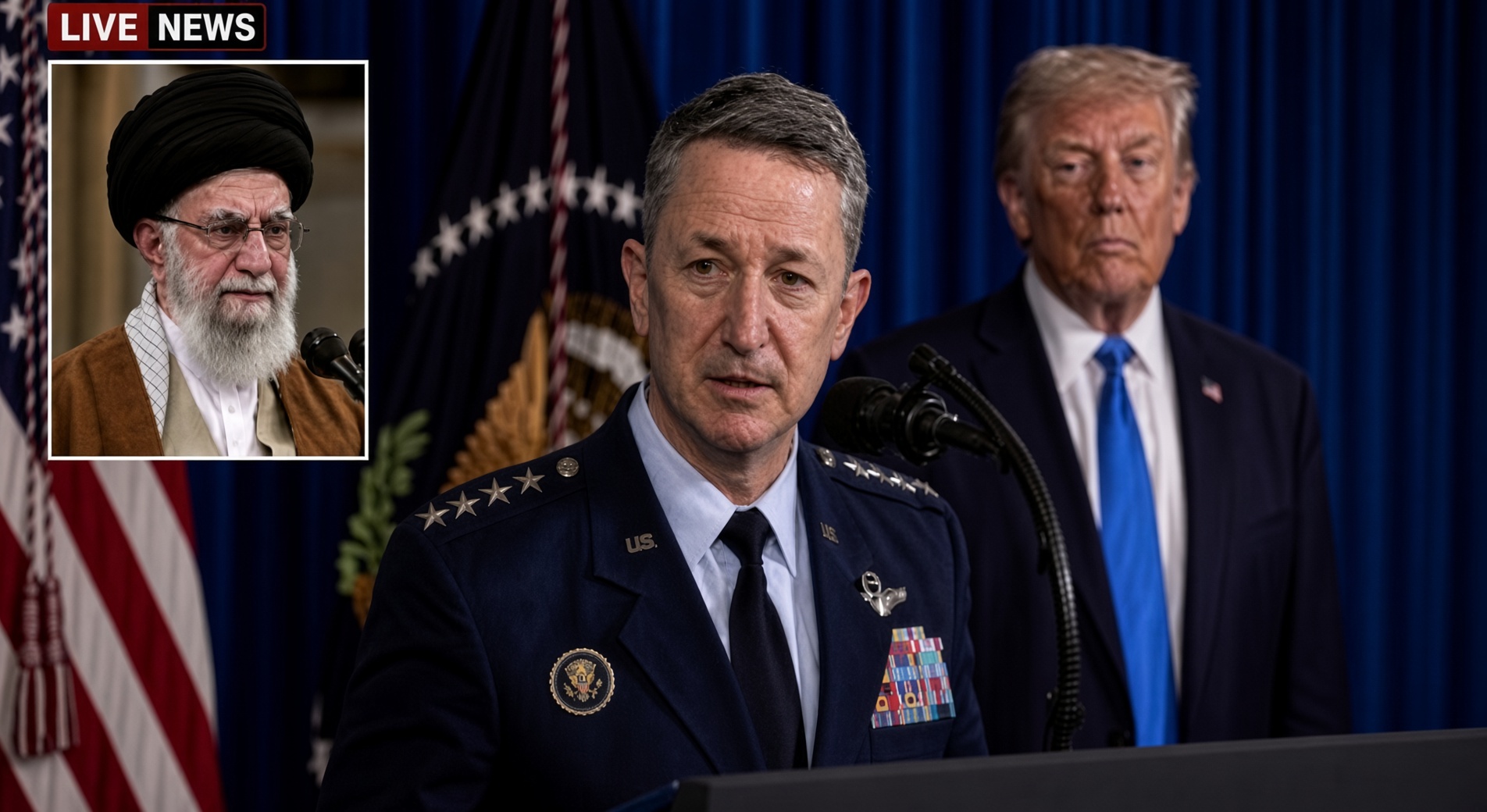
WASHINGTON — A sharp, multi-theater escalation between the United States and Iran has breached long-standing operational guardrails, following an Iranian ballistic missile barrage aimed at American installations in the Middle East that triggered direct, large-scale coalition counterstrikes across Iraq and deep inside sovereign Iranian territory.
The confrontation erupted on July 28 when the Islamic Revolutionary Guard Corps (IRGC) fired a salvo of medium-range ballistic missiles directly from launch sites inside Iran. Defense officials described the launch as an attempted saturation strike designed to overwhelm forward U.S. positions. American integrated air-defense networks, anchored by Patriot and Terminal High Altitude Area Defense (THAAD) batteries, engaged and neutralized the inbound threats. While regional U.S. forces reported no operational casualties, installations across the region immediately transitioned to maximum defensive postures.
The intercepted barrage catalyzed an immediate, multi-axis military response by American and partner forces, signaling a shift from protracted proxy friction to direct state-on-state confrontation.
Hours after the missile launches, U.S. Central Command, in coordination with the Royal Saudi Air Force, launched joint precision airstrikes across eastern Iraq. Fighter squadrons struck logistics conduits, weapons stockpiles, and command nodes operated by paramilitary groups acting under the operational direction of the IRGC’s expeditionary Quds Force.
Defense officials framed the Iraq sorties as a necessary response to an acute operational surge: over the preceding 72 hours, Iran-aligned militias had launched more than 30 one-way attack drones toward coalition installations and critical Saudi energy infrastructure. The joint missions highlighted an accelerating operational convergence between Washington and Riyadh, where defense planners remain acutely focused on protecting Gulf oil facilities against cruise missile and unmanned aerial system vectors.
CENTCOM communiqués noted that Iran-backed militias in Iraq had attempted more than 600 strikes against American bases, diplomatic facilities, and logistical convoys between February and April 2026 alone, highlighting the relentless operational friction confronting forward-deployed personnel.
The escalatory spiral crossed a far more consequential threshold on July 29, when CENTCOM confirmed that U.S. naval and air assets had conducted a wide-ranging series of kinetic strikes against high-priority IRGC infrastructure inside Iran itself.
According to military disclosures, the strike packages targeted three critical capability clusters:
-
Long-range early-warning radar arrays and integrated surface-to-air missile batteries.
-
Hardened underground storage facilities for ballistic missiles and specialized drone fabrication hangars.
-
Coastal surveillance outposts, anti-ship cruise missile launch complexes, and naval command posts along the Persian Gulf littoral.
CENTCOM stated the cross-border strikes aimed to degrade Tehran’s capacity to menace international shipping, regional security partners, and deployed coalition forces. The operation bypassed traditional indirect pressure points, landing heavy kinetic blows on Iran’s domestic military footprint.
The confrontation is unfolding across an interconnected theater spanning the Mesopotamian basin, the Yemeni interior, and critical maritime corridors. The Strait of Hormuz, through which roughly 20 percent of global petroleum flows, remains the conflict’s most vulnerable flashpoint. Any sustained naval interdiction, sea-mine deployment, or kinetic clash within the passage carries immediate implications for maritime insurance premiums, crude benchmarks, and international supply chains.
Further complicating the maritime battlespace, Iran-aligned Houthi forces in Yemen have coordinated anti-ship missile volleys and long-range drone launches across the Red Sea and Gulf of Aden. This dispersed threat environment forces U.S. and allied naval groups to spread air-defense magazines across vast swathes of open water, linking localized skirmishes into a cohesive theater-wide campaign.
For Washington, the late-July exchanges highlight the precarious challenge of restoring deterrence against direct state attacks without sparking an unconstrained regional conflict. For Tehran, direct strikes on domestic military hubs challenge the core credibility of its defense posture and regional network.
As both capitals recalibrate their operational thresholds, military analysts caution that the margin for error has diminished substantially. With air defenses on hair-trigger alerts and vital energy arteries exposed, the conflict continues to test the outer limits of strategic deterrence across the Middle East.