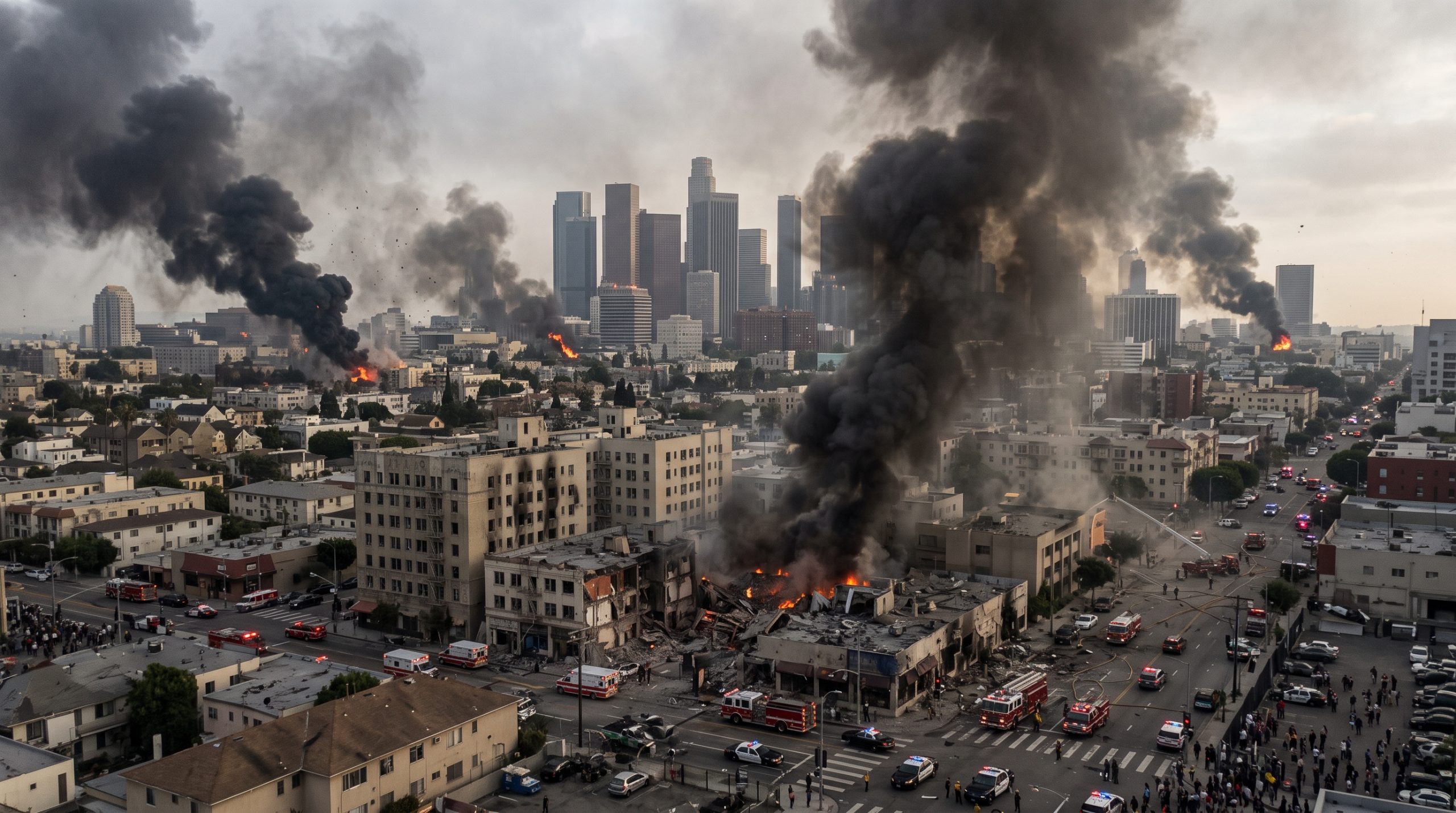
LOS ANGELES — A barrage of rockets struck several neighborhoods across Los Angeles without warning, triggering large explosions, fast-moving fires, and widespread casualties in both residential and commercial zones. Emergency search and rescue units deployed across multiple districts as dense smoke rose over heavily damaged city blocks.
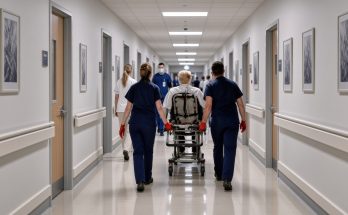
Local authorities confirmed fatalities shortly after the strikes, though an exact death toll has not yet been established. Scores of victims were rushed to nearby emergency rooms suffering from blast-force trauma, severe burns, shrapnel wounds, and severe smoke inhalation. Hospitals across the region shifted into mass-casualty protocols to manage the sudden surge of injured patients.
Sudden Blasts and Rapid Destruction
Eyewitnesses reported hearing high-pitched whistling sounds moments before detonations ripped through structural targets across multiple city blocks. The impacts shattered windows for miles, shook multi-story buildings, and ignited secondary fires that quickly engulfed nearby structures, prompting panic as civilians fled their homes and offices into smoke-filled streets.
First responders arrived on scene within minutes of the initial impacts, encountering severe operational hurdles. Roadways were choked with concrete debris, downed power lines, and burned-out vehicles, impeding heavy emergency apparatus. Search and rescue crews, alongside urban structural specialists, began clearing debris by hand and using specialized listening equipment to locate individuals trapped beneath collapsed buildings.
Firefighting personnel concentrated their efforts on containing volatile blazes threatening intact residential complexes. Public safety officials warned the public of secondary hazards, including unexploded ordnance and structurally compromised facades at risk of immediate collapse. Authorities issued urgent shelter-in-place directives, instructing civilians outside the blast perimeters to remain indoors and avoid all major transit corridors to ensure uninhibited access for emergency vehicles.
Relief Operations and International Reaction
International monitors, humanitarian organizations, and disaster relief groups quickly condemned the violence and began mobilizing emergency aid. Aid agencies are coordinating logistics to deliver critical medical supplies, temporary emergency housing, trauma therapy, and water supplies to hundreds of displaced families.
At the neighborhood level, volunteer networks and mutual-aid groups established impromptu staging centers at surviving community centers, distributing water, food, and basic necessities to displaced residents.
Emergency operations officials warned that casualty figures are expected to rise as tactical teams systematically enter the most severely impacted collapse zones. Investigations into the launch origin and trajectory of the weaponry remain active, with regional and federal agencies securing perimeters across the affected areas.