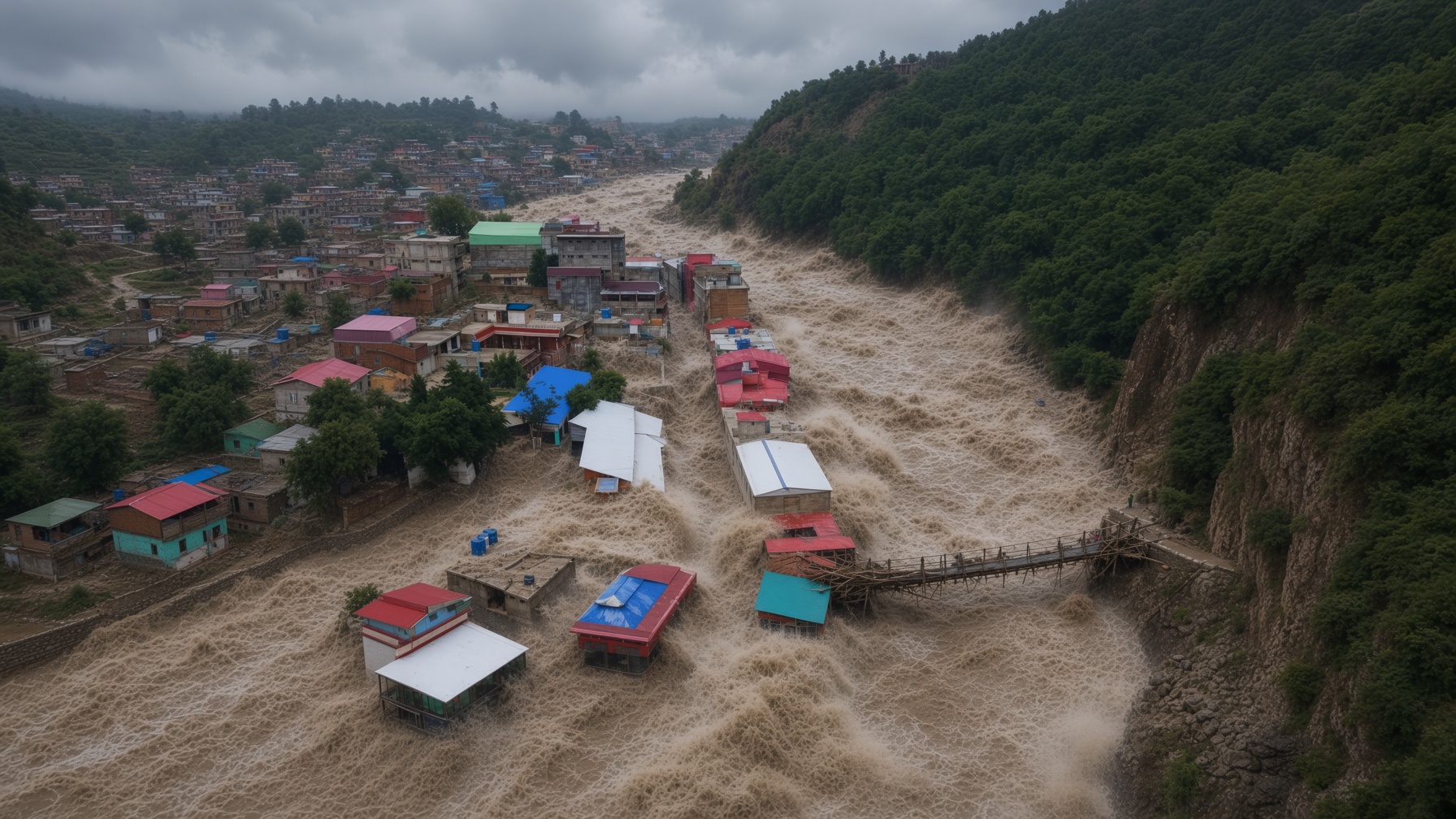
A sudden collapse of ice and rock high on Langtang Lirung sent a torrent of water, mud and debris racing through Himalayan valleys on Aug. 26, killing hundreds of people in Nepal and leaving more than 1,000 missing across the Nepal-China border.
The flood struck Wednesday morning along the Bhote Koshi and Lhende Khola river systems in Nepal’s Rasuwa and neighboring districts, then surged south toward the Trishuli valley. Scientists say a massive ice-and-rock avalanche on the mountain’s north face, at roughly 17,000 feet, produced a high-speed debris flow that overwhelmed settlements with little warning. Satellite images later showed rivers widened and buried under thick sediment.
Nepalese authorities reported at least 359 bodies recovered by Thursday evening, with later tallies rising above 390 and some Friday updates placing the Nepal death toll near 469. Chinese officials confirmed three deaths in Tibet’s Gyirong County. The numbers remain fluid as crews reach isolated stretches of the valley.
Hundreds of foreign tourists and pilgrims were among those unaccounted for. Nepal listed roughly 910 people missing, including more than 500 foreigners from more than 30 countries—chiefly India, the United States, Australia, Britain, Canada and Malaysia. Many were traveling toward Mount Kailash in Tibet or the Gosainkunda area. In Gyirong, Chinese state media reported 558 missing, including about 260 foreign nationals. The U.S. State Department said it was tracking Americans believed to have been in the affected zone.
The flood destroyed homes, washed out dozens of bridges and roughly 25 miles of road, damaged hydropower plants and severed the Rasuwagadhi-Gyirong border crossing. Communications and power failed in several hard-hit communities. On the Tibetan side, Gyirong Port suffered heavy damage, complicating cross-border coordination.
Nepalese Army helicopters have plucked more than 100 people from isolated slopes and ferried the injured to Kathmandu. Tens of thousands of soldiers, police and emergency workers have been deployed. Rescue work remains hazardous: roads are gone, slopes are unstable, and debris has dammed sections of the rivers, creating new lakes that officials on both sides warn could burst.
Authorities have urged residents along the Bhote Koshi, Trishuli and Narayani rivers to stay away from banks. Recovery, they say, will take months. For families in Nepal and abroad, the immediate task is still locating those who have not been found.