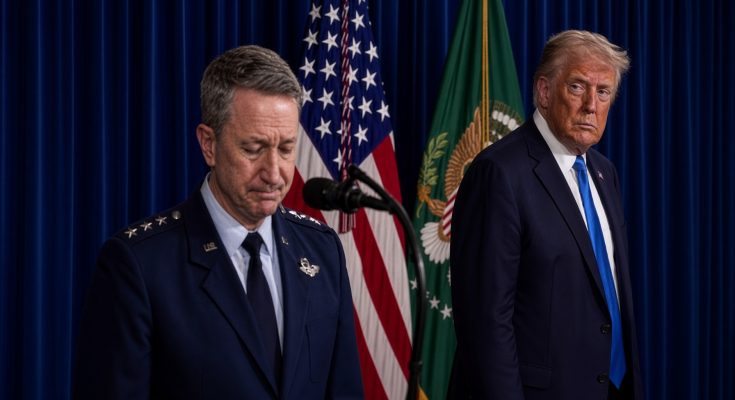
WASHINGTON — The conflict between the United States and Iran intensified after Iran’s Islamic Revolutionary Guard Corps launched multiple ballistic missiles toward U.S. forces in the Middle East, triggering a rapid military response and expanding the confrontation across the region.
According to the U.S. Central Command, the Iranian missiles were launched from Iran on July 28 in what American officials described as an attempted surprise attack against U.S. forces. CENTCOM said all of the missiles were intercepted and that American troops remained on heightened alert.
The missile attack was followed by U.S. strikes against Iranian military targets, while American and Saudi forces separately carried out coordinated strikes against Iran-aligned groups in Iraq.
🇺🇸 U.S. Responds With Strikes on Iranian Targets
CENTCOM said U.S. forces conducted a major wave of strikes against dozens of Islamic Revolutionary Guard Corps targets in Iran on July 29.
The targets included military command centers, missile and drone facilities, coastal surveillance and defense installations, and maritime capabilities. U.S. officials said the operation was intended to reduce threats against American personnel, commercial shipping and neighboring Gulf countries.
The strikes came after weeks of increasingly direct military exchanges involving U.S. and Iranian forces.
🇸🇦 U.S. and Saudi Forces Target Iran-Aligned Groups in Iraq
At the same time, U.S. and Saudi forces conducted coordinated airstrikes against Iran-aligned militant groups in eastern Iraq.
Reuters reported that the operation targeted groups that the U.S. military said were directed by Iran’s Revolutionary Guard and had been involved in attacks against American forces and Saudi energy infrastructure.
The operation marked a significant development in the regional conflict, bringing Saudi forces into publicly acknowledged joint military action with the United States against Iran-backed groups.
🌍 Conflict Spreads Across the Region
The latest escalation demonstrates how the confrontation extends well beyond direct U.S.-Iran exchanges.
Iran-aligned armed groups have operated in several countries across the Middle East, while attacks involving missiles and drones have increasingly threatened U.S. personnel, regional infrastructure and commercial shipping.
CENTCOM said more than 50,000 U.S. service members were operating across the Middle East and remained prepared for additional threats.
The expanding military activity has also raised concerns about the security of critical waterways and energy infrastructure, particularly the Strait of Hormuz, a major global shipping route.
⚠️ Risk of Further Escalation
The latest exchange adds another dangerous chapter to the confrontation between Washington and Tehran.
With U.S. forces conducting operations against Iranian military targets, Iran launching attacks against American positions and Iran-aligned groups remaining active across the region, the possibility of additional retaliation remains a major security concern.
Diplomatic efforts continue alongside military operations, but the latest missile launches and retaliatory strikes underscore how quickly tensions can escalate across multiple fronts.
For the United States, Saudi Arabia and other regional partners, the immediate focus remains protecting military personnel, infrastructure and commercial shipping while attempting to prevent the conflict from