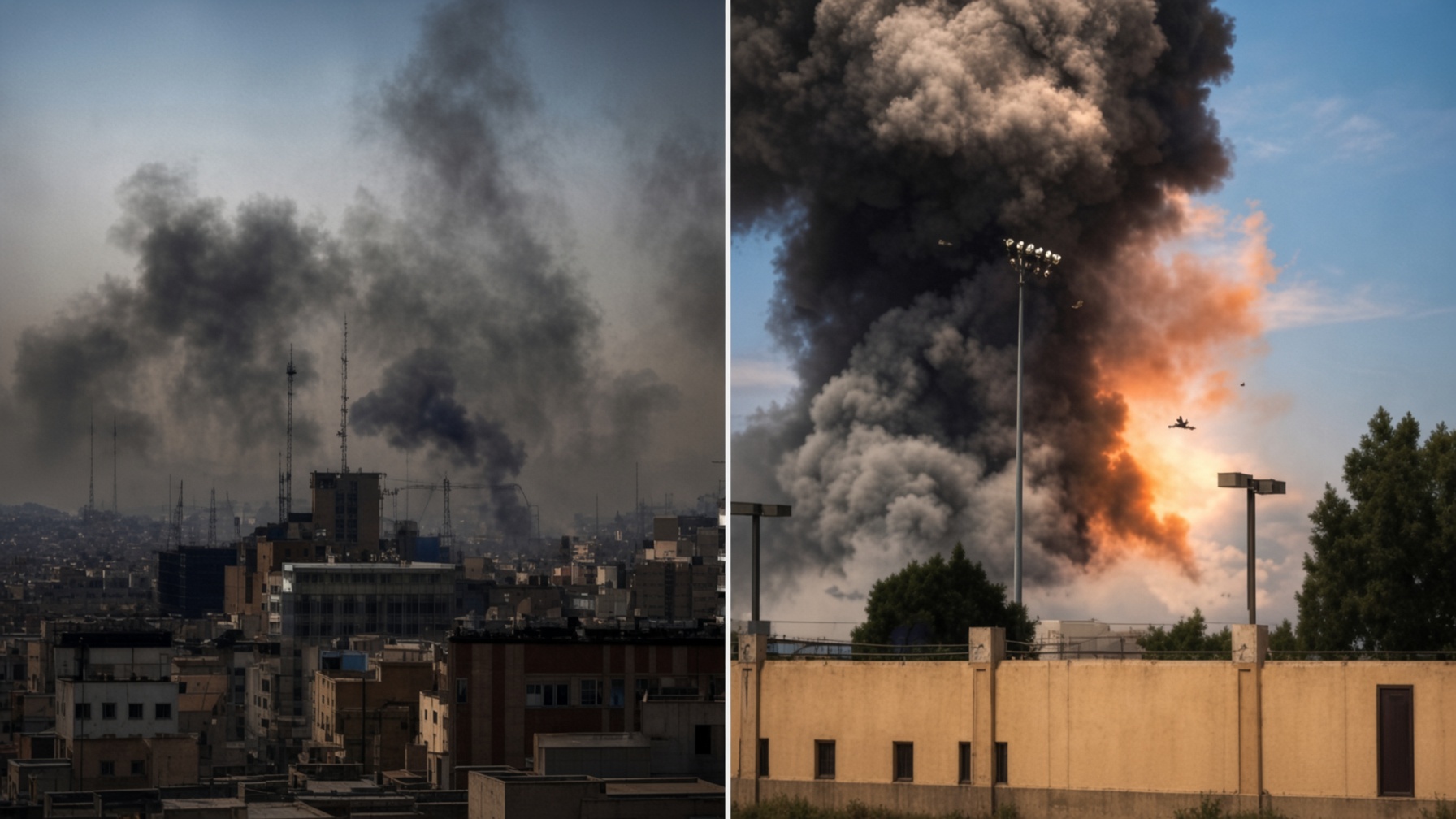
WASHINGTON — Iran’s retaliatory missile and drone campaign against American and allied military positions has widened the security crisis around the Persian Gulf, with strikes reported at U.S.-linked facilities in Bahrain, Kuwait, Qatar, the United Arab Emirates and other countries that host American forces.
The attacks followed the broader U.S.-Israeli campaign against Iranian targets that began in February 2026. Since then, Tehran has repeatedly launched missiles and one-way attack drones at installations used by U.S. troops and regional partners. Gulf governments have raised alert levels as concerns grow over forward-deployed forces, airfields, fuel sites and commercial shipping routes near the Strait of Hormuz.
Among the most frequently cited targets is Al Dhafra Air Base in the UAE, a hub for U.S. air operations, surveillance and reconnaissance. Iranian officials have claimed drone strikes against radar sites and areas used by American personnel at Al Dhafra and Al Minhad. Those claims form part of Tehran’s continuing retaliatory narrative; U.S. officials have often said incoming threats were intercepted or caused limited damage.
Bahrain, home to Naval Support Activity Bahrain and the headquarters of the U.S. Navy’s Fifth Fleet, has also come under repeated attack. Iran has claimed strikes on U.S.-linked sites including Sheikh Isa Air Base. Bahraini authorities have reported intercepting aerial threats and, in some waves, damage to civilian structures away from fleet headquarters.
Kuwait has been another focal point. Iranian forces have claimed attacks on Ali Al Salem Air Base, Camp Arifjan, Camp Doha and Camp Udairi. Some Iranian accounts of destroyed equipment and casualties have not been independently verified. Separate reporting and satellite imagery, however, have documented damage at multiple U.S. locations in the country.
The scale of the campaign became clearer in May, when a Washington Post analysis of satellite imagery found damage to at least 228 structures or pieces of equipment at U.S. military sites across the region. The review identified hits on hangars, barracks, fuel facilities, aircraft, radar, communications gear and air-defense systems at sites in Kuwait, Bahrain, Qatar, the UAE and elsewhere.
A later Pentagon inspector general assessment covering operations through June found that Iranian attacks damaged or destroyed hundreds of buildings at American bases in eight countries: Kuwait, Bahrain, Qatar, the UAE, Saudi Arabia, Iraq, Oman and Jordan. The same report described losses of aircraft and drones and disruptions to U.S. logistics, including the need to shift supply lines to more distant hubs. It also cited about $184 million in damage to U.S. diplomatic facilities in Iraq, Kuwait, Saudi Arabia and the UAE.
Host governments have repeatedly activated air defenses and issued public warnings. The fighting has disrupted aviation, raised insurance and shipping costs, and added volatility to energy markets because so much oil and gas still moves through the Strait of Hormuz.
Iran presents the strikes as retaliation for U.S. operations. Washington and its partners emphasize missile defense, force protection and the defense of critical infrastructure. The core risk remains that another wave of attacks could spill beyond military sites and pull more capitals deeper into the war.
For U.S. forces across the Gulf, the campaign has shown both the reach of Iranian missiles and drones and the necessity of layered air defenses. For regional governments, it has underscored the cost of hosting foreign troops during an active conflict. With operations continuing and diplomacy uncertain, further strikes could affect military logistics, civilian infrastructure, commercial shipping and energy markets well beyond the immediate battlefield.