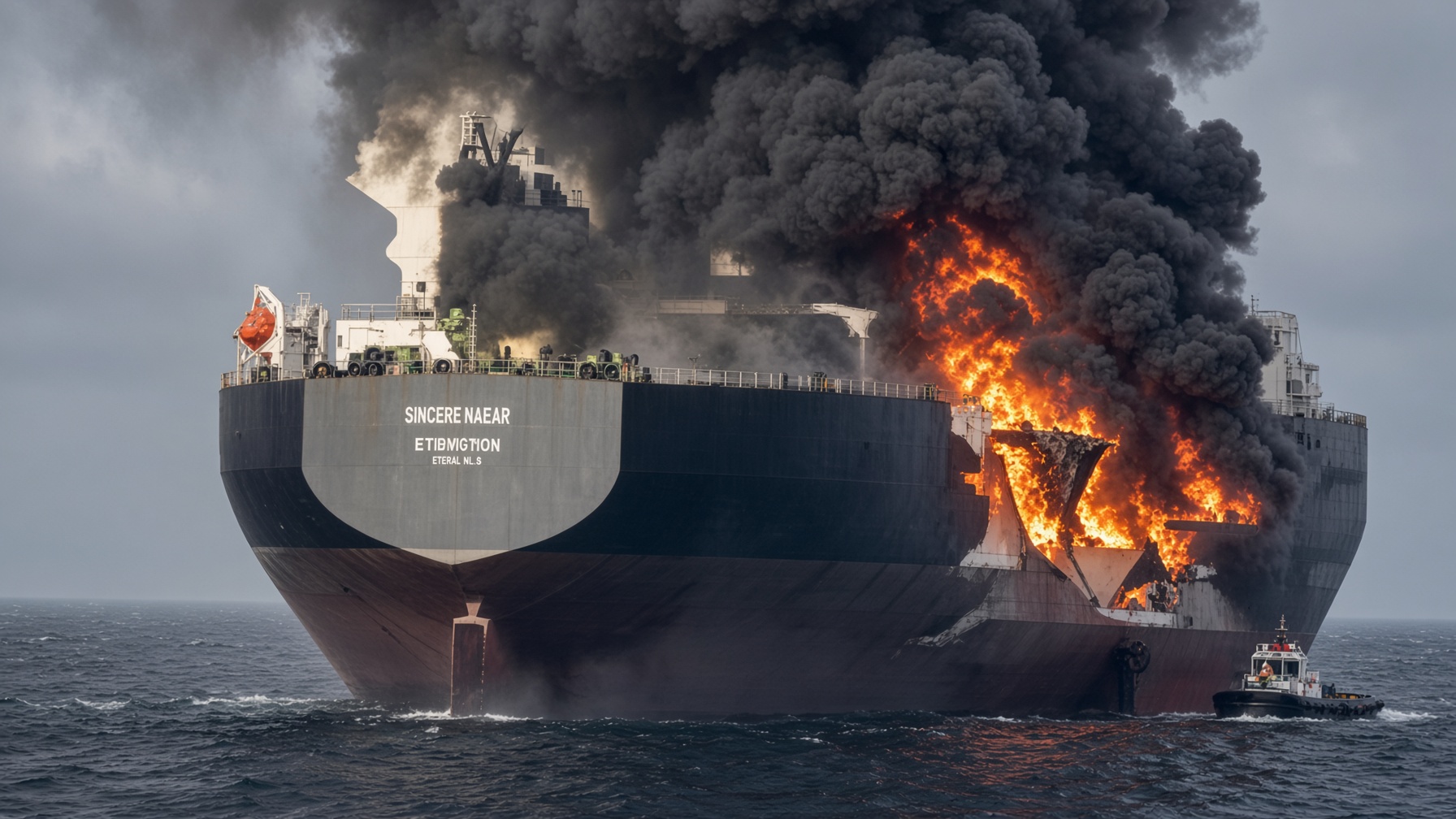
WASHINGTON — A U.S. Navy guided-missile destroyer disabled an Iranian-flagged cargo vessel in the north Arabian Sea on April 19, 2026, after the ship ignored repeated warnings and continued toward an Iranian port in violation of a U.S. naval blockade, U.S. Central Command said.
The incident involved the Arleigh Burke-class destroyer USS Spruance (DDG 111) and the Iranian-flagged M/V Touska, a commercial cargo ship associated with the sanctioned Islamic Republic of Iran Shipping Lines. CENTCOM said the Touska was transiting at about 17 knots and heading for Bandar Abbas when American forces intercepted it.
U.S. forces issued multiple radio warnings over roughly six hours, informing the crew that the voyage violated the blockade of Iranian ports that had begun days earlier. The vessel did not change course.
After the warnings failed, Spruance ordered the Touska’s crew to evacuate the engine room. The destroyer then fired several rounds from its 5-inch MK 45 naval gun into the engine compartment, disabling the ship’s propulsion and stopping it from reaching port. Later reporting indicated the rounds were inert projectiles intended to disable rather than sink the vessel.
CENTCOM described the action as “deliberate, professional, and proportional.” Footage released by the command showed the Spruance operating close to the cargo ship during the confrontation and captured the radio warning directing the crew to vacate the engine room before disabling fire.
Marines from the 31st Marine Expeditionary Unit then boarded the disabled ship, rappelling from helicopters after departing the amphibious assault ship USS Tripoli. The Touska was placed under U.S. custody, and a search of the vessel and its cargo began.
The seizure was the first time U.S. forces used disabling fire to enforce the blockade. CENTCOM said 25 other commercial vessels had already been directed to turn around or return toward Iranian ports since the operation started. The Touska was also under U.S. sanctions.
The confrontation occurred amid a wider U.S.-Iran standoff in which the Strait of Hormuz and nearby sea lanes remained critical to global energy shipments. Iran condemned the boarding as unlawful. U.S. officials said the ship had ignored lawful orders and that forces escalated only after prolonged noncompliance.
The Touska case illustrated the blockade’s enforcement model: warnings first, then targeted disabling fire if a vessel refused to stop, followed by a Marine boarding party to take control. Because the target was a commercial cargo ship rather than an Iranian warship, the operation marked a significant step in maritime enforcement during an already tense period.
For the Navy, the episode became a public example of how Washington intended to police traffic bound for Iranian ports—measured at the outset, then decisive when a ship continued toward Bandar Abbas. The disabled vessel remained in U.S. custody as the search continued and regional shipping routes stayed under close watch.