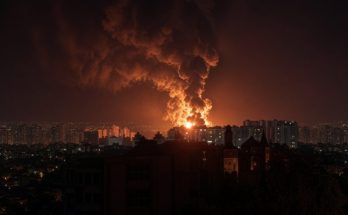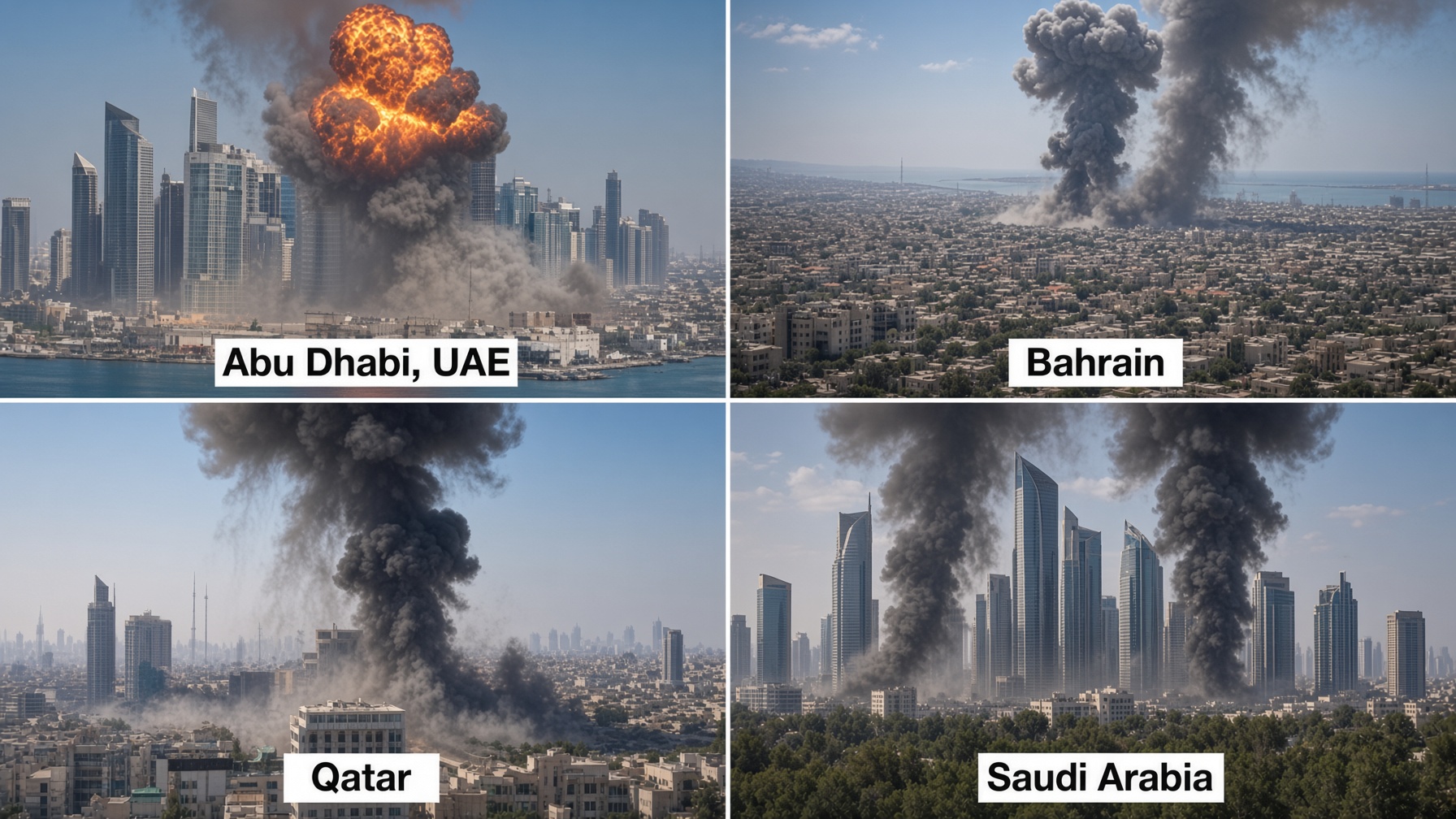
PERSIAN GULF — Iran has again fired missiles and drones at countries that host U.S. forces, turning Bahrain, Qatar, Kuwait, and the United Arab Emirates into the front line of a war that began on Feb. 28, 2026. Tehran says it is striking American bases. Gulf governments say they are intercepting incoming weapons and, in several cases, dealing with debris, fires, and civilian alerts. Independent confirmation of many Iranian “destroyed base” claims has been thin. The pattern, however, is not.
In the UAE, residents and Reuters correspondents have described loud detonations over Abu Dhabi, including near Al Dhafra and Bateen, as air defenses engaged incoming threats. Al Dhafra Air Base, west of the capital, hosts U.S. aircraft and has been named repeatedly by Iranian media. Officials have often confirmed intercepts before they confirm hits. Earlier in the war, debris and drones did reach civilian and energy sites, including a May fire at a generator outside the inner fence of the Barakah nuclear plant. That record is why each new boom over Abu Dhabi is treated as more than noise.
Bahrain sits closer to the fight. It hosts Naval Support Activity Bahrain, headquarters of the U.S. Fifth Fleet, and Sheikh Isa Air Base. Iran has claimed strikes on Juffair, Port Salman, and related radar and communications sites. Manama has sounded air-raid sirens and told residents to take cover. U.S. officials have at times called Iranian claims of damage to Fifth Fleet headquarters false after intercepts. Bahrain has also reported debris fires and civilian harm in earlier barrages. Both things can be true at once: most projectiles stopped, some still land.
Qatar’s Al Udeid Air Base is the largest U.S. installation in the region and a regular Iranian talking point. Tehran has claimed hits on command and maintenance facilities there. Doha has raised its security level, intercepted incoming missiles, and reported injuries from falling shrapnel rather than a confirmed base knockout. Qatar has also said Al Udeid is not being used to launch strikes on Iran — a distinction that has not stopped the targeting.
Kuwait’s military has said its defenses engaged ballistic missiles, cruise missiles, and one-way attack drones aimed at facilities tied to U.S. forces, including Ali Al Salem Air Base. Authorities have urged civilians to follow emergency instructions. Iran routinely claims large target lists there. Kuwait and the United States have more often reported intercepts, scattered damage, and occasional civilian or worker injuries than the wholesale destruction advertised in Tehran.
The economic risk sits in the water. The Strait of Hormuz carries a large share of seaborne oil. Months of mines, tanker attacks, and naval warnings have already cut traffic. Each new Gulf salvo raises insurance costs and the chance of another blocked cargo. Hosting U.S. forces was meant to deter Iran. In this war, those same bases have become the stated reason Iran fires at Gulf cities. The next assessment will turn on what actually hit the ground — not on the claim that everything did.