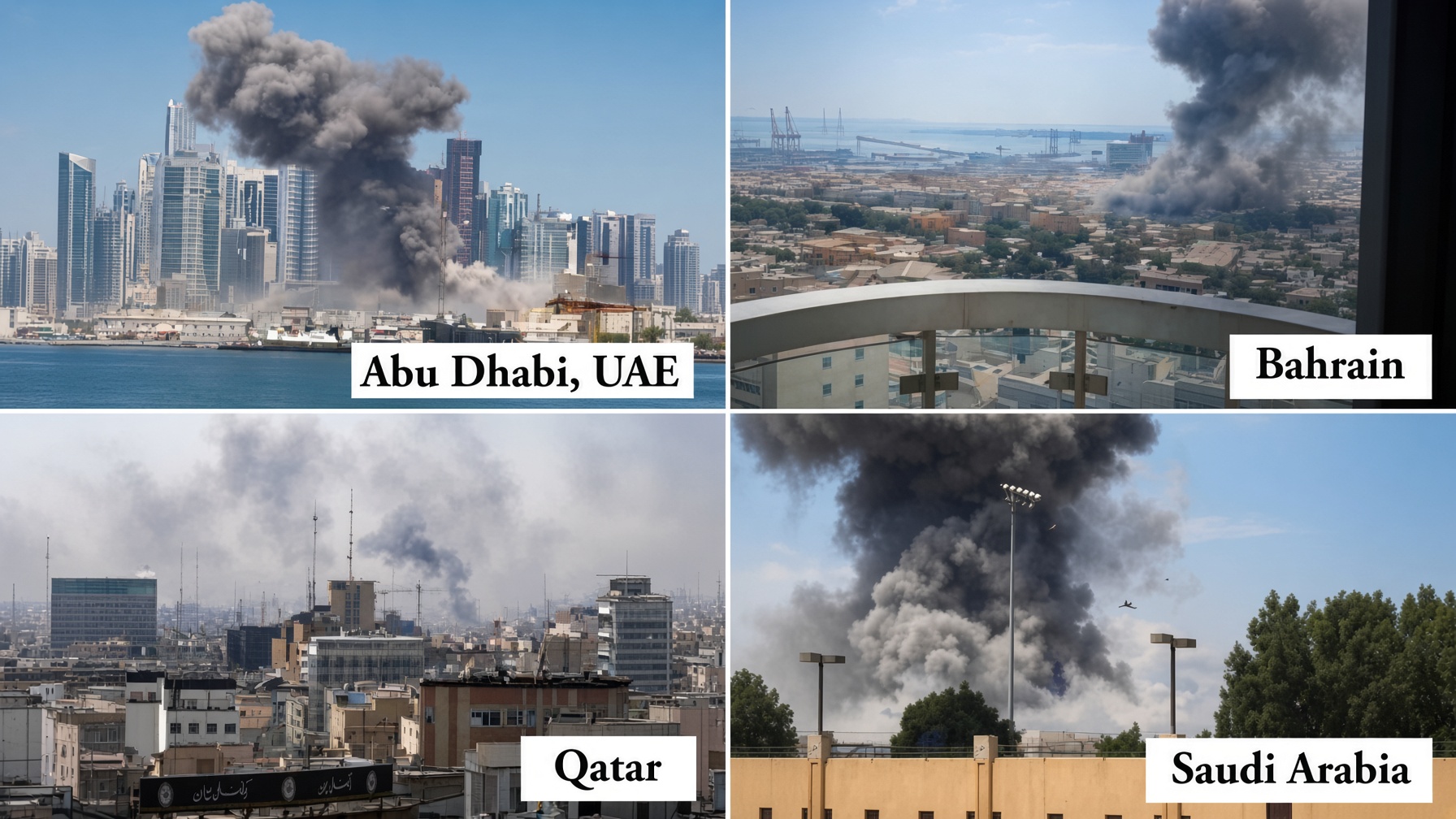
WASHINGTON — A relentless campaign of Iranian ballistic missile and one-way drone strikes targeting American military installations has significantly widened the conflict across the Persian Gulf, inflicting extensive structural damage on forward bases, straining regional alliances, and threatening global maritime trade.
Launched in retaliation for joint U.S.-Israeli operations that commenced in February 2026, Tehran’s asymmetric offensive has systematically targeted American-linked staging grounds across eight host nations: Bahrain, Kuwait, Qatar, the United Arab Emirates, Saudi Arabia, Iraq, Oman, and Jordan.
Multi-Billion-Dollar Toll on American Infrastructure
While Pentagon officials regularly highlight the efficacy of layered missile interceptors—including Patriot and THAAD batteries—the sheer volume of saturation strikes has breached defensive screens, causing substantial damage.
Independent satellite analyses and unclassified government oversight reports illustrate an unprecedented operational strain:
-
Extensive Base Damage: A Washington Post review of commercial satellite imagery confirmed hits on at least 228 structures and equipment components across the theater, damaging aircraft hangars, barracks, tactical radar arrays, communications gear, and fuel depots.
-
Inspector General Audit: A Pentagon inspector general assessment through June revealed that Iranian strikes have damaged or destroyed hundreds of buildings across eight regional countries, resulting in confirmed airframe losses, grounded surveillance drones, and forced logistical realignments to rear staging hubs.
-
Diplomatic Fallout: The report tallied an estimated $184 million in direct damage to U.S. diplomatic compounds across Iraq, Kuwait, Saudi Arabia, and the UAE.
High-Value Strategic Targets Under Siege
Across the lower Gulf, vital nodes of American power projection have faced sustained alerts:
-
United Arab Emirates: Tehran has repeatedly targeted Al Dhafra Air Base—the premier hub for U.S. aerial surveillance, refueling, and combat sorties—claiming strikes against advanced radar networks, alongside attacks near Al Minhad.
-
Bahrain: Naval Support Activity Bahrain, the operational headquarters of the U.S. Navy’s Fifth Fleet, remains a focal point. While interceptors have neutralized numerous inbound salvos aimed at fleet installations and Sheikh Isa Air Base, falling debris has damaged nearby commercial and civilian structures.
-
Kuwait: Ground logistics have absorbed intense pressure, with confirmed damage reported across Ali Al Salem Air Base, Camp Arifjan, Camp Doha, and Camp Udairi, severely complicating ground resupply chains.
Economic Crosscurrents and Alliance Friction
The escalating campaign has forced Gulf host nations to confront the steep geopolitical costs of garrisoning foreign troops during active hostilities. Sovereign air defense networks are repeatedly engaged, domestic air travel faces recurring ground stops, and soaring maritime war-risk premiums have disrupted container and tanker traffic traversing the vital Strait of Hormuz.
With critical hydrocarbon transit routes directly exposed to coastal battery crossfire, energy markets remain highly sensitive to regional volatility.
As Washington bolsters force-protection measures and regional partners reassess their defense postures, the strategic dilemma deepens: with diplomatic off-ramps constrained, each successive salvo increases the peril that collateral damage could trigger a wider, uncontrolled theater war.