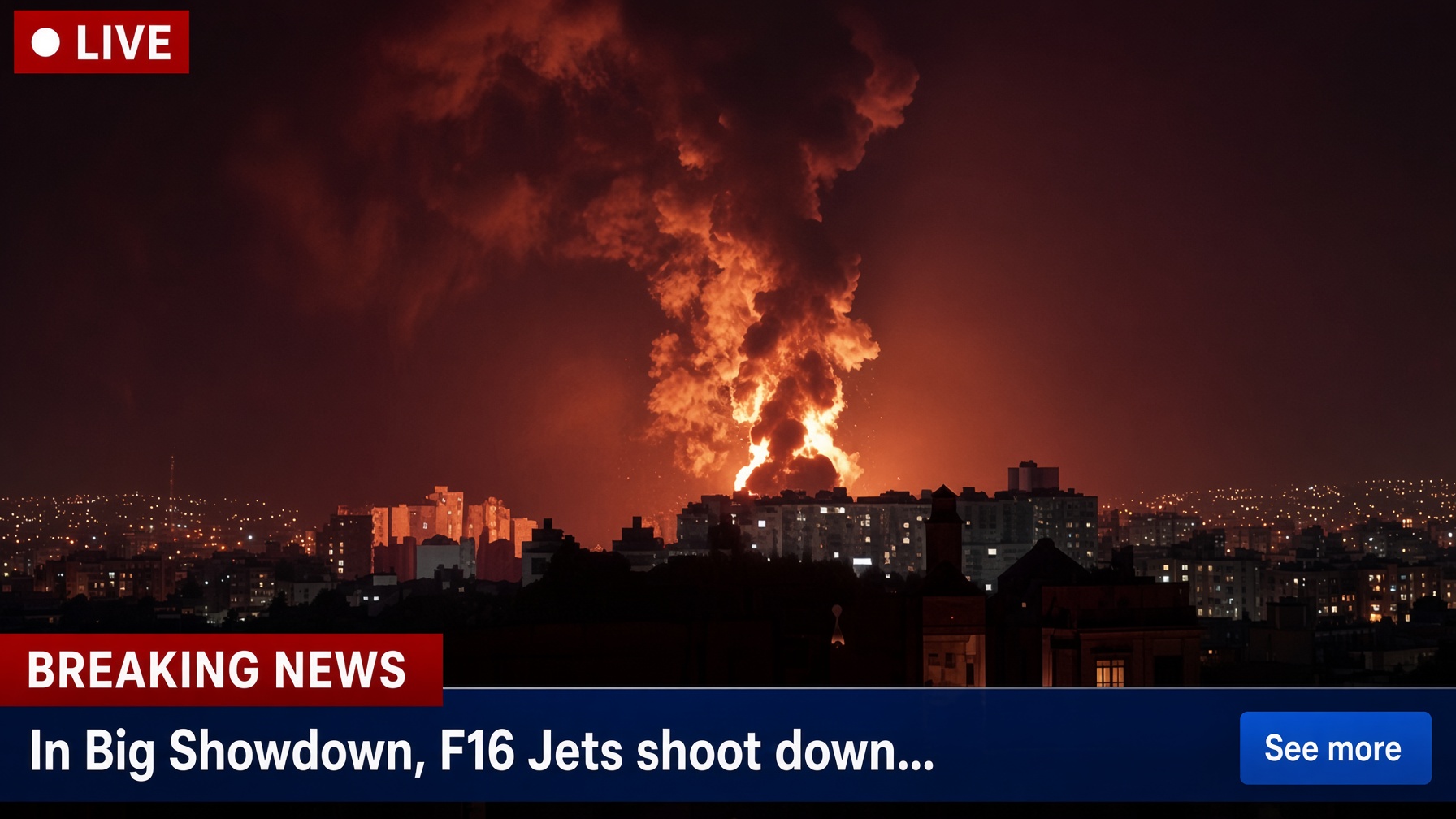
BUCHAREST — The Romanian military launched fighter jets and deployed specialized bomb-disposal teams after an explosive-laden unmanned surface vessel was intercepted drifting within striking distance of the country’s flagship offshore natural-gas project in the Black Sea.
The incident unfolded roughly 80 nautical miles east of Constanța inside Romania’s exclusive economic zone. A commercial vessel first spotted the drone just several hundred meters from the Neptun Alpha drilling platform, prompting emergency defensive protocols across Romanian defense commands.
Air Interception and Ordnance Neutralization
Recognizing the immediate threat to personnel and critical energy infrastructure, the Romanian Air Force dispatched two F-16 Fighting Falcons to monitor and engage the target.
During the aerial interception, one of the fighters strafed the unmanned surface vessel with onboard autocannon fire. The strikes damaged the craft, though it remained afloat. A Romanian Coast Guard cutter transporting a specialized Naval Forces Explosive Ordnance Disposal (EOD) unit was subsequently deployed to intercept the disabled drone.
Upon closer inspection, military specialists confirmed that the vessel was rigged with an active explosive payload capable of catastrophic detonation. EOD operators neutralized the charge on-site. The Ministry of National Defence confirmed that no casualties or structural damage to the drilling platform occurred.
Key Incident Details
| Parameter | Details |
| Location | ~80 nautical miles east of Constanța (Neptun Deep field) |
| Target Proximity | Several hundred meters from the Neptun Alpha platform |
| Air Response | 2× Romanian Air Force F-16 fighter jets (cannon engagement) |
| Naval Response | Romanian Coast Guard cutter & Naval Forces EOD unit |
| Vessel Payload | High-explosive warhead (neutralized safely) |
| Casualties / Damage | None reported |
Mystery Surrounds Maritime Incursion
The episode underscores the expanding operational hazards confronting NATO’s southeastern frontier, where naval operations linked to Russia’s ongoing war against Ukraine increasingly endanger commercial corridors and energy platforms.
Romanian Defense Minister Radu Miruță confirmed direct communication with Kyiv, stating that Ukrainian defense officials explicitly denied operating the weaponized maritime drone. Moscow has issued no public comment or claim of responsibility. Romanian intelligence and naval investigators are currently examining the wreckage to determine the vessel’s propulsion systems, origin point, and intended target trajectory.
This marks the latest in a troubling cluster of security incidents around the field. Earlier in the month, Romanian naval divers destroyed two unmanned craft identified as “Gerbera-type” systems drifting in the perimeter of the same project.
Guarding NATO’s Energy Hub
The Neptun Deep deepwater field—a joint venture between Austrian energy giant OMV Petrom and state-owned Romgaz—serves as the centerpiece of Romania’s long-term energy transition. Scheduled to begin natural-gas extraction in 2027, the offshore reserve is anticipated to turn Romania into the European Union’s largest natural-gas producer, drastically blunting regional dependence on Russian fuel.
Following the close call, Romanian President Nicușor Dan urged heightened vigilance across maritime surveillance units. Military patrols around the Neptun Deep perimeter have been reinforced, with joint naval and air assets actively tracking surface radar contacts throughout the volatile maritime corridor.