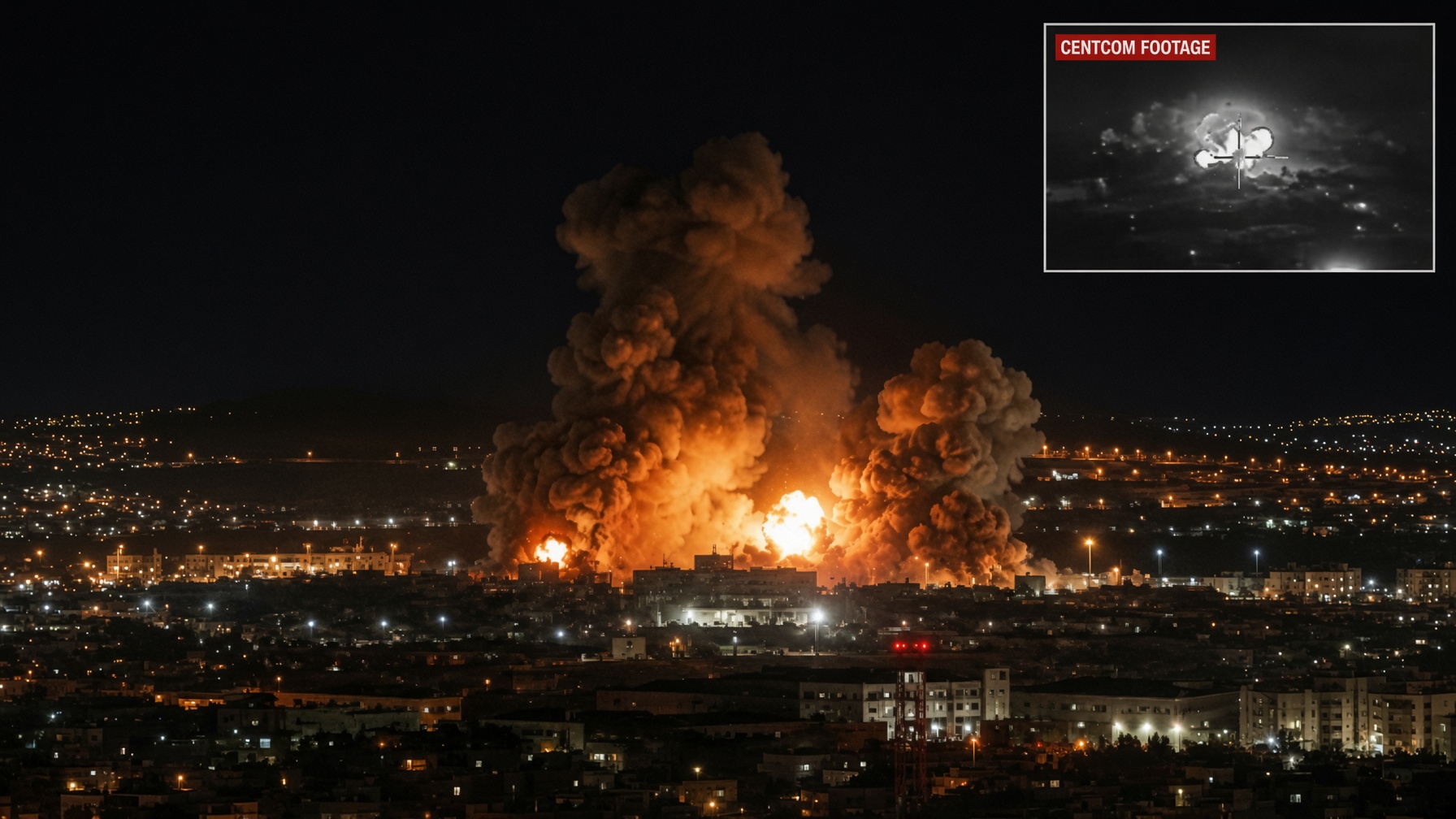
WASHINGTON — The U.S. military’s campaign against Iranian military targets has entered a seventh consecutive night, with U.S. Central Command releasing new footage that it says documents the latest phase of operations across the region.
According to CENTCOM, American forces have struck a range of Iranian military capabilities, including surveillance and intelligence facilities, logistics networks, underground weapons-storage locations and maritime assets. U.S. officials say the objective is to degrade Iran’s ability to conduct military operations and project power across the Middle East.
Footage released by the military shows U.S. aircraft operating during the campaign, along with precision strikes and elements of the planning and execution of the operation. American officials have maintained that the strikes are directed at military and strategic targets rather than civilian infrastructure, while independent assessments of the damage and potential civilian impact continue.
The sustained operation represents another major escalation in an increasingly dangerous confrontation between Washington and Tehran. Military analysts say the continued strikes demonstrate the scale of the American campaign while raising concerns that the conflict could eventually expand beyond its current scope.
Iranian officials have strongly condemned the attacks, accusing the United States of violating Iranian sovereignty and international law. Tehran has warned that continued U.S. military action could trigger retaliation, increasing fears of a broader regional confrontation.
Governments across the Middle East are closely watching the developments and reviewing security measures. Authorities have increased surveillance, strengthened emergency-response preparations and urged restraint as they assess the possibility of further escalation.
The conflict is also generating concern over critical regional infrastructure. Any expansion of hostilities could threaten commercial shipping routes, energy facilities and aviation networks, potentially producing economic consequences well beyond the immediate battlefield.
At the same time, diplomatic efforts remain underway. International governments and organizations have called on both Washington and Tehran to exercise restraint and pursue diplomatic channels to prevent the confrontation from developing into a wider war.
U.S. defense officials continue to assess the effectiveness of the campaign while monitoring Iranian military activity and potential threats to American personnel and regional partners.
With military operations continuing alongside diplomatic efforts, the confrontation remains highly fluid. The coming days could prove critical as Washington weighs its next steps and Tehran considers how — and whether — to respond.
For governments across the region and markets around the world, the central question remains the same: Will the escalating campaign remain limited, or could it trigger a much larger conflict?