WASHINGTON — Donald Trump Jr. does not hold office. He still occupies a lane in Republican politics that many elected officials would envy: a direct line to the MAGA base, a role in who gets close to power, and a media operation that does not depend on a briefing room.
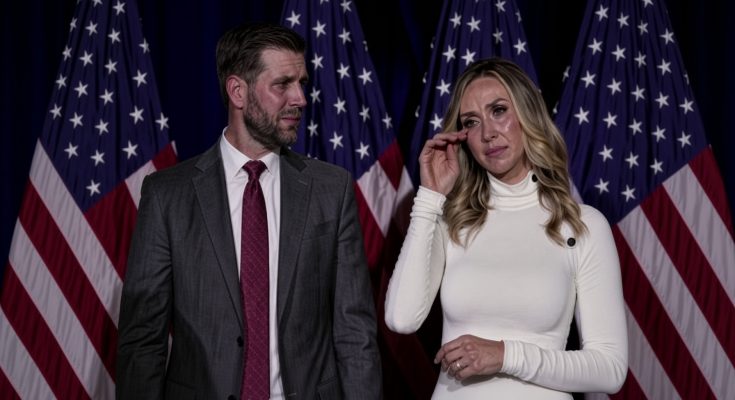
The president’s eldest son built that position through rallies, fundraising, endorsements and a running argument with both Democrats and the Republican establishment. The 2024 campaign and the handoff into a second Trump term made the arrangement visible. He was named an honorary chair of the Trump-Vance transition, with his brother Eric Trump and other senior allies. The job was informal by design. It still put him in the room where names were weighed for loyalty and fit.
A media operation, not a portfolio
Most of his reach is not bureaucratic. It is audience. He has a large following on social platforms and a regular presence on conservative television and podcasts. *Triggered With Don Jr.* made him a familiar voice to people who already speak the movement’s language. He has also pushed politics toward the rooms traditional news does not own. In 2024 he urged his father onto podcasts aimed at younger listeners, a bet that independent hosts now move votes the networks used to move.
The style is consistent: commentary mixed with attacks on Democrats and on Republicans he treats as insufficiently aligned. That mix keeps activists listening. It also keeps him useful to candidates who want a crowd that does not arrive through a party committee.
Campaigns and Vance
Trump Jr. has stumped for Republicans besides his father. The most consequential of those relationships is with J.D. Vance. He backed Vance’s 2022 Senate run in Ohio, then argued for him as running mate in 2024. At the Republican National Convention in Milwaukee that July, Trump Jr. spoke in prime time before Vance accepted the nomination — a family-and-allies tableau as much as a speech.
Endorsements and appearances have also tied him to House and Senate hopefuls and to the donor class that funds them. Influence, in this model, is a circuit: the base hears him, candidates want him, donors notice, and the next invite arrives.
Power off the org chart
He has said he does not want a formal job in the administration. During the transition he described a different assignment: help keep people he considers unfit or disloyal out of important posts. That is gatekeeping without a commission. It leaves him free to talk, campaign and argue while staying off the payroll and off the ethics forms that come with a West Wing title.
The party question
Republicans are already arguing about what the movement looks like after this presidency. Supporters say Trump Jr. can talk to the coalition without a filter and that he knows the candidates who live in it. Critics ask whether the next generation of the GOP will be a set of independent politicians or an extension of one family.
He has not launched a campaign of his own. For now the work is advocacy and media. That is enough to keep him in the conversation about where the party goes next. Whether it ever becomes a race for office is a separate decision. The influence is already there, and it does not require a swearing-in.