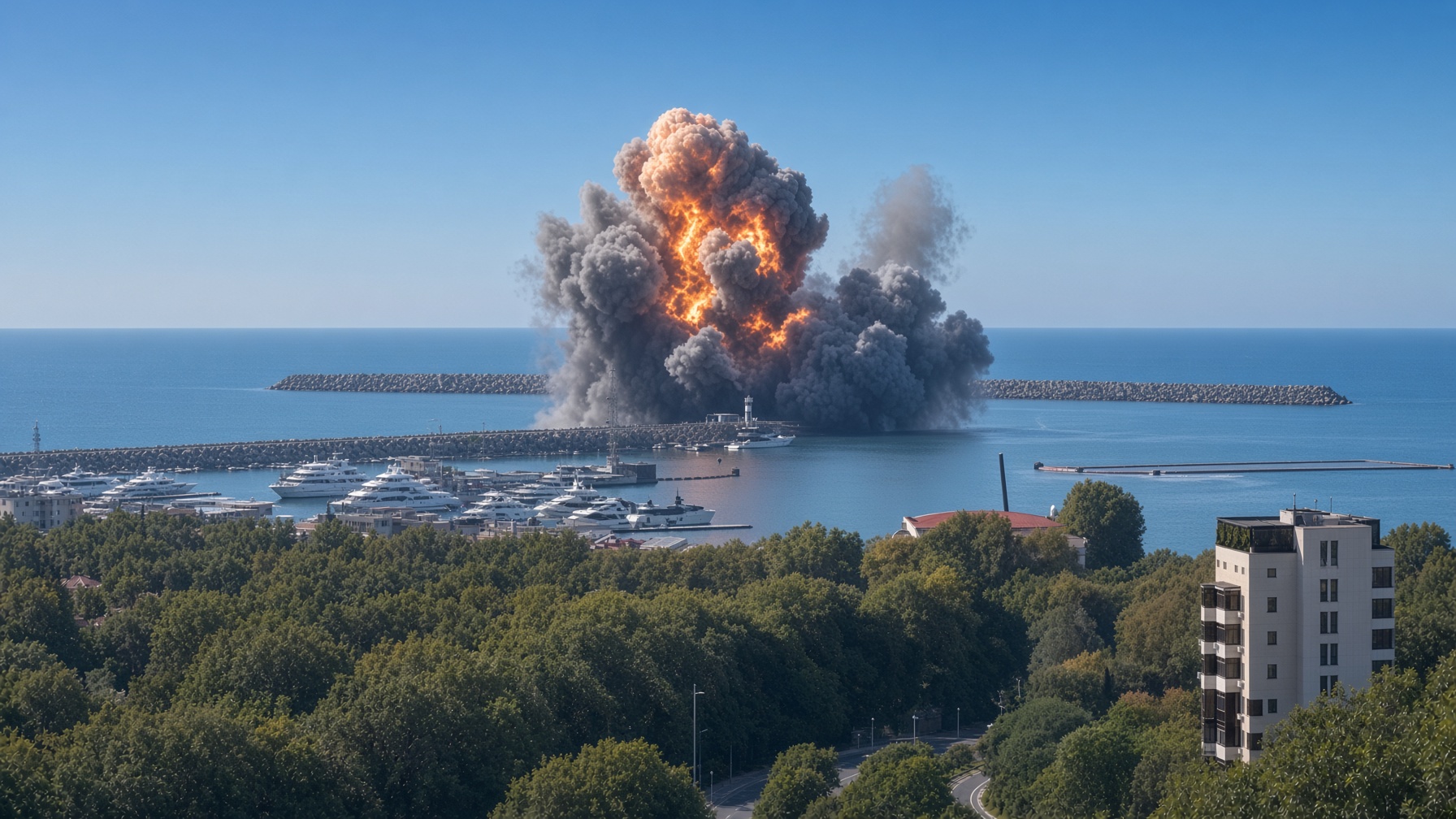
KYIV, Ukraine — Ukraine is expanding its long-range drone operations against targets inside Russia, while President Volodymyr Zelenskyy is warning airlines, insurers and international aviation authorities that the growing frequency of drone activity could make Russian airspace increasingly hazardous for civilian aviation.
In a Sept. 1 address, Zelenskyy said Ukraine’s expanding drone campaign was creating new risks for aircraft operating over Russian territory. He urged airlines and insurers to take the changing security environment into account, while saying Ukraine’s military operations are directed at Russian military and economic infrastructure connected to the war.
The warning comes after repeated Ukrainian drone attacks disrupted operations at Russian airports and forced temporary restrictions on flights. Zelenskyy argued that the expanding range of Ukrainian strikes means the consequences of the war are increasingly extending beyond Ukraine’s borders and into Russian airspace.
The aviation concerns come against a backdrop of intensifying aerial warfare. Ukraine continues to use long-range drones to strike targets inside Russia, including energy and industrial facilities that Kyiv says contribute to Moscow’s war effort. A Ukrainian drone attack this week, for example, damaged equipment at the Yaroslavl oil refinery and forced the suspension of crude processing, according to people familiar with the incident cited by Reuters.
Russia, meanwhile, continues launching large-scale missile and drone attacks against Ukraine.
On Sept. 12, Russian strikes hit multiple Ukrainian regions, killing civilians and injuring dozens of people. Ukrainian authorities reported that Russia used drones as well as ballistic and cruise missiles in the overnight attacks, with Odesa among the areas suffering significant damage.
The expanding air campaign has effectively created another layer of the battlefield, with both countries increasingly using unmanned systems to attack targets far from the front lines.
For civilian aviation, the situation presents an additional challenge. Russia remains a major airspace corridor for some international carriers, although many Western airlines already avoid Russian airspace. Aviation-security specialists have warned that the combination of drones, air-defense operations and rapidly changing flight restrictions can increase risks for aircraft operating near affected areas.
At the same time, the drone campaign is unfolding alongside renewed diplomatic efforts.
U.S. special envoys Steve Witkoff and Jared Kushner traveled to Moscow and Kyiv in early September, meeting Russian President Vladimir Putin and Ukrainian President Volodymyr Zelenskyy as Washington sought to revive trilateral negotiations. The meetings produced no announced breakthrough, but officials indicated that efforts were underway to restart talks.
Ukrainian presidential office head Kyrylo Budanov said Kyiv was preparing for another round of trilateral negotiations involving Ukraine, Russia and the United States in October. Russian officials have also indicated that Moscow does not rule out renewed talks, although major disagreements remain.
The result is a conflict unfolding on two increasingly connected fronts: intensified long-range attacks and renewed diplomatic efforts.
As drones reach deeper into Russian territory and Russian strikes continue across Ukraine, the security consequences are no longer confined to the immediate battlefield. Airspace, airports, energy facilities and critical infrastructure are all becoming increasingly intertwined with the broader war — while diplomats attempt to find a path toward negotiations.